
















Recent Searches

Navigating Your Career as a Professional Sign Language Interpreter

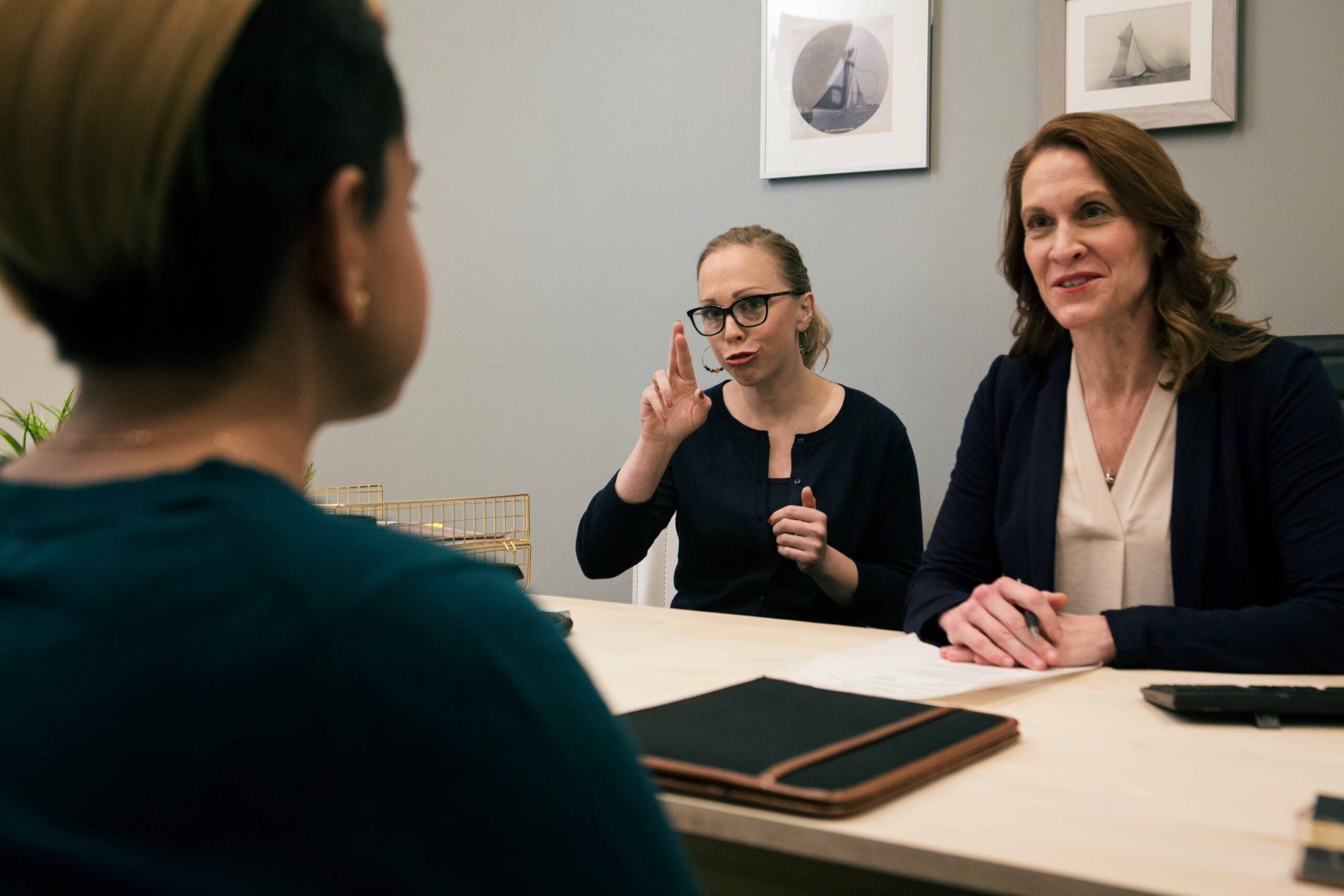
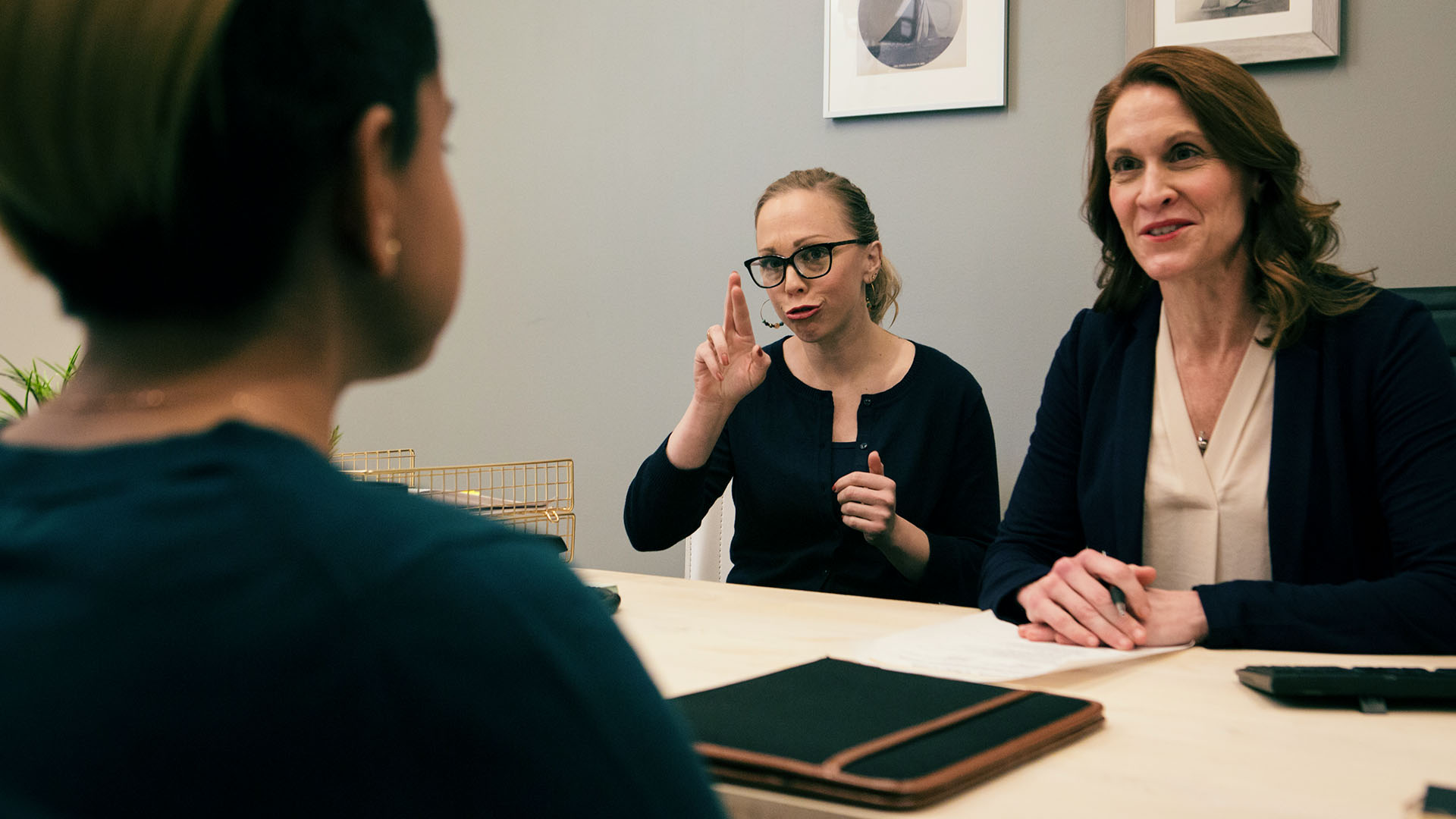
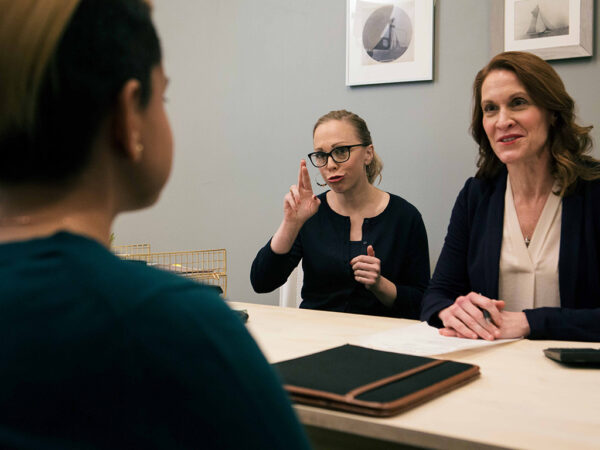
Woman interviews job candidate. Interpreter behind her provides sign language interpretation.

Technology has transformed communication —  from the uptake of telegraphs in the 19th century to the ability of today’s machine learning software to instantly produce speech-to-text captioning in dozens of languages — and in many ways has brought people together across languages. At Sorenson, we’d argue that technology is a tool for interlingual communication, but it cannot yet match skilled interpreters for linguistic and expressive nuance.

Sign language interpreters are in high demand, and that’s great because:

  1. It’s a sign of greater communication accessibility between deaf and hearing people
  2. It means more job opportunities for sign language interpreters

Every certified sign language interpreter is part of a relatively small force trying to make a dent in an enormous need:

  • In the U.S., there are just over 10-thousand certified ASL interpreters¹ compared to roughly one million Deaf and hard-of-hearing adults who use sign language.²
  • While approximately 87-thousand Deaf people in the UK use sign language,³ the country has only 1,500 registered sign language interpreters.⁴
  • The Canadian Association of Sign Language Interpreters has about 830 members,⁵ to support 357-thousand Deaf Canadians.⁶

If you’re exploring your options in a career as a sign language interpreter or looking for interpreting jobs, you can be choosy about where you take your skills. Here are some considerations to guide the next steps in your sign language interpreting career.

Key factors to consider in choosing the next steps in your sign language interpreting career

When planning any career move, some factors are obvious — like compensation and schedule — but those essential considerations are a fraction of the impact on your career and job satisfaction.

For interpreters in particular, professional development and continuing education are essential to keeping your skills sharp and opening doors to additional opportunities, whether you want to compare VRS and community interpreting or gain skills and knowledge in specialty areas like medical, legal, or educational settings.

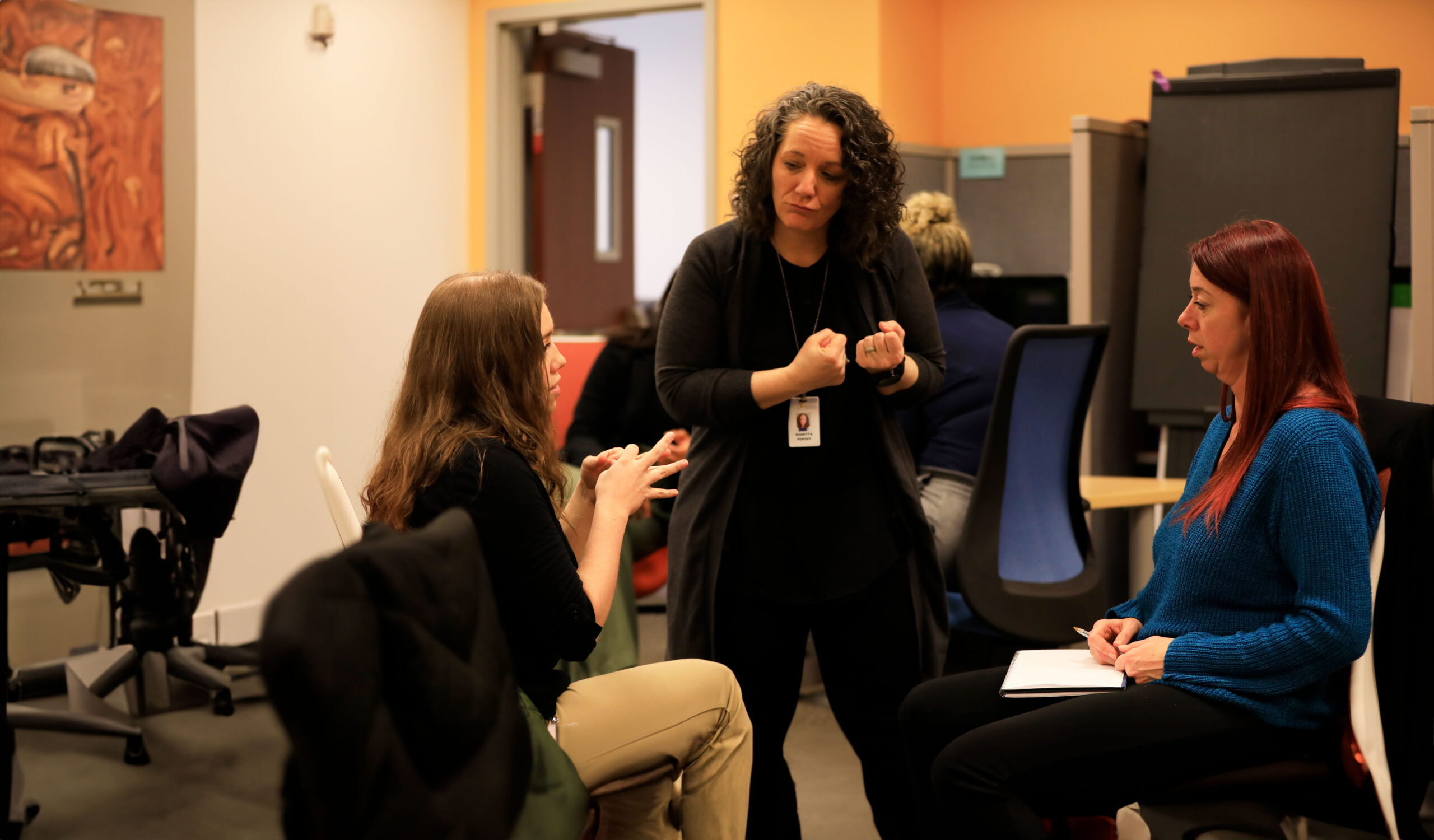
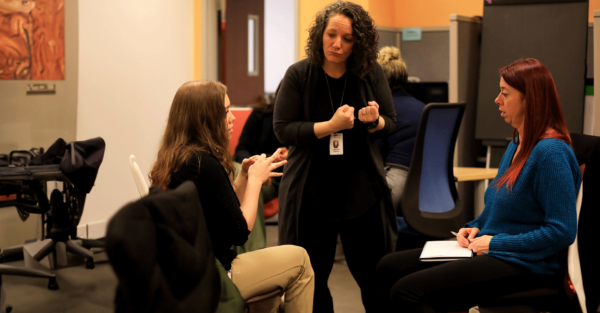
Three women practice sign language interpreting in a classroom workshop setting.

Professional development

In the interpreting world, “knowledge is power” applies to both what you know (continuing education) and whom you know (networking). When plotting a course in your career, think about what kind of access each of your options will provide to training and connections for professional growth.

Continuing education 

The most seasoned and skilled sign language interpreters never stop learning — about techniques, dialects, and evolution of the living languages they work with. It is a professional necessity for interpreters to further their education long beyond completion of their initial interpreter education courses by way of advanced degrees, continuing education courses, and training.

How you approach ongoing professional learning roughly breaks down into two options:

  1. You can independently pursue degree programs or enroll in interpreter CEU courses like those available through Registry of Interpreters for the Deaf (RID) or a number of companies specializing in language services and education. You’ll find a wide variety of interpreting CEUs (continuing education units), many of which you can complete fully online. You’ll be responsible for the registration costs.
  2. If you’re an employee/staff interpreter, your company or organization may offer its own educational or training opportunities, contract with a third party to provide training, or cover the costs for interpreters to enroll in external continuing education courses.

Interpreter education and training opportunities are arguably Sorenson’s biggest impact in the global languages services realm because not only does the company offer complimentary professional development for its thousands of interpreting employees, its interpreter programs also train interpreters who aren’t Sorenson staff.

Sorenson Interpreting Academy provided more than 40-thousand hours of instruction in 2023 alone with 16-thousand participant registrations in its programs for every level from students through experienced professionals.

The mission of these programs is to enhance the skills of Sorenson’s own exceptional interpreters, of course, but also to enrich the sign language interpreting community as a whole through quality professional development opportunities:

  • Deaf Interpreter Academy is a no-cost program offering professional-level trainings for new and working Deaf interpreters in the industry and provide skill development opportunities to all interpreters in Deaf-hearing interpreter teaming techniques.
  • Compass is also a no-cost program that builds on the linguistic and cultural foundations of heritage language users to fast-track their sign language interpreting education.
  • Interpreters with strong potential who don’t yet meet Sorenson’s rigorous standards for employment enroll by the hundreds every year in the company’s Connections program to take their skills to the next level, and 98% say they would recommend the program to others.

The dozens of interpreter educators who comprise the Sorenson Interpreting Academy team include veteran sign language interpreters — many of whom are Deaf interpreters and Codas — sharing  expertise in language development, instructional design and content, as well as mentoring. 

Mentorship and networking 

Meeting and working with fellow interpreters is a chance to borrow skills, build confidence, and open doors to career advancement; sign language interpreting is a small world, after all.

  1. Working with more experienced interpreters can develop mentor relationships that allow you to benefit from years of practice and skill-building as well as constructive feedback.
  2. Meeting and mentoring younger interpreters can be fulfilling, and don’t overlook the potential to learn from them as well. As sign languages evolve, fresh interpreters may be current on the latest slang.
  3. Professional organizations and conferences are a networking goldmine. You may want to weigh how different employment scenarios would impact your ability to participate.

The size of your interpreting team plays a significant role in your mentoring and networking opportunities, whether you’re interpreting for a large language services provider, a small staff, or flying solo as a freelancer.

For example, Sorenson is the largest private employer of sign language interpreters in the world with a team of more than 5,000 interpreters globally. One of the benefits of being part of an interpreter workforce of that size is the potential to learn from peers with an astounding variety of expertise:

  • Deaf interpreters
  • Trilingual interpreters
  • Interpreters with specialized training for DeafBlind and low vision interpreting, medical, legal, and government settings
  • Every interpreting setting in the industry: VRS, on-site, scheduled and on-demand VRI

Your level of exposure to other interpreters — as mentors, mentees, and professional connections — may influence your decision to pursue interpreting work as an employee or freelance.

Freelance vs. employee

Are you going to be better off going solo as a freelance interpreter or finding a position with a company that offers sign language interpreting? There’s not a right or wrong answer; it comes down to what factors are most important to you. As with any industry, freelance vs. staff interpreting come with pros and cons, many of them relating to flexibility and support.

Freelance interpreting 

Pros: As a freelance sign language interpreter, you have the maximum level of control and flexibility; you can choose your hours and what kind of interpreting work you book. That flexibility allows you to customize your work schedule. You may also be able to negotiate your rates to reflect your experience, specialization, or other market factors.

Cons: The flip side of freelance interpreting can be additional responsibility and instability. You’re responsible not only  for securing interpreting work, but arranging your own insurance, training and certifications and licensure as required, and handling the administrative side of the business — invoicing, bookkeeping, and taxes.

There are a couple basic options to find freelance interpreting work: 

  • Independently, through self-marketing and networking: If you’re well-connected and establish relationships with organizations or individuals that regularly require interpreting, this approach may run smoothly. Without those relationships, marketing yourself can require a lot of leg work.
  • Work with a language services provider: The company fields interpreting requests and connects them with a pool of freelance interpreters. This setup removes the burden of marketing yourself, but opportunities may be inconsistent.

Staff interpreting

Pros: A major benefit of an employee interpreting position is the stability of consistent work and pay. As a staff interpreter, you may also have company-provided benefits like health insurance, retirement plans, and paid time off (though this is not guaranteed, particularly for part-time interpreting positions). Some employers who maintain interpreting staff will also offer professional development opportunities.

Cons: Some staff interpreting positions do offer more flexibility than a standard corporate environment, but do not always offer as much as freelancing. Being an employee means answering to management and operating within the confines of company expectations. Also, as an employee, your ability to negotiate your rates is likely limited to your hiring and potentially annual reviews.

Your experience as an employee will vary by your setting — whether you’re a staff interpreter for a private enterprise, a government agency or educational institution, or are an employee interpreter with a language services provider. While many language service providers operate exclusively with freelancers, there are few exceptions like Sorenson, which maintains a dedicated staff of thousands of interpreter employees.

Benefits and compensation

Interpreting is one of those coveted careers where you can make a real difference in people’s day and make the world a little better. That said, warm, fuzzy feelings don’t pay the bills. You can prioritize making an impact on your community and also care about your compensation.

To get a baseline for competitive pay, you can use online databases to look up the average sign language interpreter income nationally and in your area. For example, if you look up estimates of national average sign language interpreting salaries, you may find numbers like these:

  • Average ASL interpreter salary in the U.S. around $64,000/year (from ZipRecruiter.com)
  • Average BSL interpreter salary in the U.K. around £35,000 (from Talent.com)
  • Average sign language interpreter salary in Canada around $70,000 (from Talent.com)

Bear in mind, what you can expect for a sign language interpreter salary will vary considerably by experience, certifications, location, and specialization. There can also be significant differences in interpreter income between employee positions versus freelance work, and that’s partly due to additional factors like benefits and taxes.

When weighing compensation for different career options, you may want to think about what you’re likely to get in a week, in a year, and in the long run. This is particularly important when considering freelance vs. employee interpreting paths.

  • Negotiating rates: As we discussed above, freelance interpreting offers the most opportunity to negotiate your rates, which can significantly impact your earning potential, especially if you have in-demand specialization or experience (or if you’re in an area where the need for interpreting services exceeds availability).
    However, if you don’t have the credentials yet to command top tier rates, if the demand for interpreting doesn’t give you leverage in negotiations, or if you’re not consistently booking work independently you may want to compare the average rate for freelance interpreting to the total compensation you could earn in a staff position.
  • Health insurance: Health insurance can be expensive. If you’re responsible for your own insurance, you’ll want to price policies to factor that into your income calculations. Likewise, health insurance benefits can add thousands of dollars a year to the value of a compensation package from an employer.
  • Retirement savings: Retirement is where long-term compensation considerations really come into play. Much like insurance, if you opt to work freelance as an interpreter, you’ll need to look into independently setting up and contributing to a retirement savings account and planning for that money to come out of your earnings.
    If you choose an employee interpreting position, retirement benefits do increase the value of your compensation package, but the amount may vary greatly; compare employers’ retirement contributions and/or matching as part of your evaluation of offers.

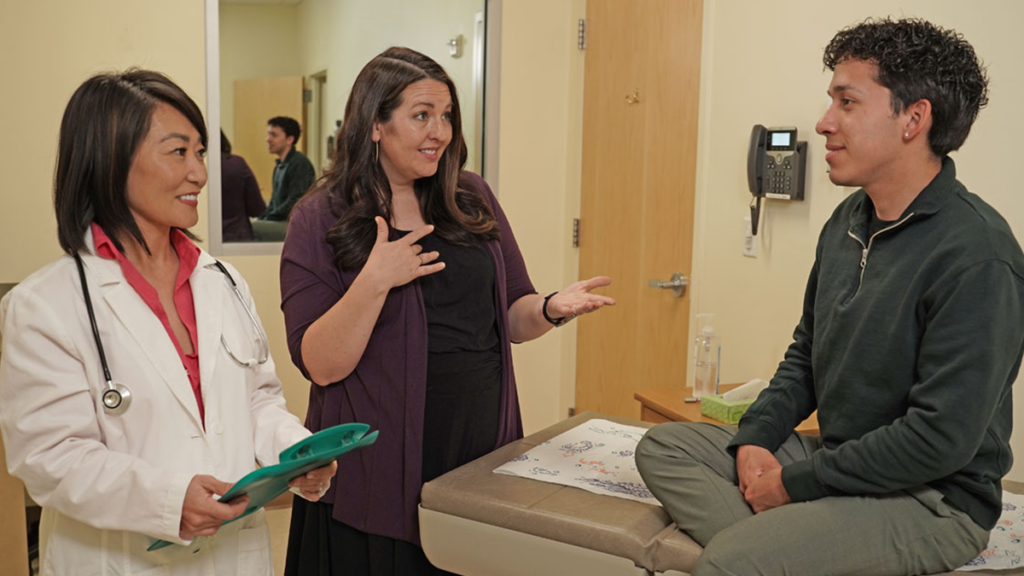
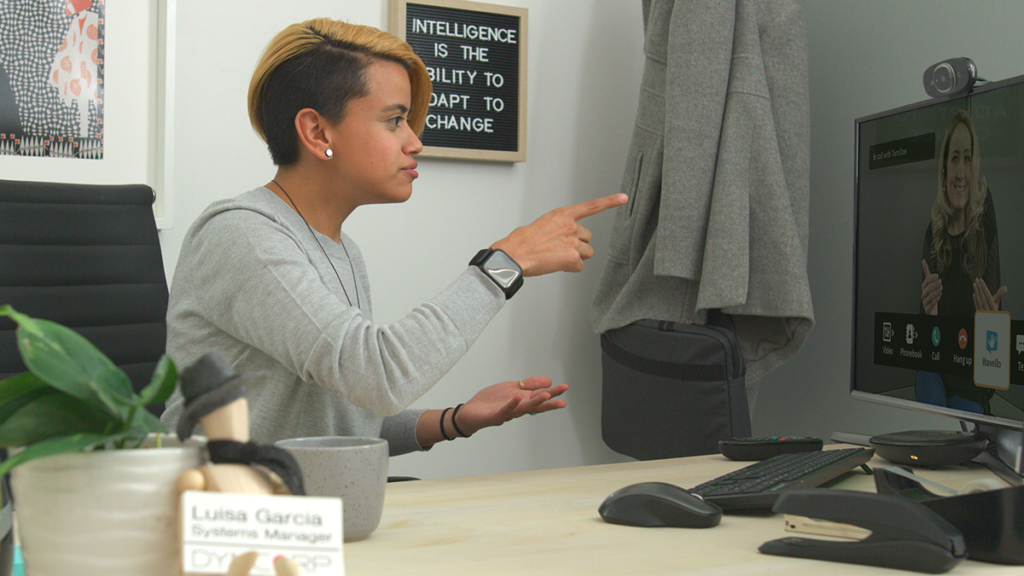
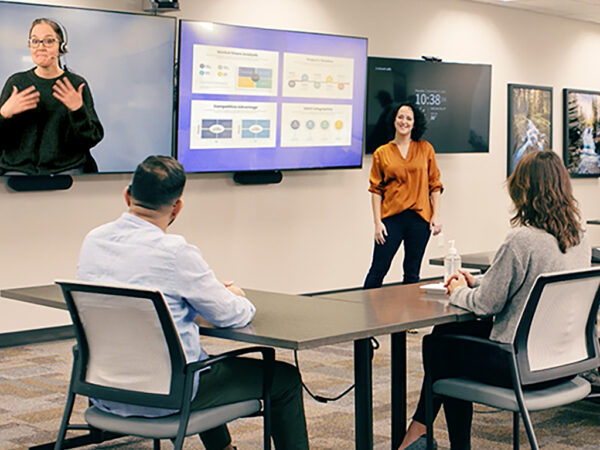
Three women practice sign language interpreting in a classroom workshop setting, Woman giving presentation in front of conference room with virtual sign language interpreter on screen behind her, Woman at cubicle desk uses sign language to communicate on a video call.

Variety of interpreting opportunities

If you could only do one type of sign language interpreting for the rest of your career, what would it be? VRS, community interpreting, scheduled VRI, on-demand VRI? Would it be a specialized service like legal interpreting or DeafBlind interpreting? Can’t choose just one, or haven’t tried them all to know for sure? 

When plotting where to steer your career, factor in how important it is to you to have a variety of interpreting opportunities.

Video Remote Interpreting (VRI):

VRI has skyrocketed in popularity as an enterprise service. For interpreters, scheduled VRI combines the remote video interpreting aspect of VRS with the slower pace and greater potential for prep of community interpreting. The relatively recent introduction of on-demand VRI skews toward a quicker pace for short conversations in an enterprise environment.

Video Relay Service (VRS):

It’s tough, it’s rewarding, and it generates the biggest demand for sign language interpreters. VRS is fast-paced and unpredictable, allowing interpreters to connect sometimes dozens of conversations in a workday.

On-site/community interpreting:

On-site (or community) interpreting is often the option clients name as their favorite for the greater visibility, mobility, and elimination of technical difficulties. Those are equally beneficial for interpreters, though on-site work does require travel, which can include dealing with traffic, parking, and checking in at the location.

Specialized interpreting:

The term “specialized interpreting” casts a wide net and can refer to interpreting needs that require niche skills, additional training, or techniques to fit particular situations or content — like interpreting emergency government news conferences or theater performances. Most often, specialized interpreting falls into three high-demand categories:

  • Legal interpreting: Legal interpreting can encompass court proceedings, conversations between attorneys and clients, as well as law enforcement interviews and investigations. It’s another area of specialization that requires specific skills and terminology.
  • Medical interpreting: Medical settings are one of the highest needs for specialized interpreters, both in person and VRI. Medical interpreting requires additional knowledge of medical terminology as well as compliance with state and institutional policies relating to safety and privacy.
  • Educational interpreting: There’s steady demand for educational interpreters in primary, secondary, and higher education. With more deaf children attending mainstream schools and deaf college enrollment growing at a faster rate than that of hearing peers, the need for sign language interpreting at all levels of education has never been higher. In fact, in the U.S., the National Deaf Center points out that higher education is one of the sectors most keenly feeling the shortage of sign language interpreters as universities struggle to keep pace with the influx of deaf students.⁷

Traditionally, educational interpreting has been largely on-site, but the increase in remote learning has created a need for VRI in education as well.

Those are only a few examples. Specialized interpreting can also include different approaches to interpreting to better meet the linguistic needs of clients, like low vision interpreting or interpreter teaming with a hearing interpreter and a Deaf interpreter.

  • Certified Deaf interpreters: If you’re a Deaf interpreter who’s gone through the necessary training to become certified (or plan to), you’re well-versed in interpreter teaming (or you will be). Even for interpreters with native language proficiency, teaming is a skill in itself, and it takes training and practice for Deaf and hearing interpreters to collaborate seamlessly. That’s one of the key elements of Sorenson’s Deaf Interpreter Academy, a no-cost program for Deaf interpreters to hone their skills and build a foundation for professional interpreting success.

To acquire the training required for specialized interpreting, you’ll need to enroll for continuing education programs/courses and training.

Some companies that employ interpreters will provide the necessary training for interpreters to maintain their certifications and licensure. Sorenson is unique in the size and scope of its interpreting and interpreter training teams that it offers wide range of professional development for its staff at no cost to boost the pool of qualified interpreters for any need. Interpreters may even get reimbursement for related costs like testing fees, registration for professional conferences, and interpreting organization membership.

Design your own sign language interpreter career

The biggest takeaway from this guide is that you have options as a professional sign language interpreter. Demand is high for your skill set, and a global shortage of interpreters means you have the power to be selective about your career moves.

There’s not a one-size-fits-all path to suit every interpreter. Weigh your priorities and preferences from the factors we’ve laid out here, talk to mentors and peers about their experiences, and research your options.

Sorenson is always hiring sign language interpreters to support connection and language equity on a global scale. We encourage you to browse our interpreting opportunities and interpreter training opportunities to advance your career.

Sources

  1. Dive into your exclusive access to RID publications and materials.
  2. How many people use Sign Language? A national health survey-based estimate
  3. Prevalence of British Sign Language
  4. Facts and statements on inclusion
  5. Casli directory of members
  6. Statistics on deaf Canadians
  7. The ASL interpreter shortage and its impact on accessibility in college settings

Accessibility in Sports: Building Economic Power and Innovation for Enterprise

Group of sports fans in matching colors celebrate their team's victory in an outdoor restaurant.

The love of sports transcends cultures and countries. Chances are you know a sports fanatic, or you are one yourself. The collective experience of enjoying a sporting event is palpable, and we revel in the athletic competition and the spectacle.

However, the universal love of sports doesn’t equate to universal design. Attending and enjoying sporting events comes with challenges for many sports lovers. Take, for instance, Deaf and hard-of-hearing communities and multilingual audiences where language barriers blunt the full joy of watching sports, leading to an exclusive environment rather than an inclusive one.

Given the incredible variety that sporting events attract, providing accessibility in sports can create the ultimate inclusive experience for sports fans, increasing the potential for audience expansion and attendance.

We’ll look at the benefits of inclusivity in sports, both for fans and the sports industry, and address:

  • The revenue potential for improved accessibility at sporting events
  • The current accessibility gaps in sports
  • The benefits of making sporting events more accessible

The goal of language accessibility for sports and sports entertainment is to increase business and boost the enjoyment of these events for the global audience. The ability to fully enjoy the spectacle that plays out before us amps up the thrill and energy of the experience.

Current state of language accessibility in sports

It’s been more than 40 years since the first closed captioning during a live sports event on New Year’s Day 1981, when the Georgia Bulldogs and Notre Dame played at the New Orleans Superdome. Yet even today, full accessibility for sports audiences remains a novelty — exciting and well-received — rather than the standard.

  • Deaf rappers Sean Forbes and Warren Snipe made history at the 2022 Super Bowl as the first deaf halftime show performers in the game’s history.
  • In 2023, Justina Miles, a hard-of-hearing American Sign Language (ASL) performer, gained positive attention after her ASL performance for Rihanna’s Super Bowl halftime show.

However, the world’s largest international sporting events offer a glimpse at the inclusivity that’s possible with language accessibility:

At FIFA World Cup 2022 in Qatar, most of the one million attendees came from Saudi Arabia, India, U.S., UK, and Mexico. However, translation services for sports fans from around the world meant volunteers didn’t need to speak multiple languages, and broadcasters could provide commentary in multiple languages through real-time translation services.  The use of translation technology and real-time interpreting and translation services achieved the goal of making the game accessible and enjoyable for fans.

For the 2024 Olympic Games, athletes from more than 200 countries competed in Paris with an estimated three billion people watching from around the world. Organizers translated all signage and provided live interpreting at the Games as well as captions and/or subtitles for broadcasts.

Sports viewership

An undeniable aspect of language accessibility for these events is demand. Global sporting events attract billions of fans around the world. Here’s a brief rundown of the number of viewers or attendees for international competitions :

  • 2022 FIFA World Cup: 1.5 billion
  • 2023 Tour de France: 42.5 million French viewers
  • 2023 Women’s World Cup: 2 billion (a record) 
  • 2020 Tokyo Summer Olympics: 3 billion
  • 2022 Beijing Winter Olympics: 2 billion

Improved technology has both increased sports viewership through real-time availability and contributed to making sports more accessible for the varied audiences watching around the world.

Language accessibility at U.S. sporting events

Though more sports venues have become proactive in integrating accessibility for Deaf and hard-of-hearing live sports attendees, a national ESPN study shows that organizations have lots of room for improvement to accommodate sports fans with “invisible” disabilities (which includes Deaf and hard-of-hearing individuals) who come to the games expecting a thrilling and seamless experience.

ESPN conducted a survey of 136 sports teams (NFL, NBA, WNBA, MLB and NHL) and received responses from 120 teams. The top concerns of fans with invisible disabilities in this study include:

  • Dedicated accessible entrances
  • Drop-off zones
  • Elevator access
  • Printed menus
  • Training for stadium staff

Less than half of the teams said they provide dedicated entrances for people with disabilities. About the same number said they provide printed menus that customers can point to.

That’s not to say that venues aren’t moving the needle at all on accessibility. Many upgrades that improve the experience for fans with disabilities are part of innovations that benefit everyone at the event.

Smart stadiums elevating accessibility in sports

Take “smart stadiums” for example. This digital age innovation emphasizes connectivity with 5G and Wi-fi and optimizes fan engagement through assistive tools and beacon technology. With ticketing, concession sales, and seat assistance right on their mobile devices, language barriers pose less of a hurdle for fans to navigate their game day experience.

Smart stadiums are not explicitly for the benefit of sports attendees with disabilities, and many of the intelligent features are beneficial for fans and stadium staff alike:

  • Faster and more personalized purchases
  • Responsive to changes throughout the stadium grounds (parking, concession stands, weather)
  • Monitor bathroom traffic
  • Wi-fi availability
  • Mobile app that enables attendees to interact personally with stadium staff
  • Ability to enjoy the game wherever fans are

These, and other features, improve profitability and the fan experience by saving time and boosting sales.

Additionally, reliable connectivity throughout the venue enables fans to use internet-based assistive technology like speech-to-text captioning and translation apps or on-demand interpreting services.

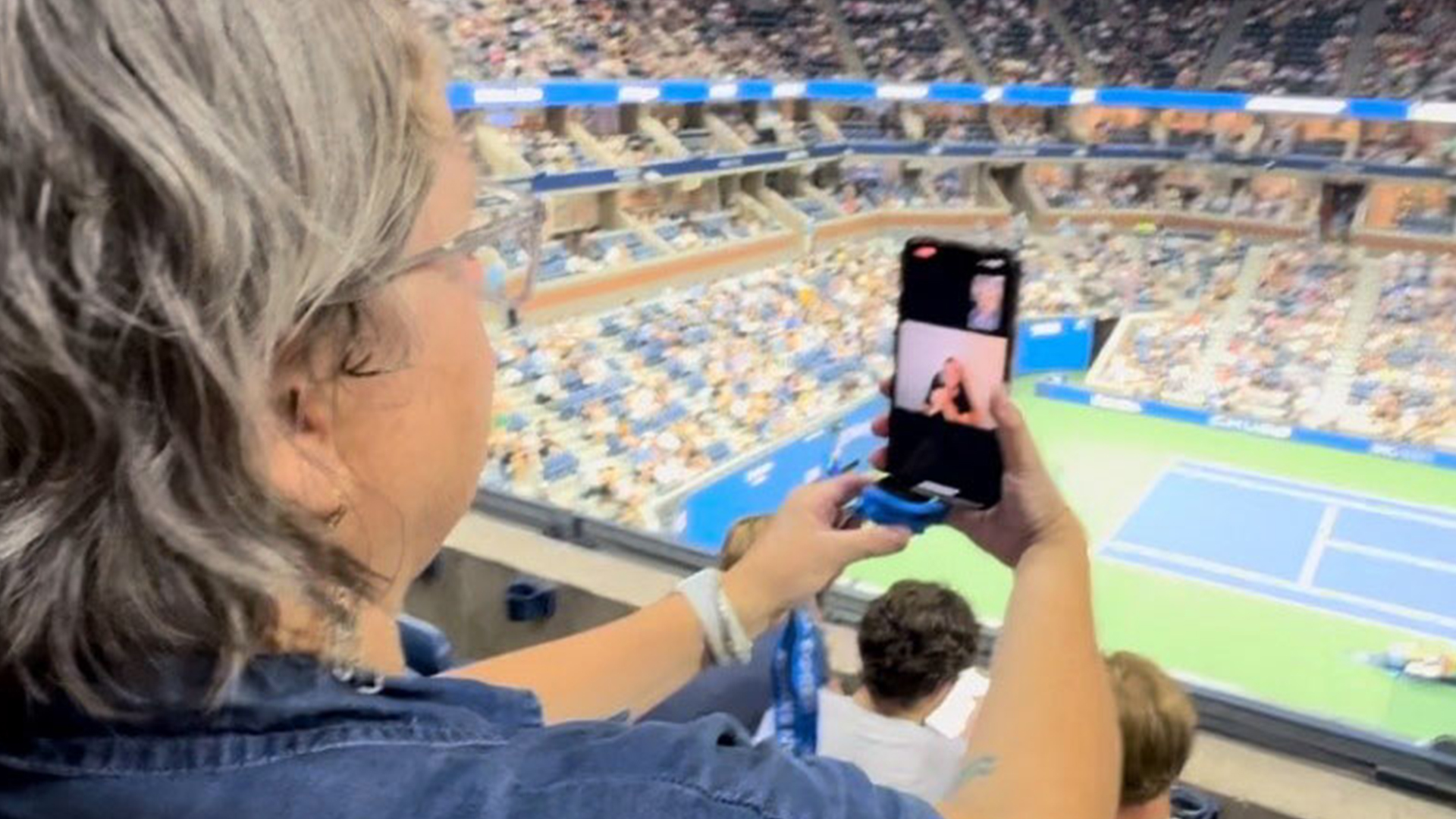
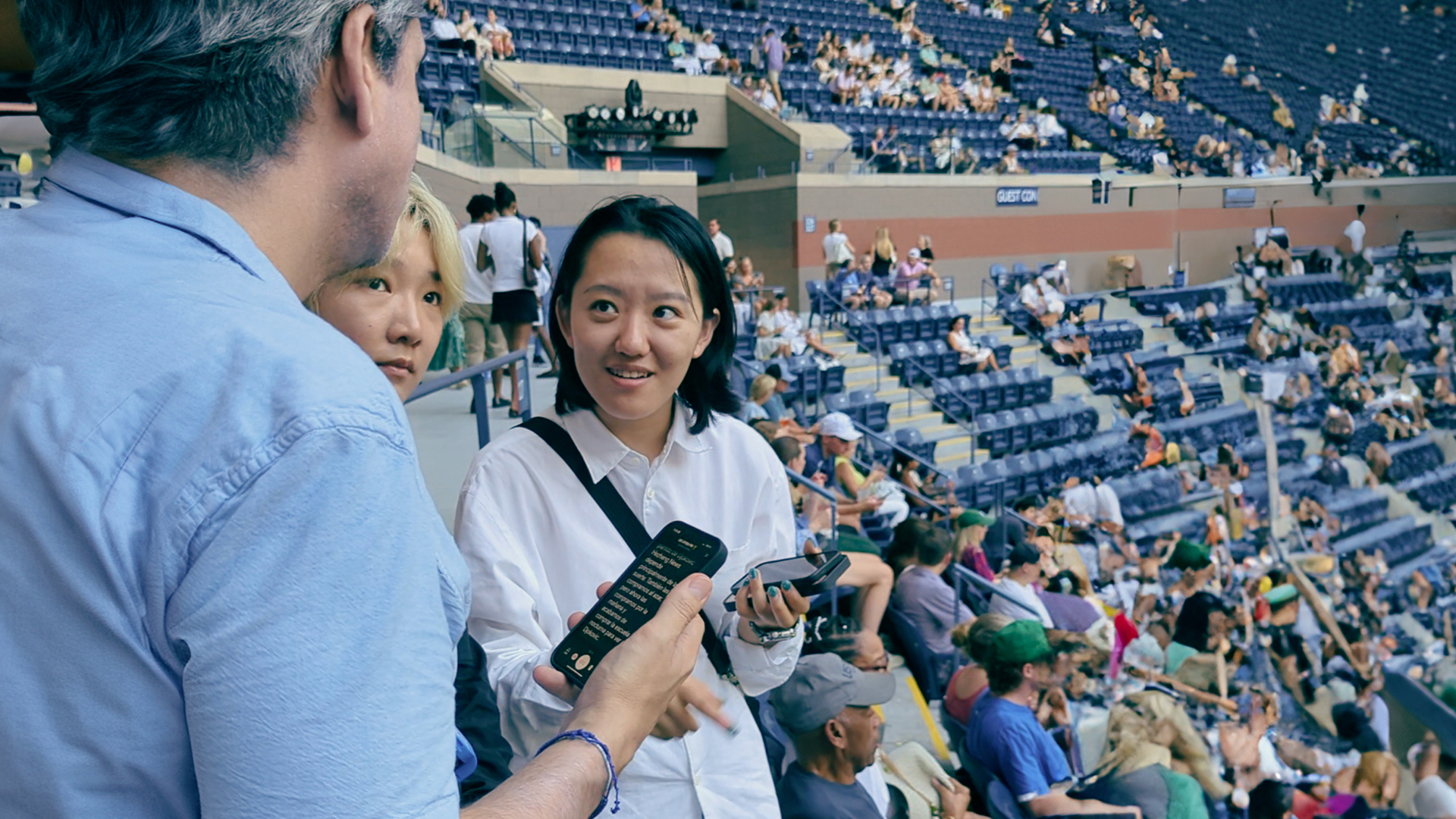
Woman video chats with interpreter on smartphone from upper decks of stadium during tennis match.

Accessibility for Deaf and hard-of-hearing individuals

Wider availability of tools like sign language interpreting, closed captioning, and assistive listening devices (ALDs) at some sports arenas are a big step in improving information and language access for Deaf and hard-of-hearing individuals attending sports events. They are improving language accessibility for Deaf and hard-of-hearing attendees with sign language interpreting, closed captioning, assistive listening devices (ALDs), and upgrading their sports venues to “smart stadiums.” Smart stadiums optimize fan engagement through assistive tools, 5G and Wi-fi connectivity, and beacon technology.

Slowly but surely, these kinds of considerations for deaf fans are permeating major league sports. Just this year, the National Hockey League debuted “NHL in ASL” for the Stanley Cup Finals, a broadcast of the games with complete commentary in ASL with Deaf broadcasters for Deaf and hard-of-hearing fans watching at home. The broadcast also includes visual features to depict fan noise at the game so viewers can see when the crowd goes wild.

Experts expect the rate of hearing loss to double by the year 2060. With the average age of a baseball fan being 57, stadiums ought to take heed of these changing demographics and lean into accessibility for a growing demographic. 

Multilingual accessibility 

Multilingual accessibility in sports is a complex issue: while linguistically diverse fans don’t have the same legal protections that people with disabilities do to compel the sports industry to adapt, they have something else in their favor: numbers. The U.S. Census Bureau’s 2023 American Community Survey reports more than 22% of people living in the U.S. speak a language other than English.

And it’s not only fans bringing linguistic variation to sports. Twenty eight percent (28%) of MLB players are non-U.S. born. Most of those players are from the Dominican Republic, followed by Venezuela, Cuba, Puerto Rico, and Mexico.

In 2015, Major League Baseball (MLB) instituted a rule requiring each of its 30 teams to have at least two full-time Spanish-language interpreters.

The Los Angeles Dodgers go a step further to cater to its Hispanic fans with a Spanish version of its website and broadcasts of its games in Spanish (live radio and TV).

Major sporting events (Super Bowl, World Series), global competitions (Olympics, FIFA World Cup), and US sports venues (MetLife, Levi’s) offer on-site multilingual interpreting services. The international makeup of players and fans obliges stadiums to adopt these inclusive language practices.

Examples of venues offering language accessibility in sports  

Several major sports arenas in the U.S. provide accessibility services for Deaf, hard-of-hearing, and multilingual fans. Here are some successful examples of language accessibility in sports.

Mercedes-Benz Stadium

This Atlanta, GA stadium provides:

  • Assistive listening devices
  • Closed captioning handheld devices you can check out from guest services. Closed captioning is viewable on all boards within the stadium
  • Obtain accessible seats by contacting Ticketmaster

Madison Square Garden

This New York stadium provides comprehensive accessibility services:

  • Assistive listening devices
  • Open and closed captions

For hockey and basketball games, open and closed captions are available on a ribbon board for sports commentary.

What’s the difference between open captions and closed captions?

Open captions are burned into the video and are always visible. They cannot be turned off. You can turn closed captions on or off.

Sign language interpreting or closed captions are available for other sports events for fans who request them with two weeks’ notice. 

Crypto.com Arena  

Formerly the Staples Center, this Los Angeles stadium follows ADA mandates for effective communication:

AT&T Stadium

This Arlington, TX, sports venue provides:

  • Assistive listening devices
  • Handheld captioning devices that provide real-time captions for all public announcements
  • Choose English or Spanish as your preferred language for audio
  • Sign language interpreters available for select concerts with 30 days’ advance notice.
  • Casino.com recognizes AT&T Stadium as the country's most accessible sports stadium.

Fenway Park  

Home to the Boston Red Sox, this historic ballpark offers:

Benefits of language accessibility in sports

Although accessibility planning is not part of every sports venue’s operations, there are benefits to making accessibility in sports standard for attendees:

  • Higher attendance: Accessibility features help stadiums attract a broader audience. When Deaf, hard-of-hearing, and multilingual fans come away with a positive experience, they help spread the word about the thrilling experience they had at a game, which gets more people interested.
  • Greater participation: Accessibility can boost fan excitement during live games and help everyone cheer and celebrate game wins and boo the losses together. Ever see “the wave” at sports events?
  • Positive brand reputation: Stadiums that prioritize accessibility demonstrate inclusivity, encouraging fans to return to relive the same fan experience.
  • Robust communication: Captioning, sign language interpreting and spoken language interpreting, and translation services contribute to positive experiences and effective communication for fans and staff.
  • Increased revenue: A larger fan base, sponsorships, concession and merchandise sales, and accessible online platforms all contribute to higher revenue.

Financial incentives

The sports industry is wildly profitable. A 2023 study from Statista showed tickets for major sporting events yielded more than 14 billion dollars in 2022, with that number on track to reach 15 billion in 2024. Even with more fans watching their favorite pro sports at home, experts expect the demand for live sporting event tickets to exceed two billion by 2028. Being inclusive of all fans can bring increased attendance at stadiums, considering — as we mentioned above — there are more than 22 million people in the U.S. alone who speak languages other than English, not to mention international visitors. And more than a quarter of American adults have a disability. If sports venues committed to offering those fans the same quality of experience as other fans, how much more likely do you think they’d be to buy tickets? Add in concessions and merchandise sales on top of that.

With the advent of AI tools for real-time captioning and translation and the adoption of universal design, sports attendance will only increase when Deaf, hard-of-hearing, and multilingual fans learn there are language services that directly cater to their communication needs.

The benefits for sports fans are clear, but language accessibility can also benefit sports venues and athletic organizations through increased partnerships and sponsorships. 

Case study: 2024 US Open Tennis Championships

Sorenson sponsored the 2024 US Open, and a multilingual Sorenson team attended the tournament with two Sorenson products — Sorenson Forum and Sorenson Express — to facilitate communication with staff and fellow fans. How did it go? We asked them about the experience.

An unexpected experience for deaf fans

  • The US Open website states, “The US Open is fully accessible for guests with disabilities.” Our team said many of the accessibility services appear to focus on patrons with physical disabilities and less so on sensory disabilities. Without the invaluable support of Sorenson Express for on-demand ASL interpreting and Sorenson Forum for live captioning, our Deaf team members noted that language accessibility at the tournament would have been a challenge: On the first day, the team visited guest services to request captioning. Unfortunately, there seemed to be a misunderstanding as the stadium staff believed that captions should be available once they found their seats.
  • When the captioning was not available, the team returned to guest services. The staff then offered assistive listening devices. Despite the team explaining they were Deaf and unable to use the devices, the staff struggled to understand the device’s limitations.
  • “They were really pushing me to try it,” says Jessie Adner, Sorenson Director of Design Consulting. “I was saying over and over again that I can’t hear. I use sign language interpreters.” Finally, the stadium staff understood and they put the device away. “I could see their wheels turning,” Ms. Adner says. “I gave them my business card and told them I’d be happy to consult with them.” 
  • When they were seated in the stadium, the Sorenson team happily used the captions on the video board, but said captions cut in and out throughout the game and primarily focused on the referee speaking rather than announcements, the players, the coaches, or introductions.
  • Then they had an idea. They connected a small radio that was available for hearing patrons to a smartphone with the Sorenson Express app to get an ASL interpreter on demand to interpret the game.

Something as simple as interpreting available in a mobile app fulfilled the basic desire to enjoy the game along with other fans.

“People can cheer for their favorite players or talk with the person sitting next to them,” Ms. Adner says. “We were really emphasizing the game day experience that Deaf people often lack.”

Ms. Adner says she’d love to go back to the US Open next year. “It was so fun with my colleagues, with the food and the experience, and just being in the same area as all of the players,” Ms. Adner says. “I’m addicted to tennis now.”

This year’s US Open did have a sign language interpreter for the national anthem as the result of deaf fans’ recommendations in 2023.

Using Sorenson Forum for seamless communication

The U.S. Open attracts not only athletes from around the world, but also fans spanning languages and cultures. A highlight of the game experience for the Sorenson team was being able to talk to those fans using Sorenson Forum’s on-demand translation and spoken language interpreting.

“We had the opportunity to use Sorenson Forum with foreign language speakers,” says Sorenson Director of Corporate Events Britnee Hursin. “We were able to have a conversation which was really cool.”

A Spanish-speaking Sorenson team member carried on a full conversation with a Chinese couple who spoke Mandarin, using Sorenson Forum to translate in real time between their respective languages.

Three people use real-time translation to communicate in stadium stands during event.

The last word

The Sorenson team said they saw for themselves a significant accessibility gap in sports, even at events that aim to provide accessibility for all fans.

The team emphasized that captions benefit not only Deaf and hard-of-hearing audiences but also multilingual speakers, provided they can access captions in their preferred language. They met many non-English speaking fans and say multilingual captioning would make the sporting events “inclusive for a broader audience,” rather than just a tool for deaf communities.

“We’re not just accepting [the] status quo,” Ms. Hursin says. “We want to work in partnership with them .”

A vision for accessibility in sports

The vision for sports is accessible. By integrating language accessibility, the sports entertainment industry can offer multilingual, Deaf and hard-of-hearing fans a prime seat for the thrill and camaraderie of sporting events — and watch inclusion pay off.

Catering to a multilingual audience reaps economic benefits through increased attendance: higher ticket and merchandise sales (including concessions).

Language accessibility benefits also extend to staff, players, and officials through clear communication with customers and teammates.

We encourage sports venues and organizations to prioritize accessibility in their operations. Reach out to accessibility professionals, invest in staff training and technology, and, most of all, listen to audience feedback.

Ready to start implementing language accessibility for your sports events? Request a meeting with Sorenson’s consultant team today to discuss your needs to make your sports events accessible and inclusive.

Deaf Entrepreneurship: What Enterprises Can Learn from Deaf Businesses About Accessibility and Innovation

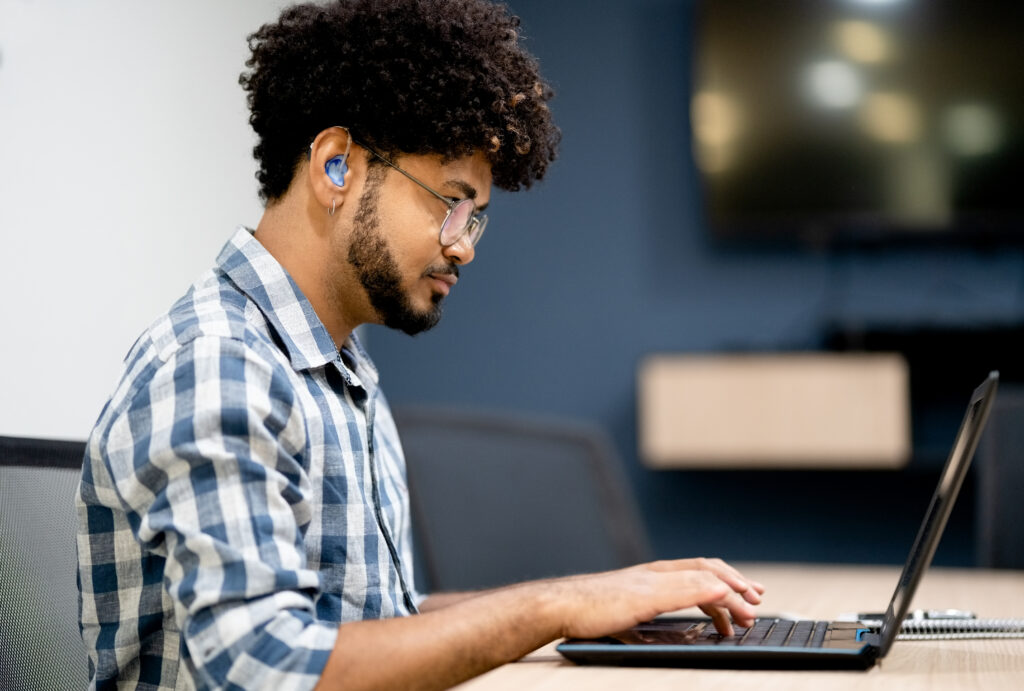
Young man wearing hearing aid works on laptop in conference room.

Deaf-owned businesses have been at the forefront of implementing communication technologies and inclusive practices, often out of necessity. These adaptations have not only allowed them to thrive as successful business owners but they have also created accessibility models that can benefit other enterprises.

In this article, we’ll share valuable insights from deaf businesses that enterprises can use to replicate accessible and inclusive environments:

A deaf entrepreneur’s journey

When Robert Dunn, the Deaf owner of Dunn Rite Optical in St. Augustine, FL, graduated from RIT, he said he knew he wanted to become a business owner.

“I loved the idea of setting up my own business,” Dunn says, “and not having to work for somebody else. This was in 1992, when I started thinking about how I could make this happen.”

After an optical trade show, he researched the costs of building the machines to manufacture the frames and lenses. But he needed to complete a 4,500-hour apprenticeship to take the state exam for an optician license.

Optical stores turned him down because opticians feared their businesses would suffer if customers couldn’t communicate with Dunn. So he was relegated to the back room of an optical store.

Altogether, the journey took 30 years for Dunn to become a licensed optician.

Today, Dunn Rite Optical serves Deaf and hearing customers on the East Coast and Florida.

Why so many deaf people start their own businesses

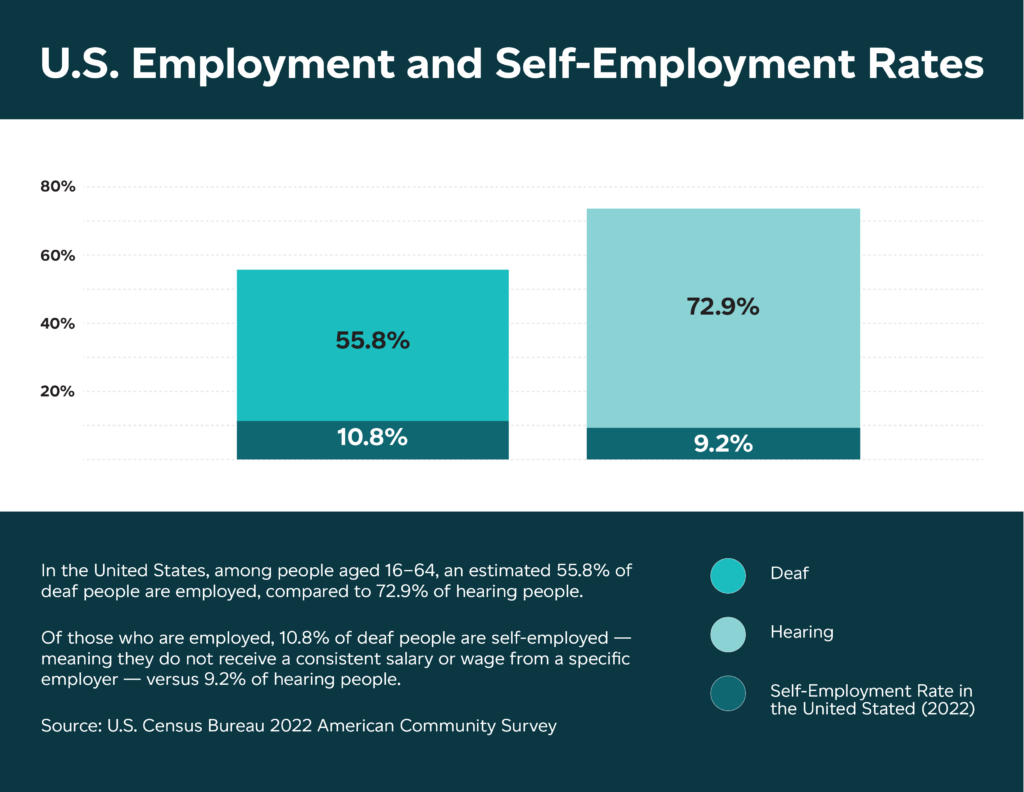
Deaf people often face barriers in the job market, including discrimination and lack of accommodation. Even with a slight increase in deaf employment (53.5% in 2021 to 55.8% in 2022)¹, unemployment remains a chronic problem in deaf communities.

Infographic titled U.S. Employment and Self-Employment Rates. Visual representation of data in next paragraph.

The chart illustrates the contrast in employment rates between deaf and hearing individuals (55.8% and 72.9%, respectively) along with another notable statistic: the rate at which deaf people take employment into their own hands.

Challenges finding jobs led many to start up their own businesses where they can control the work environment and ensure inclusivity and accessibility. An estimated 10.8% of deaf people are self-employed, compared to 9.2% for hearing people, taking on freelance or contracting work. Deaf people also edge out hearing people in business ownership (4.1% and 3.8%, respectively)².

Accessibility paved the way for deaf entrepreneurs

Several developments made going into business a viable option for ambitious deaf individuals:

  • In 2015, in a bid to become more accessible, the Small Business Administration (SBA) created a videophone service to enable ASL users to connect with an ASL-fluent SBA representative for resources and business support³.
  • The National Association of the Deaf (NAD) launched a resource hub⁴ with information for aspiring Deaf business owners to start a business or become a government contractor.
  • Communication Service for the Deaf’s Social Venture Fund (CSD SVF) became the first social investment fund focusing on supporting Deaf-owned businesses⁵.
  • The availability of Video Relay Service (VRS) provided significant support for the surge in deaf business ownership⁶. This federally funded service has made Deaf and hearing communication by phone seamless for individuals and enterprises. Sorenson has provided major improvements — from the initial video compression technology to the highest quality videophones for the deaf.

With the right resources, deaf business owners are achieving success on their own terms and giving deaf employees the same opportunities with accessible workplaces. Many deaf-owned businesses, including Dunn Rite Optical, employ deaf people, thus creating a “deaf economy”⁷ that provides inclusive employee and customer experiences that mainstream enterprises can learn from and imitate.

Serving Deaf and hearing customers

Deaf-owned businesses don’t just cater to deaf communities. Many serve both deaf and hearing customers.

By implementing communication technologies — including on-demand real-time interpreting (like Sorenson Express), Video Relay Service (VRS), and captioned phone service — deaf business owners bridge the communication gap with hearing customers. These solutions make the business accessible across languages and create a positive customer experience with seamless communication while expanding their customer base.

Communication technologies

The same tools deaf business owners use to welcome hearing customers can work for all enterprises to be more accessible to all customers. The advantage deaf entrepreneurs have is:

  • Familiarity with industry leaders like Sorenson because they use language technology every day in their personal lives
  • A finger on the pulse of the latest innovations, like on-demand spoken and sign language interpreting
  • Insight into the communication needs and preferences of deaf and hard-of-hearing individuals, based on their own experience and others in those communities

Enterprise leaders can tap into that knowledge and learn valuable lessons from deaf entrepreneurs on how to use communication technologies.

  • Scheduled interpreting: This option is available for on-site and Video Remote Interpreting (VRI) services. Scheduled on-site interpreting or VRI may be appropriate for a business that involves predictable interactions such as conferences, meetings, or tours. It’s ideal for interpreting needs with specialized vocabulary, and scheduling guarantees interpreter availability.
  • On-demand ASL interpreting: Sorenson Express ASL provides real-time ASL interpreting without scheduling for effective deaf and hearing communication during impromptu meetings or conversations with colleagues and customers.
  • Closed captioning: Businesses can provide captioning for any video, audio, or TV, on the premises or online. Captioning improves access for deaf and hard-of-hearing customers to multimedia content, and people of all abilities now prefer and expect captions.
  • Video Relay Service (VRS): Businesses can handle phone calls between deaf and hearing callers through an ASL interpreter at no cost if the deaf individual is registered for this federally funded service.
  • Captioned telephone service: Businesses can provide federally funded Internet Protocol Captioned Telephone Services (IP CTS) for hard-of-hearing employees who speak but need captions to understand phone conversations.
Young woman with cochlear implant sits at desk in bedroom working on her laptop.
Enterprises prioritizing accessibility are more likely to attract a broader customer base, especially those that value inclusivity and accessibility.

And it’s not only customer relations that improve when an enterprise leans into becoming accessible and inclusive. A U.S. Department of Defense report⁸, based on data from Gallup Workplace Studies, notes that these businesses have:

  • 22% lower employee turnover
  • 22% higher productivity
  • 39% higher customer satisfaction
  • 27% higher profitability

Now let’s look at how to implement inclusive solutions to achieve those results.

Implementing communication technologies for enterprises

To create an accessible environment for employees and customers, enterprises can follow these steps to get started:

  1. Engage with employees and customers: Run an audit of current communication practices and identify areas that need improvement.
    Use our Communication Accessibility Checklist as a guide.
  2. Integrate enterprise solutions: As you introduce interpreting, translation, and captioning services, spread the word throughout the business about their availability and how to access them for everyday accessibility.
    When you work with Sorenson’s accessibility design consultants, they can help you determine not only which solutions will best meet your specific communication needs, but also how to weave them into your enterprise operations to drive the most impact for your teams and customers.
  3. Tap into federally funded services: Telecommunications Relay Services, including VRS and captioned phone service, allow deaf and hard-of-hearing employees and customers to communicate by phone at no cost to enterprises.

For guidance on getting started, or if your accessibility efforts aren’t yielding the results you expected, Sorenson’s in-house team of expert accessibility designers can advise on tailoring a strategy to your needs and goals.

How communication accessibility affects work culture

A Job Accommodation Network (JAN) 2024 report⁹ suggests that employers understand the value of providing accommodations to individuals with disabilities. The most common benefits of accessibility employers reported are:

  • Retaining a valued employee (85%)
  • Increased employee productivity (53%)
  • Increased attendance (48%)
  • More involvement of underrepresented groups (33%)

Access to communication tools such as ASL and spoken language interpreting, translation, and captioning allows full employee participation and optimal productivity. An inclusive and accessible work environment fosters a sense of belonging, boosting employee morale and collaboration efforts.

Moreover, over half of the 1,049 employers in the survey reported “no cost or low cost” when providing accommodations¹⁰.

Those accommodations for different communities contribute to an inclusive environment and show dedication to eradicating communication barriers. The result: positive customer experiences and expanded reach and appeal.

Lessons from deaf entrepreneurs

The rising number of deaf-owned businesses is a testament to the determination and resilience of the deaf community, but also to the viability of accessible communication solutions for enterprise.

Businesses like Dunn Rite Optical not only provide career opportunities for deaf employees but also draw deaf communities throughout the U.S. to turn out to support and provide positive word-of-mouth marketing.

By implementing communication technologies, all business owners can tap into that kind of customer and employee loyalty by creating a welcoming environment across communication needs with interpreting and multilingual captioning.

To learn more about leveraging accessibility and inclusion for better customer and employee experience, and a competitive edge, download our ebook, “Unlocking the Potential of the Deaf and Hard-of-Hearing Communities.”

Sources

  1. A New Look at 2022 Census Data about Deaf People – National Deaf Center
  2. Deaf People and Employment in the United Stated: 2019
  3. VIDEO: Small Business Administration Boosts Access to Services for Deaf and Hard Of Hearing Entrepreneurs
  4. NAD – Start Your Own Business
  5. A Win-Win for the Deaf Community: Deaf-Owned Businesses Create Opportunities, Change Perceptions
  6. What is Video Relay Service (VRS)?
  7. The emergence of a deaf economy
  8. Business Case for Diversity with Inclusion
  9. Costs and Benefits of Accommodation
  10. Diversity, Equity and Inclusion in the Workplace

Beyond Telecommunications Relay Service: Creating Meaningful Accessibility for Deaf and Hard-of-Hearing Communities

Man holds up hand in argument with woman in foreground. Another woman in background looks on.

Which aspects of daily life do you want to have access to? Is it important that you be able to have a career and financial independence? Get an education? Shop? Go out to eat? 

For Deaf and hard-of-hearing individuals, effective communication is vital for full participation in professional and social life. While telecommunications relay services (TRS) were a groundbreaking step for communication accessibility, phone calls alone are not enough for full inclusion and job opportunities for Deaf and hard-of-hearing people. 

It’s imperative that businesses and organizations embrace broader accessibility solutions, and innovative technology has made it realistic to implement them in situations where full inclusion seemed implausible even a few years ago. 

Generations of Deaf and hard-of-hearing (DHH) people made their way in the world prior to assistive technologies, but the creation of federally funded telecommunications relay services (TRS) in the early 1990s aimed to spark a fundamental change: to ensure access to tools for millions of Americans with hearing loss to not merely get by, but to thrive.

Interpreting and captioning services remain powerful tools for DHH people to claim their social and financial independence and excel where they learn and work.

  • The World Health Organization (WHO) currently counts more than 1.5 billion people worldwide with hearing loss.
  • It estimates that by 2050 that number will rise to 2.5 billion.1

That projection includes more than 700 million people with disabling hearing loss — 10 percent of the world’s population — who will need assistive technology to maintain their independence and fully participate in education, work, and community.

That means interpreting and captioning need to be widely available beyond phone calls. We’re going to discuss how and why businesses and organizations should start adapting their inclusion measures to provide:

The role of federally funded Telecommunications Relay Services (TRS)  

Accessible communications technologies for the Deaf and hard of hearing have come a long way from the early days of teletypewriters (TTY). 

It’s been more than 20 years since Video Relay Service (VRS) first became available in the U.S., with the Federal Communications Commission (FCC) introducing regulations for the service in 2002.  

At the time, it was groundbreaking — for the first time, a way for Deaf and hearing people to talk over the phone, each in their primary language. The response was overwhelming: 

Sorenson, the world’s leading provider of communication solutions for the Deaf and hard of hearing, made its mark in VRS, and that’s still what most people associate with the company.

Federally funded captioned phone service followed in 2007, with IP CTS providing access to real-time text of phone conversations for people with hearing loss who needed captions to use the phone. It made phone calls accessible to hundreds of thousands of Americans who couldn’t hear well enough to understand their conversations otherwise. 

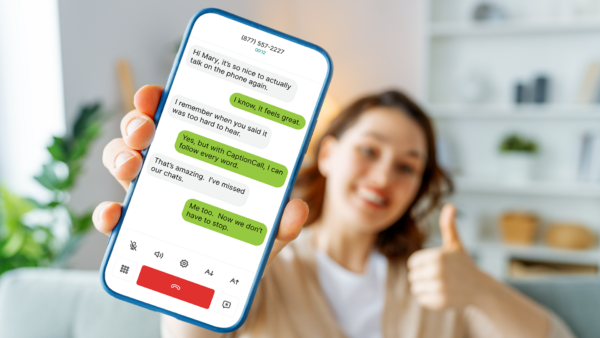
America’s leading captioned phone service, CaptionCall by Sorenson, launched in 2008 and became a lifeline for Deaf and hard-of-hearing individuals and their families, restoring confidence and independence for people who, for years, hadn’t been able to communicate by phone.

Both VRS and IP CTS remain essential tools for DHH individuals to connect on the phone at home, on-the-go, and even in the office. Sorenson routinely provides Lumina videophones and CaptionCall phones for employees at their workplace.  

Employers can also install the CaptionCall Mobile app on company-issued mobile devices so employees who qualify for the service can simply complete the in-app registration process to get captioned work calls. 

However, Americans’ phone use has changed: over the past 20 years, phone calls have declined as people rely more heavily on text messaging, social media, and email to communicate for personal and professional purposes. 

Think about it: how much of your day-to-day interaction happens over phone calls? 

Group of coworkers gather around open laptop.

Deaf and hard-of-hearing accessibility in the workplace 

Hiring Deaf and hard-of-hearing employees is a win-win, but both parties can only get the most out of their partnership if the work environment supports teams’ success.  

Expanding opportunities for Deaf, hard-of-hearing, and underserved communities is part of Sorenson’s mission, so we’ve written several in-depth guides to creating accessible and inclusive workplaces: 

Simplified, creating accessibility in your workplace is a two-pronged process:  

  1. Offer jobs for Deaf and hard-of-hearing talent. 
  2. Provide the logistical and cultural framework to set them up for success. 

Job opportunities for Deaf and hard-of-hearing people 

Integrating accessibility into work culture is the equivalent of a neon sign announcing a company’s commitment to providing Deaf employment opportunities.

You already have hard-of-hearing employees in your workplace, even if you don’t know it. While many people with hearing loss don’t disclose it to their employer or coworkers, 15% of Americans have some level of hearing loss, and the majority of them are in the workforce.

Deaf workers, on the other hand, can’t conceal their disability as much as those with mild to moderate hearing loss, and a lack of accommodations is more likely to impede their ability to thrive in their jobs. 

Wait…is hearing loss a disability under the ADA? 

Yes, the Americans with Disabilities Act (ADA) protects people with hearing loss from discrimination and requires that certain government, businesses, and non-profits provide them the same opportunities as hearing people, including effective communication. 

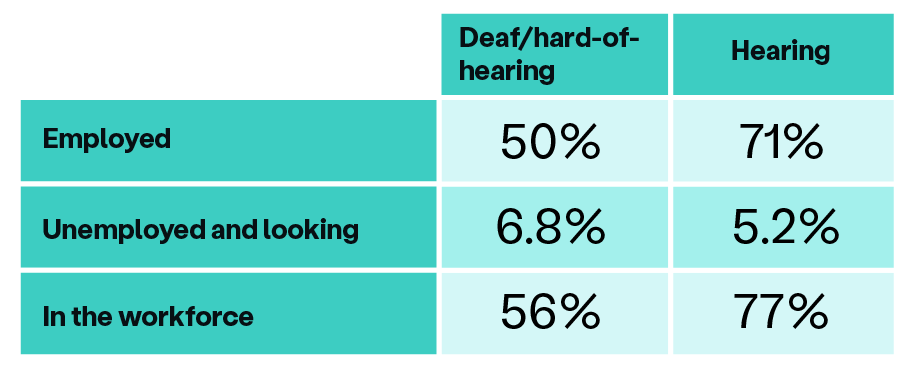
Despite federal law prohibiting many entities from discrimination in hiring because of hearing loss, Deaf people are unemployed and underemployed at a higher rate than their hearing peers. Results of the U.S. Census Bureau’s 2022 American Community Survey showed 50% of deaf or hard-of-hearing American adults were employed, compared to 71% of hearing adults.

Table showing difference in employment numbers between deaf/hard-of-hearing people and hearing people. Unemployed and looking rates for deaf/hard-of-hearing people are 6.8% compared to 5.2% for hearing people.

Table 1: Deaf/hard of hearing vs hearing employment data (2022 American Community Survey).

The disparity in employment rates for DHH and hearing talent isn’t a matter of interest; the same survey found a higher percentage of the Deaf and hard-of-hearing community actively seeking work than their hearing counterparts.

It’s also not an issue of education or qualifications. DHH college enrollment and degree attainment has shot up over the past generation, with many focusing their studies on in-demand fields like healthcare and education. We’ll get into more detail about DHH education trends below.

Deaf and hard-of-hearing employment over the years 

The striking difference in employment among hearing and DHH adults hasn’t always been the case. 50 years ago, Deaf and hard-of-hearing Americans were working at same rate as hearing people. Data from 1974 showed DHH men’s workforce participation was 83 percent (compared to 80% for men as a whole) and 49% of DHH women in the workforce (compared to 44% of women as a whole).2

So what happened? Largely, a change in the job market: fewer of the manufacturing jobs that presented opportunities for workers with hearing loss and a surge of service industries — including retail and hospitality that largely do not have the accessibility measures to fully embrace DHH customers or employees.

The lag in workplace accessibility for DHH talent to match the transition of job opportunities is no doubt a factor in the large percentage of that community absent from the workforce altogether. The 2022 American Community Survey found 44% of Deaf and hard-of-hearing American adults were not in the labor force, nearly double the rate of hearing adults (23%).

How to make the workplace more deaf inclusive  

It’s easier than you might imagine to create an inclusive workplace for Deaf, hard-of-hearing, and hearing colleagues to effectively collaborate and succeed.  

Providing the tools to support any employee to excel benefits entire teams and promotes job satisfaction for greater productivity and lower turnover. Those tools may range from simple team training to assistive technologies.

  • Communication training: Brief teams on communication best practices that will benefit DHH employees and hearing employees alike:
    • Making eye contact while speaking
    • Taking turns rather than talking over each other 
    • Providing written meeting agendas and summary notes for the whole team 
    • Putting key communication in writing via email or messaging software 
    • Enabling captions in virtual meetings 
  • Assistive-listening systems: Also known as assistive-listening devices, these amplify sound through a receiver — typically a hearing aid or cochlear implant, but also work with headsets. 
  • Captioning services: Both real-time and post-production captions can provide clarity and greater comprehension for employees of all hearing levels, particularly those working outside of their primary language. 
  • Phone call captioning: Federally funded IP CTS is available at no cost to individuals who need captions for their phone calls because of hearing loss. Eligible users can get a CaptionCall phone for their desk and use the CaptionCall Mobile app on the go to read every word of their phone calls and voicemail.
  • Real-time captioning: Providing live captions for meetings, presentations, and training sessions may be an essential consideration for DHH employees, but it can enhance comprehension for hearing employees as well. Particularly in distracting situations with background noise, both hearing and DHH employees may rely on captioning to follow along and maintain focus. 
  • Post-production captioning: Add captions to recorded video and audio content to make training videos, recorded events, and announcements accessible to Deaf and hard-of-hearing employees along with the majority of people who prefer captioned content. 
  • American Sign Language (ASL) interpreting services: Sign language interpreting is an invaluable service for communication between Deaf employees who use sign language and their hearing coworkers, allowing both to use their primary language. Skilled interpreters are able to convey the content and context of statements in signed and spoken languages for full understanding. You have several interpreting options, including:

Which interpreting service to choose? That depends on your specific situation and needs. We created a guide specifically to help make decisions about interpreting services: American Sign Language Interpreting Options.

Sorenson also offers complimentary consultation with accessibility experts on selecting the right services for your particular needs: 

  • Video Relay Service: Deaf individuals who use ASL may also use federally funded video relay service (VRS) for phone calls with hearing people. Those individuals may already have a VRS account for personal use, and with their employer’s authorization they can get a separate account for work use along with a videophone for their desk.As the leading VRS provider in the U.S., Sorenson provides service and videophones at work for thousands of Deaf employees, including its own.  
  • Employee involvement: A critical element of workplace inclusion is including the perspectives of Deaf and hard-of-hearing employees, especially in accessibility considerations. No two DHH individuals have identical experiences or preferences; ask employees about what arrangements will best support them to excel in their work.

    You may want to include DHH employees in a conversation with Sorenson’s design consultants to better understand how different solutions would suit your workplace.

One man and two women sit at table in courtroom presenting to woman in foreground. The man signs the letter C while the women look on.

Accessibility in education

In many ways, educators are ahead of the curve in accessibility, broadly providing interpreting and captioning services for hard-of-hearing and Deaf education for decades. They’ve had to be; since 1990, with the enactment of the ADA, many public educational institutions have been under federal mandate to provide reasonable accommodations to ensure equal access for students with disabilities.

The impact of giving DHH students accessible educational opportunities? They’re seizing them.

  • Between the mid 1970s and 2010, the rate of DHH students attending college increased 360% (compared to a 37% increase for all students who finished high school).3
  • While college enrollment among students with disabilities has grown by more than double the pace of enrollment among students of all abilities since the ADA took effect (19% vs 9% from 1990 to 2005), students with hearing loss experienced the most significant boost in participation of any disability category.4

Deaf and hard-of-hearing students in higher education 

While Deaf and hard-of-hearing students are increasingly pursuing education beyond high school, their paths do not exactly mirror those of their hearing peers.  

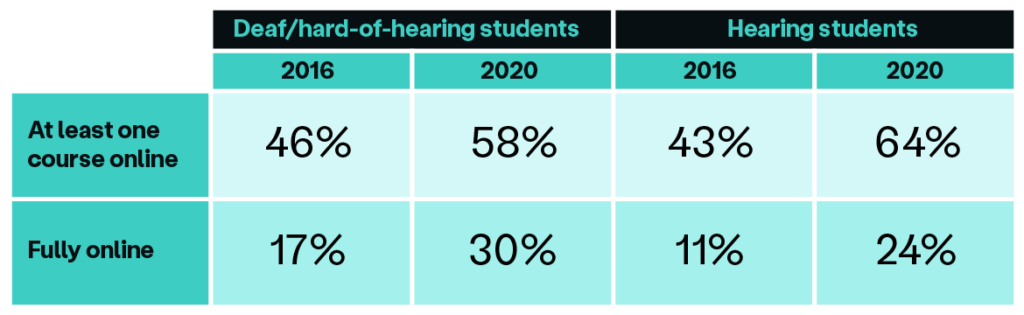
Data from the 2020 National Center for Education Statistics survey shows DHH students are more likely to enroll in associate’s degree programs than hearing students. (41% vs 37%) and are more likely to take online courses for some or all of their program, even prior to the COVID-19 pandemic

Table showing online class enrollment differences between deaf/hard-of-hearing students and hearing students in 2016 and 2020. In 2016, 46% of deaf/hard-of-hearing students took at least one course online, at 17% took all their courses online. In 2020, those numbers rose to 58% and 30%, respectively. Among hearing students in 2016, 43% took at least one course online with 11% being fully online. In 2020, those numbers rose to 64% and 24%, respectively.

Table 2: Online learning among Deaf/hard-of-hearing and hearing undergraduate students in the U.S. (National Center for Education Statistics).

The pandemic escalated the trend of online learning that was already presenting a challenge to a cornerstone of traditional accommodations for DHH students: onsite interpreting alone will not cut it in the age of virtual classrooms.

With remote learning models seemingly here to stay, educational institutions must embrace a diversity of accessibility tools. Assistive technology for Deaf and hard-of-hearing students makes it easier to adapt to evolving educational environments:

  • Closed captions and real-time captioning services compatible with video conferencing platforms is essential for DHH students and a valuable tool for hearing students as well.

While video editing software and video conferencing apps may have their own integrated captioning, the technology that auto-generates those captions doesn’t offer high enough accuracy for educational use, particularly for names, jargon, and speakers with accents.

  • Video remote interpreting (VRI) is a flexible resource for virtual learning, streaming events and presentations, group discussions, or student-faculty conversations outside of classes.
  • Scheduled VRI can accommodate nearly any video conferencing software, allows for interpreter selection and preparation for background and subject matter, and is appropriate for needs ranging from less than an hour to all-day events.
  • On-demand VRI is a new option in the communication accessibility realm, capable of filling many of the gaps between anticipated interpreting needs.

Sorenson Express on-demand interpreting is available on a tablet or integrations with Zoom and Microsoft Teams for fast access to ASL interpreters in impromptu meetings, conversations outside regular class times, or quick questions on campus when an onsite interpreter isn’t around.

Despite significant progress following accessibility mandates, DHH students continue to lag behind hearing peers in both high school and college graduation rates. Expanding measures to provide educational equity is critical to closing the gap, particularly with the increase in these students attending mainstream schools.

Educational settings for Deaf and hard-of-hearing students 

There are roughly 50 residential schools for Deaf children across the U.S. and two dozen day schools that provide instruction in ASL so DHH students who sign can learn in their primary language alongside peers with similar educational needs and experiences. 

However, parents of children with disabilities have steadily been shifting them in growing numbers into mainstream schools for decades. While DHH students are still enrolled in specialty schools at a higher rate than children with disabilities as a whole, that number is also on the decline. 

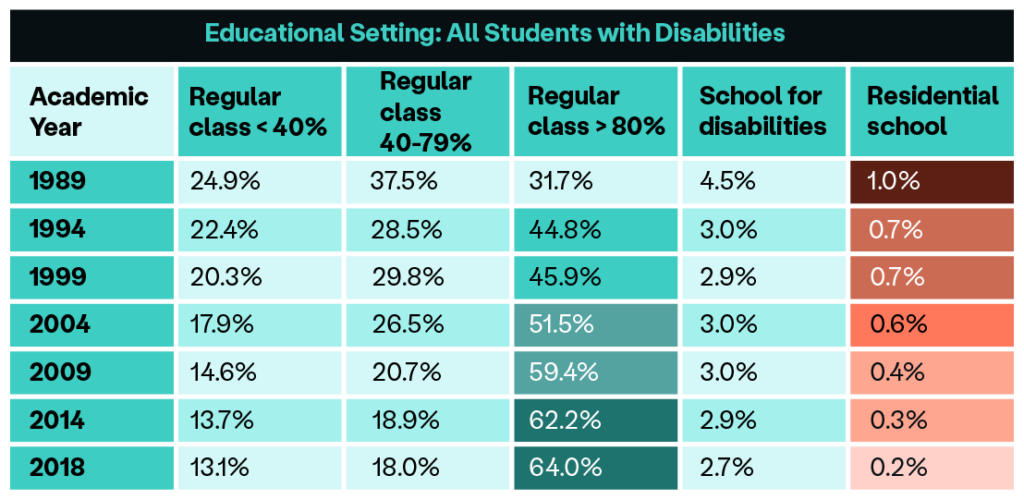
Between 1989 and 2018, data from the National Center for Education Statistics tracked enrollment of students with disabilities collectively — not by specific type of disability — and shows enrollment in residential schools dropped by 80% while the number of students getting the majority of their educational instruction in a mainstream classroom more than doubled.

Table titled Educational Setting: All Students with Disabilities. Table shows how the types of schools students with disabilities enrolled in by year starting in 1989 through 2018. Data shows a clear shift toward higher enrollment in regular classroom settings.

Table 3: Learning environments of U.S. students with any type of disability (National Center for Education Statistics).

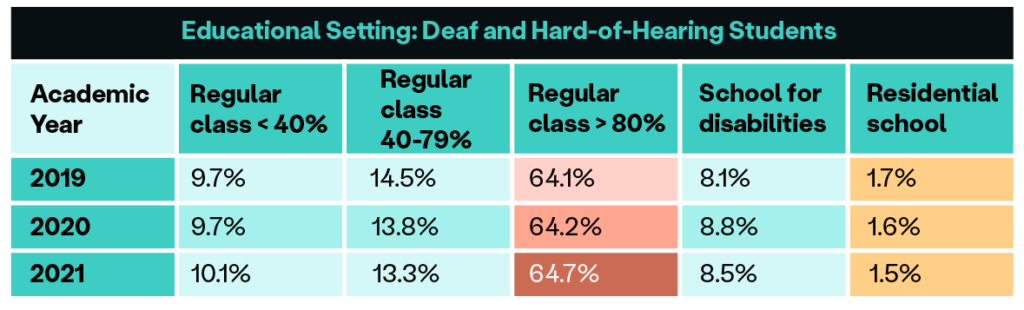
Among Deaf and hard-of-hearing students specifically, numbers from the 2019 – 2021 academic years paints a less dramatic picture of the same trend of residential school enrollment dropping off as full-time education in mainstream classrooms grows. 

It’s worth noting that the rate of DHH enrollment in separate, non-residential schools for students with disabilities increased for the 2020 and 2021 academic years, coinciding with the pandemic when many mainstream schools transitioned to remote learning. Those virtual learning scenarios demand innovative approaches to accessibility.  

Table titled Educational Setting: Deaf and Hard-of-Hearing Students. Table shows percentage of all deaf and hard-of-hearing students enrolled in different kinds of schools for 2019, 2020, and 2021. The numbers stay relatively steady year over year, with regular classrooms being most popular at around 64%.

Table 4: Learning environments of Deaf and hard-of-hearing U.S. students (National Center for Education Statistics). 

While mainstream schools do, by federal mandate, provide interpreters and/or captioning solutions for DHH students, greater numbers of Deaf students in the classroom is driving up demand for accessibility solutions at the same time that remote and hybrid learning models necessitate new approaches to providing equitable experiences. 

Educators raise the bar on an innovative attitude toward inclusion, blending a variety of tools to provide accommodation for Deaf and hard-of-hearing students, using on-site ASL interpreters, captioning services, and adaptive teaching techniques like Visual Phonics for Deaf students to present the curriculum accessibly. For many schools, VRI is a missing piece of assistive technology for Deaf students. 

VRI as an asset for inclusive education 

For DHH students in traditional classrooms who use sign language, on-site interpreting remains an invaluable tool. But the teams who manage accessibility accommodations at schools across the country are experiencing the strain every day of coordinating daily onsite interpreting for an expanding DHH student body: 

  • Varying availability of interpreters across the country, particularly in rural areas 
  • Covering for interpreter absences 
  • Maintaining state certification requirements 
  • Rise of remote learning/working 

In addition to the challenges of meeting interpreting needs for students and staff during school hours, schools trying to provide student support after hours, special events, and communication with DHH family and community members can stretch their resources with video remote interpreting. 

  • Scheduled VRI  is an ideal option for virtual learning, remote parent-teacher conferences and meetings, and after hours events. VRI also offers the flexibility to cover for interpreter absences or staffing shortages. 
  • On-demand VRI provides a quick, convenient solution for unplanned interpreting needs. Sorenson Express is perfect for a tablet or mobile device for impromptu conversations with DHH students or family in administrative offices, in the hallways, or on the bus.  

Sorenson’s education team specializes in helping schools support students, faculty, and staff with effective accessibility solutions and interpreter training.

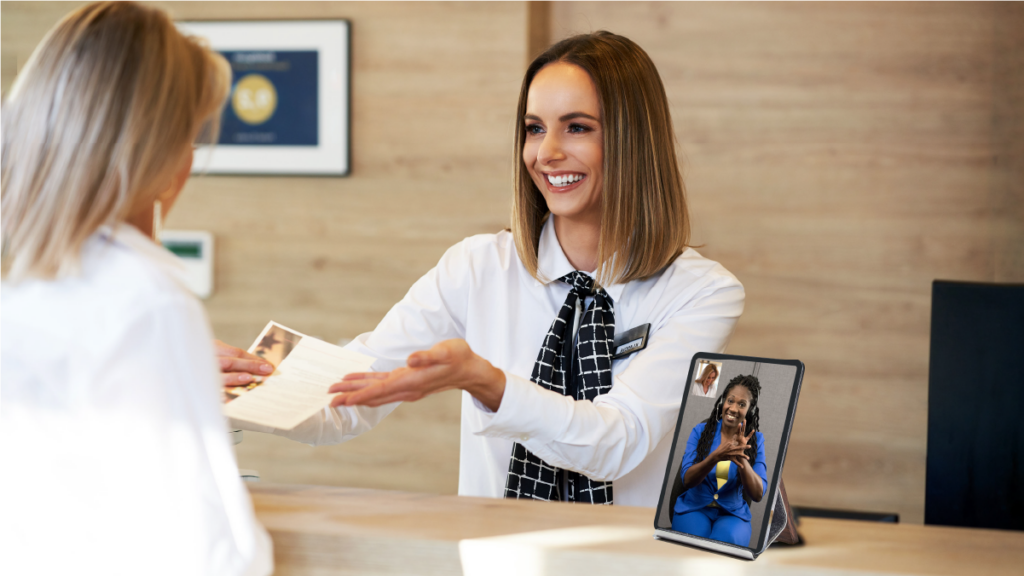
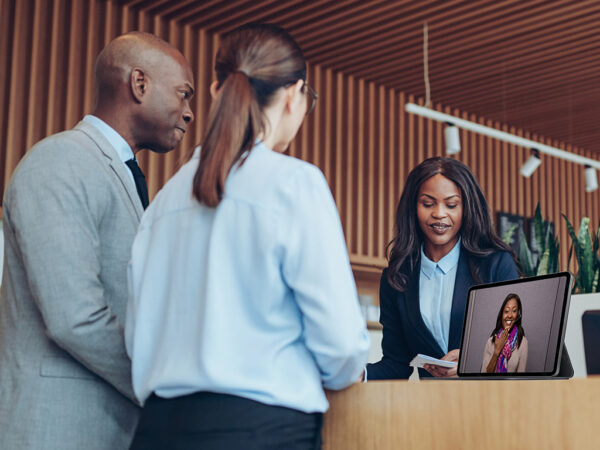
Hotel concierge hands paperwork to guest. Tablet on countertop shows live virtual sign language interpreter.

Accessibility in retail and hospitality 

As federal mandates jump-started accessibility measures in government, education, and health care over the past 30 years, retail and hospitality have been slower to adopt inclusive communication solutions.  

This is due, at least in part, to the spontaneous nature of most interactions in these settings: customers don’t pre-arrange their fast food restaurant trips, making on-site or even scheduled VRI impractical for those situations. Instead, when there’s a need to communicate in retail and hospitality settings, many times DHH customers and staff make do with gesturing or writing notes back and forth. It suffices, but it’s hardly ideal for either party. 

We dive into the demand, benefits, and options for retailers to up their game in another post about Deaf inclusion in retail you can read here. 

Looking for a quick summary? We’ve got you covered. 

How do I make my business more deaf accessible? 

One of the big takeaways of our article on how we can be more inclusive to the Deaf and hard-of-hearing community is that customers — Deaf and hearing alike — are more willing to patronize businesses that make an effort to provide an inclusive experience. If you don’t provide one, they’ll find a competitor that does. 

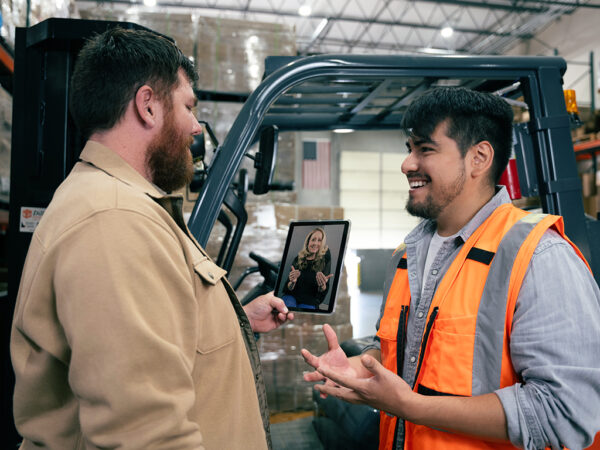
The good news is that technology is making it feasible to provide accessible communication anytime, anywhere. On-demand video remote interpreting, specifically, addresses the most common challenge to providing Deaf and hard-of-hearing accessibility in retail and hospitality: it’s a mobile solution available on an as-needed basis. 

Sorenson Express on-demand VRI: 

  • With the press of a button, get on-demand interpreting for ASL-English or ASL-Spanish. 
  • Use on a tablet (Android and iOS) for an accessible communication solution staff can carry with them. 
  • Subscription-based service customizable to the interpreting demands of a single small business up to a national chain with hundreds of locations. 
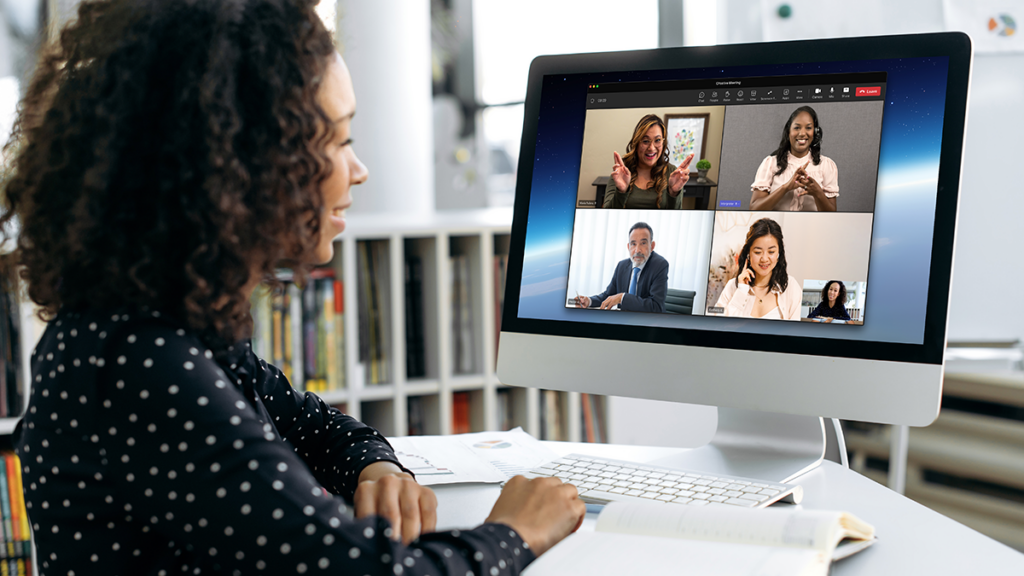
  • Integrations for Zoom and Microsoft Teams for Deaf customer service for ecommerce and internal meetings with Deaf employees. 

Want to test drive on-demand interpreting to see if it’s right for your business? You can get a one-month trial of Sorenson Express to see the impact for your customers. 

See for yourself the impact of inclusive communication on demand. Request a trial of Sorenson Express.

Why invest in accessibility for Deaf and hard-of-hearing

It’s easier to maintain the status quo than to rethink the way we do things. So why change now? Because the status quo isn’t cutting it.

Deaf and hard-of-hearing people want and need full access to every aspect of society, and we need their participation. People with hearing loss make up 15% of the U.S. population, and that percentage is rising. Neglecting accessibility for the Deaf and hard-of-hearing means hobbling our workforce, undercutting academic potential, and overlooking a consumer base with upwards of $9 billion in spending power.5

Creating inclusive, accessible environments for the DHH community to thrive in everyday life is the path forward. Sorenson’s accessibility consultants can help businesses and organizations get started.

Sources

  1. Deafness and hearing loss
  2. The Effect of Education on the Occupational Status of Deaf and Hard-of-Hearing 26-64 Year Olds
  3. The Effect of Education on the Occupational Status of Deaf and Hard-of-Hearing 26-64 Year Olds
  4. Comparisons Across Time of the Outcomes of Youth With Disabilities up to 4 Years After High School
  5. A Hidden Market: The Purchasing Power of Working-Age Adults With Disabilities

Video Remote Interpreting (VRI) in Healthcare

Man and woman speak with doctor who holds tablet showing live virtual sign language interpreter.

Imagine that you’re Deaf and you must go to the emergency room. No sign language interpreter is available, so the staff nurse looks for the video remote interpreting (VRI) equipment to set up, but finding the equipment takes two hours. In the interim, the nurse nearly gives you an injection without your knowledge or consent.  

This scenario, which happened to Corey Axelrod, drives home the importance of effective communication in healthcare for Deaf and hard-of-hearing people. An American Journal of Audiology study shows that there are higher mortality rates among Deaf people than hearing people.  

However, some Deaf people are unaware of VRI and how it works. Ironically, these are the people who may benefit the most from VRI in health care settings.     

Take Yolanda Hernandez, who’s hard of hearing and uses speech and ASL to communicate. She requests an in-person sign language interpreter for her daughter’s regular medical appointments. However, Ms. Hernandez goes without communication assistance because the interpreter often cancels.  

“We drive two hours to our appointment and then they say, ‘Oh, the interpreter had to cancel. She can’t make it,’” Ms. Hernandez says.  

Unfortunately, because cancellations have happened so often, Ms. Hernandez resolves this by bringing in her husband as an unofficial interpreter. However, this situation is not ideal, and neither is it the case for those who don’t have family support.

But before delving further, let’s learn more about VRI and how it works.  

What is VRI? What makes it an asset in healthcare?

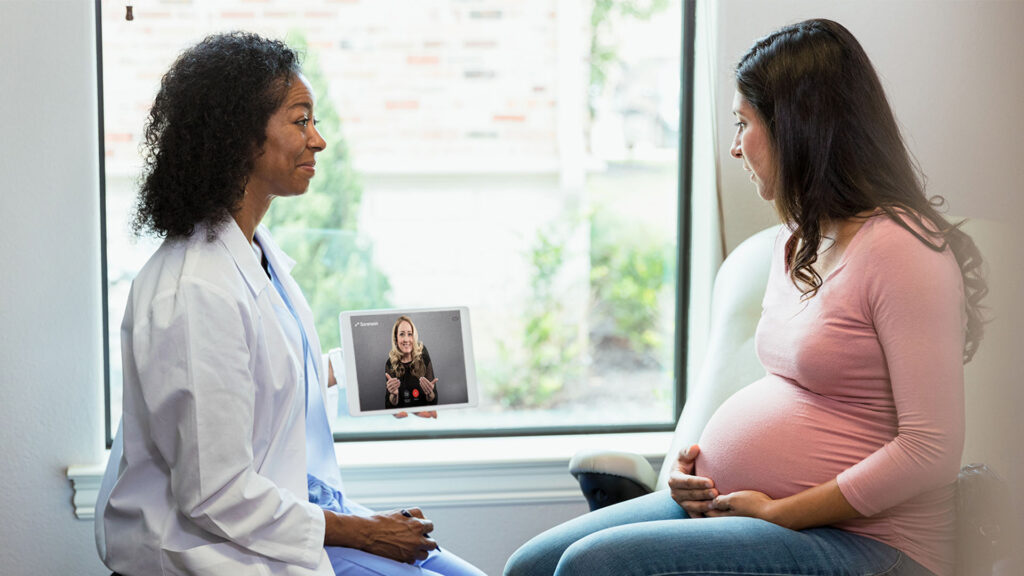
Pregnant woman speaks with her doctor, who holds up tablet showing live virtual sign language interpreter.

VRI is an off-site telecommunication service that enables a Deaf or hard-of-hearing person to access a sign language interpreter through a videophone, webcam, or tablet. Title III under the ADA covers this service under enterprises that serve the public. Such enterprises include:

  • Hotels
  • Restaurants
  • Retail stores
  • Educational institutions
  • Banks
  • Medical centers/hospitals (private and public)  

Title III does not cover two types of enterprises: religious organizations and private memberships.

Pros and cons of VRI in healthcare 

VRI is a solution when in-person interpreters are not available or practical. You can schedule VRI or sign up for VRI on-demand services.   

Many Deaf people prefer in-person interpreters to VRI, which allows direct communication with doctors. The National Association for the Deaf (NAD) argues that “providing on-site interpreters should be the primary method by which health care providers and their sign-language-using patients communicate.”  

Mr. Axelrod, the founder and CEO of 2axend and a member of a multigenerational Deaf family, says VRI is ideal in low-risk situations such as a standard doctor’s appointment. 

“These appointments are often where the interactions are one on one,” Mr. Axelrod says.  

It’s important to learn about the different benefits that VRI provides, and choose the right fit for you, based on the situation.

However, there are benefits to using VRI:  

  • Accessibility: Ideal in emergencies and in rural areas where few interpreters are available. Deaf and hard-of-hearing patients can request an interpreter based on language/cultural preferences.
  • Cost-effectiveness: VRI is a more affordable option than in-person interpreters. Most in-person interpreters require you schedule at least two hours of interpreting per session.  
  • Convenience: Available on any video conferencing platform around-the-clock with scheduling, or even on demand.
  • Flexibility: Easy to schedule or cancel appointments. Enables the healthcare provider to easily confer with nurses and other doctors on medical matters with the patient present.    

VRI is helpful for straightforward appointments when interaction is one-on-one with the doctor. Even in those instances, though, VRI can fall short, notably if the doctor doesn’t know VRI best practices or the interpreter struggles to hear or understand what’s happening in the room. Then, there are technical issues that also arise.  

As a healthcare professional, it’s critical to respect the Deaf patient’s specific communication requests. Follow their lead. Be mindful that effective communication access is essential for any patient’s healthcare needs. Their needs supersede your own, keeping with the Hippocratic Oath of doing no harm.  

“The motto, ‘Nothing about us without us’ needs to hold true in every encounter where Deaf, hard-of-hearing, and DeafBlind individuals are looked at as experts for their own accessibility experience,” Mr. Axelrod says.  

The dangers of healthcare communication barriers

Doctor uses tablet with live virtual sign language interpreter to communicate with pregnant patient in office.

A few years ago, Ms. Hernandez became pregnant with her third child. The pregnancy was high risk. One day, she began bleeding profusely and needed to go to the hospital. Her husband was working far from home, and knowing that a sign language interpreter would be unavailable, he had Ms. Hernandez’s sister put him on speaker phone during the consultation with the doctor. 

“My sister put my hubby on the phone so he could hear what the nurse and doctor were saying,” Ms. Hernandez says. “It was a scary moment. I was seven months [pregnant].”  

Many cases are not as frightening as Ms. Hernandez’s, but her story underlines the need for available and qualified sign language interpreters for critical medical situations. (As you may recall, Ms. Hernandez was unaware of VRI as an option.) 

Title III of the ADA  

As I mentioned at the beginning of this article, the implementing regulations of Title III of the ADA advises against having a family member stand in as an interpreter in any healthcare setting. The healthcare professional alone is responsible for hiring qualified sign language interpreters for their Deaf and hard-of-hearing patients.  

Nevertheless, there are two situations where it’s permissible to have a friend or family member stand in as an unofficial interpreter:

  1. In an emergency, when there is a threat to someone’s safety, it might be necessary for an adult (or even a child) who’s with a Deaf or hard-of-hearing person to help them communicate. This is acceptable when a professional sign language interpreter is not available.  
  2. In non-emergencies, when a Deaf or hard-of-hearing person needs someone to interpret and this “someone” is fine with interpreting, this is acceptable. However, this doesn’t include young children.  

There are two exceptions to the above permissible situations.  

One, when a case involves spousal abuse, a spouse is not allowed to interpret the situation. Second, if a friend or family member has a personal involvement in a situation or feels uncomfortable relaying information, they’re not obligated to interpret it. 

Some Deaf people can quickly obtain a sign language interpreter. However, the doctor-patient experience often falls short, and some Deaf patients end up with interpreters who lack experience in medical terminology. This is a common complaint among Deaf people about interpreters in healthcare.

“One of the most challenging experiences is working with a VRI interpreter who does not have the requisite knowledge to interpret in healthcare settings,” Mr. Axelrod says.  

There is currently no national certification available for healthcare interpreters for the Deaf and hard of hearing. Certification is relegated to spoken languages; many states do have their own certification requirements. However, the Certification Commission for Healthcare Interpreters (CCHI) offers a Core Certified Healthcare Interpreter credential. The National Council on Interpreting in Health care (NCIHC) also provides trainings and resources and includes national standards that outline the healthcare interpreter’s responsibilities in providing effective communication, with some input from the Registry of Interpreters for the Deaf (RID). 

Be patient  

Sheena Lyles, also known as MsDeafQueen on Instagram, tells me using VRI for doctor appointments is awkward and her doctor becomes impatient.  

“Using VRI during medical appointments is always frustrating because of the long wait to get VRI to work when my appointments were supposed to be wrapped up sooner,” Ms. Lyles says. Because of this experience, she prefers in-person interpreters.  

Based on these Deaf people’s experiences, we must ask ourselves, “Who is responsible for effective communication access: me or the patient?” The answer is the medical establishment.   

VRI: a convenient solution for medical services

Healthcare professionals using VRI can get the most out of the service by adjusting how they talk and behave to account for space and the use of audiovisual equipment. At times, setting up VRI can be more complicated than simply pressing a button. Familiarizing doctors and nurses with VRI technology can prevent wasting precious minutes and, as in Mr. Axelrod’s case, the patient having to set up the VRI.

For a seamless experience for both Deaf patients and healthcare professionals, keep these items in mind when requesting VRI:  

  • Reliable high-speed internet with enough bandwidth.
  • Familiarity with VRI technology and setup. 
  • Accommodate the Deaf patient’s communication needs (use VRI as secondary option if the patient’s preference is an in-person interpreter) and note for future reference.
  • Position the video screen so that the interpreter’s hands, face, and upper body are visible to the Deaf patient.  
  • Talk with the Deaf patient directly, not the interpreter.  
  • Provide supplemental information and materials in plain language to the Deaf patient.
  • Be patient and allow enough time to put the Deaf patient at ease and answer their questions clearly. 
  • Request a qualified interpreter.  

For more information on optimizing VRI services in the healthcare setting, please refer to NAD’s position statement.

Conclusion  

VRI can be the bridge to adequate communication access between healthcare providers and their Deaf or hard-of-hearing patients. Consider this just one aspect of providing equal access that can build the foundation for accessible and inclusive healthcare.

While using VRI requires planning — to ensure a stable internet connection, clear video and audio quality, quality interpreter selection, and patient comfort — it’s on par with the preparation to secure an on-site interpreter, and one can’t overlook the benefits of this service. Remember, the goal is to promote a patient experience as close to the in-person experience as possible.  

The objective should be clear: Healthcare should use VRI as a communication option. This technology can set a new standard for inclusiveness in the healthcare industry that respects and caters to the diverse communication needs of all Deaf and hard-of-hearing patients.   

Take the first step toward improved accessibility in your healthcare facility. Consult with Sorenson for VRI and in-person interpreting services today and start building successful communication access tailored to the unique needs of the Deaf and hard-of-hearing community.  

American Sign Language (ASL) Interpreting Services

Employer with sign language interpreter behind her interviews job candidate.Providers of sign language interpreting may offer several different solutions, all with different use cases, each with their own benefits. When considering which interpreting solution to choose, it is important to consider these uses and benefits. The major solutions are:
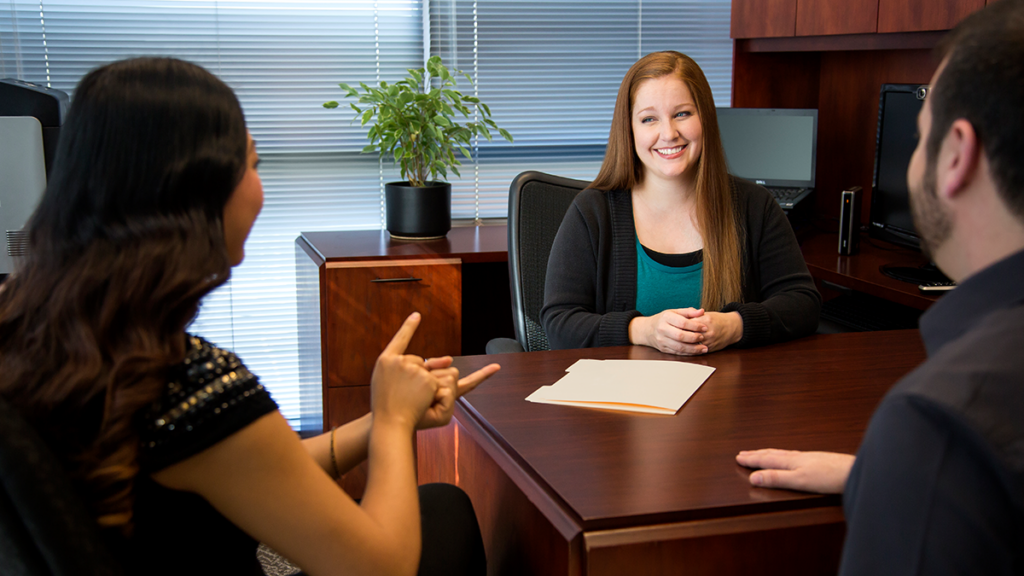
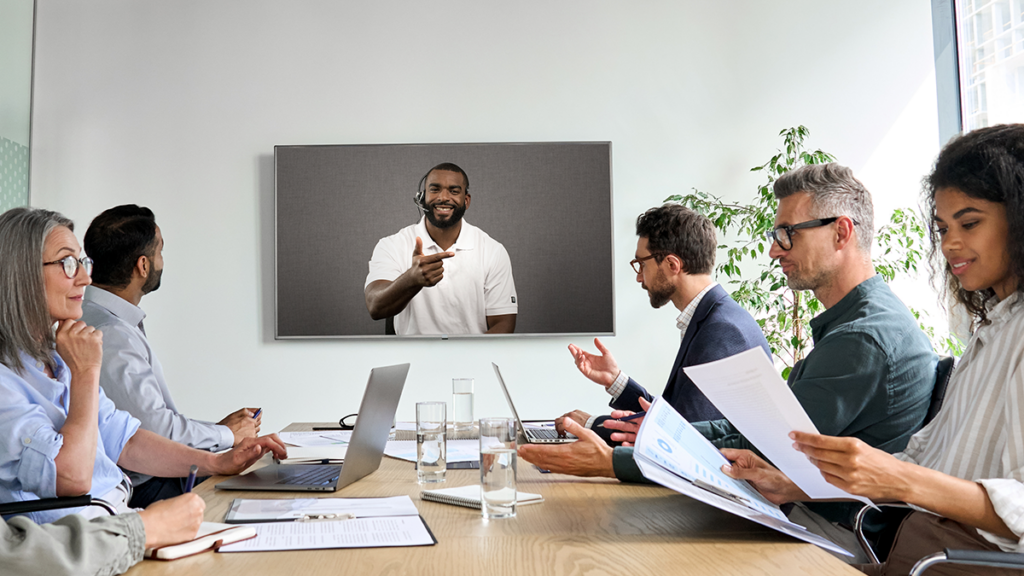

Common interpreting needs

This is a different categorization than the types of interpreting need — such as education, legal, healthcare, retail, governmental, financial, or enterprise.

All interpreting requires fluency in the sign language and spoken language of the Deaf and hearing participants in the conversation. In the United States, this is American Sign Language (ASL) and usually spoken English, but there’s increasing demand for spoken Spanish.

Interpreting vs. translation

Interpreting solutions are different from translation. Many people use “interpreter” and “translator” interchangeably, but they are distinct roles. An interpreter works with the spoken word, converting speech from a source language into a target language. A translator works with the written word, converting text from the source language to the target language. This includes translating from the written word to a signed language.

Both interpreting and translating consider the style and tone of the message content as well as taking into account differences in culture, dialect, and setting. With few exceptions, translators typically work only in one direction at a time while interpreters usually work in both directions.¹

On-site interpreting

On-Site interpreting (also called in-person interpreting or face-to-face interpreting) means that the Deaf person, hearing person, and interpreter are all at the same location. One example of when this is the best choice is when all three parties are moving around, such as a new employee tour or a healthcare facility where patients need interpreting in multiple locations (reception, triage, exam room, etc.).

Other examples are:

  • Academic or conference-type environments where multiple people may be speaking.
  • Legal situations, such as court or contract signings.
  • A team dinner at a restaurant.
  • Job interviews where all parties are local.
Woman at desk listens to another woman who is using sign language and a man.

You may also choose on-site interpreting when your location does not have an internet connection or video conferencing equipment for VRI.

Questions that often come up regarding on-site interpreting

Why do agencies charge for a required minimum time (generally two hours) or some sort of appearance fee for on-site interpreting?

On-site interpreters generally have appointments throughout the day for different people at different locations. They may start with a 9:00 appointment at one location then have subsequent appointments at multiple different locations.

The interpreter must travel to each location so they can’t follow that first 9:00 appointment with one immediately afterwards at 9:30 — that is logistically impossible. As a result, their scheduling must allow for travel as well as their time and service.

Scheduling in larger blocks of time also allows for the interpreter to be available for communication outside the actual appointment. While it may seem easy to calculate how long to schedule an interpreter for a medical appointment, for example, people frequently only consider the actual appointment itself. It is easy to forget to account for things like the interpreter and the client meeting prior to the appointment, the check-in with reception, staff calling the patient in and checking health history and preliminary testing, plus other necessary tests (bloodwork or x-rays for example) outside of the actual doctor/patient meeting.

Additionally, there are often unexpected delays which could happen at any stage of the visit. In this way, a simple 20 minutes appointment actually requires the interpreter for much longer.

Why do agencies sometimes send more than one interpreter?

Sign language interpreting is a mentally and physically taxing job. No matter how expert the interpreter is, after a long period of continuous interpreting, they will become mentally exhausted and unable to fully focus on the work of interpreting cultural and linguistic information between two languages. As a general rule, interpreters should have regular breaks of half the time they are present.² As such, the agency schedules two or more interpreters if the situation calls for continuous interpreting for a long period of time.

Video Remote Interpreting

Video Remote Interpreting (VRI) is a flexible solution for in-person or virtual conversations with an interpreter over video, which makes it appropriate for a range of use cases.

Just like on-site interpreting, one of the users — usually a business or organization — has a contract or account with a VRI provider for scheduled VRI, on-demand VRI, or both.

Scheduled VRI

Scheduled VRI is ideal for a pre-scheduled meeting — either online via any of the videoconferencing platforms such as Zoom or Google Meet with both the Deaf and hearing people in the same location and the interpreter in a remote location.

Group of coworkers having meeting in office conference room with live virtual sign language interpreter on large screen at front of room.

Some examples of pre-scheduled meetings are:

  • Interviews
  • Meetings with employees
  • Parent-teacher conferences
  • Doctor’s appointments

The interpreting agency assigns either an individual interpreter or a team of interpreters, depending on the length and complexity of the meeting. A significant benefit of scheduled VRI is the ability to consider the subject matter of the meeting when selecting interpreters and provide background information to prepare for the appointment. The user may even have a list of preferred interpreters the provider will attempt to assign when possible. This ensures the meeting has the appropriate interpreters for the users’ needs and, when possible, preferences.

On-demand VRI

On-demand VRI is the best solution when there is an unscheduled need, such as an emergency meeting or impromptu conversations. The VRI provider gives the user a contact number or app for a tablet, mobile device, or computer with a camera. In some situations, the VRI provider loans the user the equipment itself.

Couple checking into hotel speak to concierge, with tablet displaying live virtual sign language interpreter helping them communicate.

Some examples of use cases for on-demand VRI include:

  • Unscheduled interviews, employee meetings, doctor’s appointments
  • Walk-in visits to retail and hospitality businesses
  • Pharmacies
  • Utility offices
  • Government services such as police, fire, and EMS as well as the DMV or Department of Workforce Services

On-demand VRI is generally first-come, first-serve. The user may get an interpreter immediately or there may be a waiting time until one is available. Either way, they get the interpreter that is next up from the pool of available interpreters.

This method of getting an interpreter quickly is sufficient for most situations. However, this has some limitations. On-demand VRI is best for quick conversations. If a meeting goes long, the interpreter may need to take a break and get another interpreter to take over; if the subject is complicated or has a lot of context dependencies, the new interpreter may take a few moments to get necessary context.

Woman on virtual meeting with multiple sign language interpreters.

In addition, not every interpreter has the same experience level with the specialized language of law, medicine, or technical fields. The option of having a smaller pool of interpreters with this specialized experience to answer the calls from a particular user may be something the interpreting agency can arrange. But consider whether the need is great enough to accept the tradeoff of possible longer wait times to get an interpreter from that smaller pool.

Specialized interpreting

Some situations require specific training and education and may require additional certifications. These situations highlight an advantage of using an established industry leader like Sorenson. With the largest private interpreting workforce in the world, Sorenson employs qualified interpreters for the full range of specialized needs.

Legal interpreting requires knowledge of law, protocol, and training in interpreting strategies unique to legal situations. These include court and law enforcement proceedings where matters involving high-risk and personal freedoms are often the focus.³

States may require either a specific level of certification⁴ or have a process for qualifying, or both.⁵ When talking to interpreting agencies, ask them if they have sufficient numbers of interpreters who already meet those criteria to cover the need.

This type of interpreting is in high demand due to the breadth of the legal field. It includes law enforcement investigations, interviews and interrogations, client-attorney interactions, and a wide range of court and legal proceedings.³

Medical interpreting

Medical interpreters must be familiar with various medical interpreting requirements.

These include:

  • When they may or may not be in the room with the patient
  • Where they must stand to preserve the patient’s physical privacy (in the case of an ob-gyn exam, for example)
  • Any legal requirements (HIPAA, ADA, etc.)
  • Any special considerations for mental health situations⁶
Live in-person sign language interpreter helps doctor and patient communicate in exam room.

In some situations they also may need to have specific immunizations or wear clothing similar to medical professionals to maintain sterile conditions, such as in an operating room.

When discussing your needs with the interpreting agency, think about if your practice or facility would expose interpreters to any such situations. If so, tell the interpreting agency up-front so they can make sure their interpreters prepare with any additional immunizations and necessary training.

Interpreting for government

While interpreting for government agencies may not often require specialized knowledge, these agencies often deal with highly confidential information and may require interpreters to pass the agencies’ own background and security checks. This can be a long process that sometimes repeats at regular intervals for renewal. Interpreting agencies such as Sorenson that frequently contract to interpret for government agencies maintain a pool of interpreters who have passed these checks.

DeafBlind and low-vision

Some Deaf people are also either Blind (DeafBlind) or legally blind or close to it (low-vision). Those situations call for interpreters with training in signing for people with limited vision or other ways of conveying information.

A DeafBlind client, for example, rests their hands on the interpreter’s hands to “see” the signs so the interpreter needs to know how to adjust their signing. This may include signing “smaller” — not moving their hands too far away from their body. The interpreter also needs to know the appropriate way to show the emotion of the message without using facial expressions.

A client who is not DeafBlind but is low-vision may need the interpreter to sit or stand close and sign smaller so the signs do not go out of their range of vision.

Certified deaf interpreting

Education opportunities and early language access remain a challenge for many Deaf individuals.  Because of this, there likely are Deaf people who, through no fault of the hearing interpreter, do not have the ASL vocabulary level or world experience context to understand the interpreted message. In that situation, a Certified Deaf Interpreter (CDI) is a great option.  The CDI is a communication specialist, working with their hearing team to use their native language abilities and in-depth understanding of Deaf communication dynamics to tailor the message so the Deaf person will best understand the message.

How does this work? The CDI typically briefly meets with the Deaf client just prior to the appointment (15 minutes before) to assess their communication needs. During the appointment, the hearing interpreter and the CDI work together to adjust the message and make it specific to the Deaf client. During the appointment the CDI will utilize different strategies to maximize the Deaf client’s understanding of and full participation.

Common CDI needs

An example that many may be familiar with is government update broadcasts, increasingly seen with interpreters, such as emergency updates such as those during the COVID-19 pandemic. Those interpreters are usually CDIs, working to ensure the message can be understood by most Deaf people while off-camera, there is a hearing interpreter team “feeding” them the news verbatim for them to adapt and present directly to the camera.

CDIs are especially in demand for medical or legal situations where it is critical for the Deaf client to have full, unequivocal understanding of information/choices and full participation in decision making.

Trilingual interpreting

Some situations call for interpreters who know multiple languages. In the United States, the most common need is for those who are fluent in English, Spanish, and ASL due to the large number of immigrants from Latin America. Like CDIs, these interpreters are in demand for general, legal, medical, and government situations.

Video Relay Service

Video Relay Service (VRS) is a no-cost, subscriber-based service for Deaf people who use ASL. It provides interpreting services via videophone calls using ASL and spoken English or Spanish. VRS rules require that the Deaf person, hearing person, and interpreter all must be at different locations. It’s part of the Telecommunications Relay Service (TRS) program as a provision under the Americans with Disabilities Act (ADA) of 1990.

Woman at desk uses sign language to communicate with virtual sign language interpreter.

You can find more information on VRS and how it works in our “What is Video Relay Service (VRS)?” post.

Who can be an ASL interpreter?

To work professionally as an ASL interpreter, the interpreter learns not only American Sign Language but also Deaf culture. They learn how to correctly relay signed and spoken information back and forth between the Deaf and hearing people in the conversation, including how to account for dialects, settings, and more.

Naturally the question then arises, can someone hearing or Deaf be an ASL interpreter. The answer is both can be interpreters. Deaf interpreters are their own category — Certified Deaf Interpreter (CDI). CDIs specialize in communication with Deaf individuals who need enhanced access to participate fully.

Choosing an interpreter with the right qualifications

For most people searching for interpreting services, many agencies remove the burden of verifying an interpreter’s credentials by checking those credentials themselves. When contracting with an interpreting agency, you should ask them if they do this.

Continuing education is critical to the profession and ensures that interpreters develop in-demand skills.

  • The RID provides further professional development courses through Continued Education Units (CEUs) so interpreters can maintain their certification or qualify for advanced certification as well as stay up to date on industry trends or changes such as signs for new terms in different industries.
  • Sorenson Communications not only provides CEU training to the ASL interpreting community but also provides the most comprehensive interpreting training and development program in the world to upskill interpreters for all types of interpreting scenarios through its in-house training department.

Which type of interpreting to choose?

So, you need at least one of these services but aren’t sure which? It can be an overwhelming decision, whether your company is searching for accessibility services for employees, clients, or customers, or if you are a Deaf person trying to help others contract for these services.

Simply contacting a local interpreting agency does not always get the direction you need. Many agencies specialize in one type of interpreting, usually on-site interpreting. Sorenson not only offers a full range of types of interpreting, it also offers Design Consultants. These are people with in-depth knowledge of the Deaf community, ASL interpreting, and accessibility who can guide you in identifying the most appropriate services for your needs.

Sources

  1. Translator vs. Interpreter — American Translators Association (ATA)
  2. One Interpreter Or Two? — Language Scientific
  3. Legal
  4. Functional Descriptions of Interpreter Levels | Deaf and Hard of Hearing
  5. American Sign Language Interpreters
  6. ASL/English Medical Interpreter Domains and Competencies 

Smiling woman signs thumbs-up to virtual meeting on her laptop screen.

Experience the impact of inclusive communication on-demand for Microsoft Teams.

Part of building a successful business is creating an environment where employees can thrive. By embracing inclusion and accessibility, employees can do their best work and the entire company benefits. Studies reveal that companies who champion disability-inclusion have 28% higher revenue and twice the net income. In addition to higher profits, readily available technology and resources make it easy to support your employees with accessible communication. Any business can provide inclusive communication for the estimated 38K Deaf individuals in the American workforce.

Moreover, implementing technology to advance inclusive communication can decrease the number of deaf people who are unemployed or not in the labor force. According to NDC (National Deaf Center) in 2019 42.9% of deaf individuals were not in the labor force. This includes parents, caretakers, and retired people but also students who may have been looking to enter the workforce. In contrast to the 3.4% of hearing individuals who were unemployed, there was an additional 3.8% of deaf people who were considered unemployed and actively seeking work. These are people who could be contributing employees of companies. Through technology, accessibility practices can be improved and benefit both these individuals and businesses alike.

Using VRS for sign language interpreting in video meetings

When taking a look at how you can empower employees in their job functions, videoconference meetings are an area where you can make a great impact.

Historically, many deaf meeting participants have used video relay service (VRS) to get interpreting for meetings with hearing individuals when an interpreter isn’t available to them. VRS is a no-cost interpreting service for deaf people who use American Sign Language (ASL) to communicate through video calls on videophones, smart phones, tablets, or computers. Using their VRS videophone or app, a deaf person would call the meeting’s dial-in number so the interpreter could connect as a third-party.

Unfortunately, using VRS as a workaround this way only connects an interpreter to the audio of the meeting. Visual and emotional cues are essential to sign language. Without access to video in the meeting, the interpreter and deaf participant can’t get the full context of the conversation. Moreover, deaf participants have to look back and forth between the window with the interpreter and the separate meeting window. This not only contributes to meeting fatigue but can also cause participants to miss words, expressions, or information that colleagues presented during screen sharing. If you hadn’t thought about meeting fatigue before, add these obstacles for deaf employees and you may have a real hindrance on your team’s happiness and productivity.

Accessibility and on-demand interpreting in Microsoft Teams

Whether you have remote employees or use video meetings to bridge the gap between multiple offices, you can take advantage of a range of Microsoft Teams features to make your videoconferencing more inclusive. Since its launch in March 2017, the communication platform has introduced ways to improve accessibility and help users get the most out of the platform. Features such as Closed Captions, High Contrast Mode, and Screen Reader support have helped workplace inclusion. However, deaf employees who use ASL needed more interpreting solutions.  

In 2022, Microsoft Teams launched Sign Language View. This is a personal feature that allows an individual to keep an interpreter’s video visible in one location no matter who is speaking and still spotlight other participants. Sign Language view is an excellent option for companies that have an interpreter on staff. If your company doesn’t employ full-time interpreters, there is another tech-enabled solution that can bring language parity to your team with ASL interpreting service as you need it. 

Providing sign language interpreting in video meetings

In 2024, Sorenson released a better way to get sign language interpreting in Microsoft Teams meetings. Instead of the cumbersome process of having an interpreter dial in separately, Microsoft Teams users can now request an interpreter in just a couple clicks with the Sorenson app integration called Sorenson Express. By subscribing to Sorenson Express, businesses can use the integration to enable an interpreter to appear on screen within moments and see and hear all meeting content.  

By pulling an interpreter directly into your Microsoft Teams meeting as a participant, you give both deaf and hearing meeting attendees a more convenient and immersive experience in a multilingual conversation. Since hearing participants also see the interpreter, they can allow time for interpreters to sign and see when a deaf participant has something to add. Overall, the increased visibility and awareness your team can experience while using Sorenson Express during Microsoft Teams meetings will help build connection and bridge communication gaps between all participants. 

How does Sorenson Express provide sign language in Microsoft Teams for businesses?

Sorenson’s VRI is an interpreting solution with a remote interpreter for both your virtual and in-person meetings. Scheduled VRI is ideal for scenarios when you know you’ll need an interpreter ahead of time because it allows for an assigned interpreter to meet specific needs. However, it doesn’t allow for impromptu conversations.  

Sorenson Express introduces a flexible, on-demand VRI experience that gives businesses access to videoconferencing app integrations for unplanned communications. You can request an interpreter directly in Microsoft Teams or via the Sorenson web app for flexibility on your desktop, tablet, or other mobile device.  

Businesses that are set up with a Sorenson Express account can quickly access interpreting through the Microsoft Teams integration for virtual meetings as well as on a tablet for in-person conversations. Expanding communication access even further, Sorenson Express offers on-demand interpreting services in ASL-to-English or ASL-to-Spanish.  

When should you choose the Microsoft Teams integration vs the Sorenson web app?

Your situation and preferences will determine when you’ll want to invite an interpreter into Microsoft Teams from the integration or the web-based Sorenson app.   

You can use the web app:  

  • If you are the Microsoft Teams meeting presenter or an attendee (i.e., when you are participating from a different tenant, not your own company);  
  • If you have a Sorenson Express subscription; or 
  • Without downloading the Sorenson app from the Microsoft AppSource.  

You can use the integration in the Microsoft Teams app if you:  

  • Have a Microsoft Teams presenter role (which is typically the default role for Teams meetings); 
  • Are subscribed to Sorenson Express; or
  • Have permission to download and install Microsoft Teams apps.  

Why use Sorenson Express?

Sorenson Express offers a flexible and seamless experience in requesting the highest quality professional sign language interpreting, on-demand in Microsoft Teams. Sorenson has the largest team of private interpreters in the world and a trusted reputation a global language services provider with more than 20 years in the industry. More importantly, when you implement an innovative accessibility service like Sorenson Express for your business, you’re showing your teams, partners, and customers your commitment to increased connection and understanding as well as excellent service. On-demand interpreting with Sorenson Express removes the worry of potential barriers when scheduling Microsoft Teams meetings so everyone can focus on creating, problem-solving, building connections, and doing the work they love. 

Woman on virtual meeting with multiple live sign language interpreters. Text on image reads "See for yourself the impact of inclusive communication on demand. Request a trial of Sorenson Express."

Beyond sign language interpreting in Microsoft Teams

Technology that makes inclusive communication in the workplace possible is more accessible than ever. As the worldwide leader in technology that connects deaf and hearing individuals, Sorenson makes it easy for your business to start strengthening relationships between deaf and hearing employees, clients, and customers. From Fortune 500 companies to small businesses, seamless language solutions from Sorenson, including Sorenson Express, are helping businesses everywhere to create meaningful connections through technology.  

To start removing communication barriers in your business, explore Sorenson’s range of accessible communication services. One of our Accessibility Consultants can talk you through all that we offer and help you decide which services might be a good fit based on your needs. 

Inclusion in Retail: Upgrading the Retail Environment for Deaf Customers


Smiling salesperson hands customer bag as live virtual sign language interpreter on tablet signs "thank you."

Experience the impact of inclusive communication on-demand for retail.

Inclusion in retail has gained more attention in recent years, thanks to increased focus on customer experience. More consumers than ever are shopping based on their personal beliefs and values.
A recent Accenture study showed that 29 percent of all shoppers are likely to switch to a retailer that embraces inclusion. But are we doing enough to include Deaf customers?

Melissa Greenlee, a Deaf woman, went into a women’s clothing store recently, prepared to dole out a couple of hundred dollars on new athletic clothes.

When a clerk approached her, Ms. Greenlee signed that she was Deaf. The clerk looked at her, said, “Sorry,” and then disappeared. Ms. Greenlee said the clerk completely dismissed her, but she quickly bought one item and left the store.

Ms. Greenlee is the CEO and co-founder of Deaffriendly.com, a retail review site where Deaf and hard-of-hearing people leave reviews for stores they visit. The goal is to shine a light on Deaf-friendly retailers and to educate businesses on how they can be Deaf friendly. Ms. Greenlee believes businesses can do better.

“I literally had money burning a hole in my pocket,” Ms. Greenlee said. “Luckily, there was a competitor next door, and because my experience was more positive there, I spent my money there.”

Shopping is typically fun, but inclusion in retail is lacking for Deaf customers. The loud noises (especially for Deaf and hard-of-hearing customers who wear hearing aids) and crowds alone can be off-putting, but even worse is if the retail staff has a dismissive attitude and general lack of awareness of the Deaf customer’s needs.

According to the National Deaf Center (NDC), about 11 million Deaf people live in the U.S. alone. That’s a lot of potential customers who can benefit from a Deaf-centric retail experience.

This blog post explores the critical topic of inclusion in retail for Deaf customers. Deaf people face many obstacles when navigating the retail environment, both in-store and online. We explain the shortcomings of the typical retail environment and provide strategies to help you create an inclusive shopping experience for Deaf and hard-of-hearing customers, from enhancing the store layout to implementing Deaf-friendly online features. Let’s dive into how we can make the shopping space a better experience for the Deaf community.

Impact of accessibility on brand image and customer retention

The accessibility laws passed 50 years ago mandated equal access for how disabled people live and work. Many corporations have followed these laws, legally and because it’s the right thing to do. But in the last seven to eight years, companies started realizing that accessibility isn’t just a moral imperative but also a business advantage. They see their brand reputations, consumer and employee experiences, and financial strategies getting a boost because of their commitment to accessibility.

Deaf consumers represent $9B in discretionary income in the U.S. alone (American Institutes for Research). And their networks — your value-based shoppers — equal a whole lot more. In fact, two out of three Americans say their social values now dictate their shopping choices (McKinsey)​.

When Deaf customers can express their needs in the store and are understood, that creates a positive feeling that encourages them to return to the store repeatedly. If this is missing, frustration sets in, and the customer — Deaf or hearing — will simply go to another accommodating store, which Ms. Greenlee did.

Whenever a Deaf customer has a notably good or bad experience in a retail store, they talk about it with other Deaf people, friends, and family. Word spreads fast, and a store’s reputation can soar or suffer.

Molly, a Deaf advocate, describes some of her difficulties when shopping at Walmart.

“Most are supercenters with a large layout to navigate,” Molly says. “It’s their store policy that if someone asks an employee where something is, they should walk them to that aisle and show the location. But [in my experience] they never do.”

Current state of accessibility for deaf customers

The current state of accessibility in retail globally can seem dim, judging by a UK survey of customers with disabilities. But with some large, well-known retailers (e.g., Google and Target) leading the way for inclusive customer service, this can serve as a call to other retailers that it’s time to embrace language equity for Deaf customers.

One Starbucks store, near Gallaudet University in Washington, D.C., is remarkably accessible to the Deaf population, but customers in all areas want that level of service.

Accessibility is paramount to creating a seamless retail shopping experience.

Couple speaks with doctor who holds tablet showing live virtual sign language interpreter. Text on image reads "See for yourself the impact of inclusive communication on demand. Request a trial of Sorenson Express."

Conclusion

Everyone deserves an enjoyable shopping experience. Making your store inclusive of the Deaf customer shows that you value their engagement and loyalty.

By optimizing your retail environment to be Deaf-friendly, you’re making a powerful statement about your commitment to inclusivity and respect for every customer, regardless of (dis)ability.

So, are you ready to make your retail space accessible? Sorenson’s experts can help you evaluate how you can start integrating scalable accessibility solutions to support Deaf and hearing customers and staff.

What is the Difference Between Representation and Inclusion in the Workplace?

Older woman sitting at desk surrounded by younger coworkers. She gestures towards computer screen, explaining something to the group.

For companies to thrive, adding accurate representation in their employment pool is critical for sustained growth. Culture and performance benefit from varied perspectives that are often underrepresented. This is where we emphasize the importance for businesses to consider a cultural shift around accessibility and inclusion.

Building on workplace demographics: seizing opportunities through inclusion and accessibility

With over 60 million people with disabilities in the US alone, many businesses are not only missing out on a market worth over half a trillion dollars, they’re overlooking the opportunity to strengthen their workplace culture by fostering belonging.

Accessibility is the foundation to center product inception, content accessibility, event accessibility — heck, even your online website or store. Those values need to start on the inside. To put it in better terms, does your approach to accessibility and inclusion for your teams reflect what you want to present to the public? Are you considering the 26% of people who have some level of disability? Have you considered the Deaf, Blind, and hard-of-hearing communities? More importantly, can ALL your employees have equitable work experiences — from breakroom chats about the weekend to private conversations with HR?

Think about it.

Inclusion starts with creating representation across all types of users. Let’s start with some tips to consider when creating a business shift to accessibility:

What employers need to think about when creating accessible communications

  • Consider adding captions to all internal videos and even adding sign language interpreters to convey your message in ASL (or the predominant sign language for your audience).
  • If you have a company intranet, consider adding videos in ASL for Deaf employees to better understand your corporate messaging.
  • Showcase recruiting materials that feature sign language — providing a diversification of assets to cater to different audiences.
  • Create a website that meets WCAG and ADA compliance standards for users with disabilities.
  • Add accessibility in user-centered design.

If you have Deaf and hard-of-hearing employees on your team, capitalize on their valuable perspective. Analyzing your approach from multiple angles is key to spotting opportunities and missteps for accessible communications.

What it takes to build an inclusive workplace (and why it’s worth it)

Now let’s look into decision-makers and why they play a critical role in bridging the gap between representation alone and accessibility.

What business decisions should private and public entities consider when making strides to incorporate accessibility as their business model?

Start by asking:

  • Are our products, marketing, and support teams accessible to everyone? If not, what do we need to change to make them accessible?
  • Are my employees and customers equipped with the right tools to communicate with everyone? If not, what tools exist to provide equal service to everyone?
  • Does my organization employ individuals with disabilities? If not, what do I need to do to attract the right talent for my business?
  • How does shifting to an accessibility-centric business impact our bottom line?
  • How does my company’s brand reputation reflect accessibility and inclusion?

As the worldwide leader of inclusive technologies for Deaf and hearing connection, we’ve made it easy with answers for you and your business to get started. These curated tips are coming from our Sorenson committees who represent an inclusive pool of users who are Deaf, Blind, hard of hearing, and hearing.

Making your products, marketing, and support teams accessible to everyone

Start an inclusive committee (think Employee Resource Groups) including external and internal end-users as part of your product development process. Use them as feedback loops to optimize and generate better ways to make the product and content accessible to a diversified group.

Equip employees and customers with the right tools to communicate with everyone

Embrace diverse cultural and accessibility needs by showcasing communication and accessibility tools to attract diversified talent and customers for your business. For example, Sorenson Express is a first-of-its-kind video-conferencing tool for on-demand ASL interpreting. It’s both an employee and customer solution for spontaneous or urgent interpreting needs.

Employ individuals with disabilities within your organization and attract the right talent for your business

Before you start spending money on recruiting or creating talent attraction campaigns, look at what your company has done for the community and what changes you’ve made as a business to be 100% inclusive for all. Candidates will notice your communications and support channels, so make sure you are optimizing those departments to be accessible. Some great companies who are leading by example are Apple (via its SignTime support program) or Ford Motors with its steps to cultivate a culture of inclusion and accessibility.

The impact of shifting to an accessibility-centric business on your bottom line

Businesses with a focus on democratizing communication for everyone see an increase in their bottom line, with 28% – 30% greater profit margins and twice the net income of their industry peers, per the Inclusion Advantage study by Accenture Research.

While many organizations have focused more on employee demographics than inclusive workplaces, both are equally important to business success. Language solutions, including sign language interpreting services like Sorenson Express, are helping companies — from Fortune 500s to small businesses, including Deaf-owned enterprises, higher education, and government agencies — leverage new ways to make meaningful connections through technology.

A Word on “Accessibility” from a Deaf Person and VP of Brand Marketing

Black and white photo of bare feet chained to weighted ball labelled "ideology."
Ryan Commerson headshot.
by Ryan Commerson

By the time I reached the age of 5, I understood that the world was not built for people like me. Most importantly, I had this gut feeling that it was nobody’s fault. It wasn’t until college that I learned a new word: ideology. Two eminent thinkers influenced how I get the world around me: Louis Althusser and Stuart Hall.

“Ideology represents the imaginary relationship of individuals to their real conditions of existence.”

— Louis Althusser

“Race is more like a language than it is like the way in which we are biologically constituted.”

— Stuart Hall

To quickly sum up what I have come to realize: Everything that I have read or what others have told me about what being deaf means are made up. One example: because I don’t receive sound through ears does not necessarily mean that I cannot develop a language or a faculty for thinking.

Disability and accessibility as social constructs

So, here we are, talking about accessibility. The notion of “disability” and “accessibility” are also social constructs. The term “social construction” is fancy jargon for the concept that everything that eight billion people created through language is just that: a creation. We made it all up. If we can take a moment and realize that life is essentially empty and meaningless…until humans came along and started producing language, and thus created meanings for pretty much everything in life.

It’s not any one person’s fault that not everyone knows sign language and that interpreting service is expensive. Or that, although it’s possible to easily caption a regular phone call at high accuracy and speed with the help of the AI behind CaptionCall Mobile, call captioning isn’t universal. No one sat in a corner and came up with Machiavellian policies to deliberately make life difficult for some 16% of the world’s population that have a “disability”. Accessibility is actually just a word to describe an attempt to identify the engineering misconceptions resulting from thousands of years of ideological snowballing and “correct” them.

Principles of universal design

Quite essentially, accessibility in its current state is an afterthought (or oversight). If we were to consider universal design in the engineering of products to make them responsive to as many representations of humanity as possible, then we could move beyond accessibility as a corrective action. Universal design factors the lived stories of billions of people into one story — uni: one, verse: story — and expresses it in a functional design for everyone.

We all design our environment based on what works for us. It is only natural. When we employ others who are unlike us to collectively develop designs, we achieve greater universality simply because we incorporate experience that we don’t have.

Ramps for wheelchair users are not only enjoyed by them; they are immensely helpful to delivery people and parents with strollers. Captioning on television in public — for instance, in a loud restaurant or airport — is convenient and useful for more than Deaf and hard-of-hearing patrons. They are regarded as accessible only because the developers didn’t consider those use cases in the design from the beginning. If design were universal at its core, would you point out accessibility features or simply call it sensible, smart, and efficient?

The Sorenson approach: Connect Beyond Words

At Sorenson, we make it our business to offer handcrafted, branded, and thoughtful solutions on a silver platter that integrate seamlessly into daily life and business. We employ diverse Deaf, hard-of-hearing, and hearing people from all walks of life to ensure that our products go beyond that concept of accessibility as a fix. And we do it so individuals can connect with each other, communities can connect across language and culture, and enterprises can connect with some of the $500 billion disposable income of disabled Americans.