Would you trust your money with a bank that didn’t serve you in your language?
Language accessibility is always important to customer experience, but it is even more critical for financial institutions. While your customers may be comfortable buying a bottle of water at a store where clerks don’t speak their language, it’s another matter to trust their mortgage or retirement savings to a company they can’t communicate with effectively.
Providing language accessibility to customers builds trust and confidence in your services, but the impacts can also quietly spread to multiple aspects of your operations. A well-executed accessibility strategy can address high-priority concerns across multiple areas of your organization:
- Compliance: risk reduction
- CX: improved customer experience
- HR: expanded workplace inclusion
- IT: secure enterprise solutions
When you implement accessibility holistically — as part of your ideology rather than a box to check — the impact reflects more than good intentions; it’s smart business.
Compliance: reduce risk with measurable accessibility enhancements
If communication accessibility mandates are what got the ball rolling for your institution, there’s no shame in that. Regulatory requirements, including those in the Americans with Disabilities Act (ADA), are a standard starting point for many accessibility plans.
While no one accessibility solution is a silver bullet, every step to increase accessibility for protected groups can help to bolster your compliance strategy.
In the case of Deaf and hard-of-hearing customers, effectively implementing accessibility measures often depends on how they communicate:
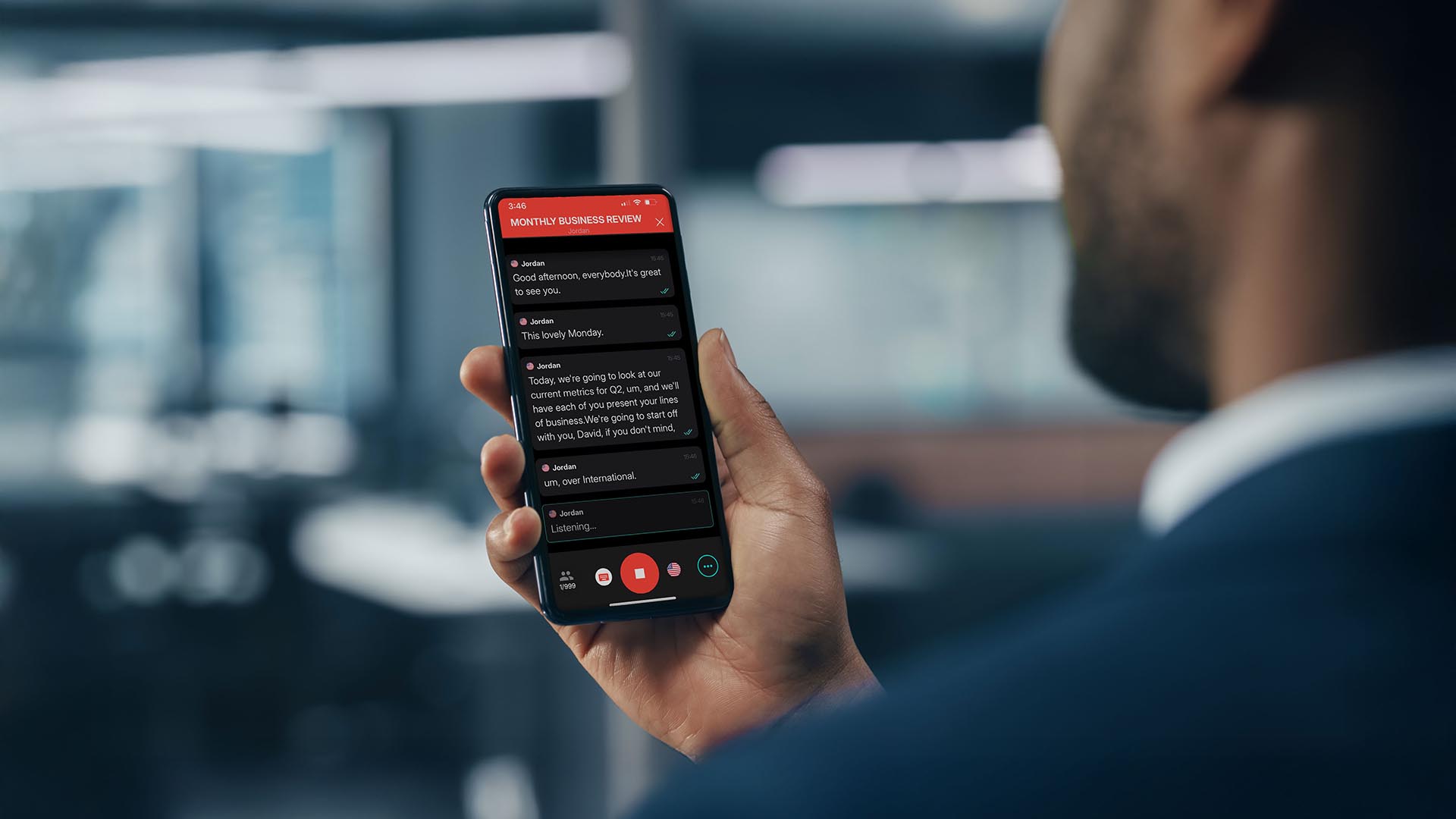
- Hard-of-hearing individuals who speak but don’t hear well may prefer real-time captioning and written communication.
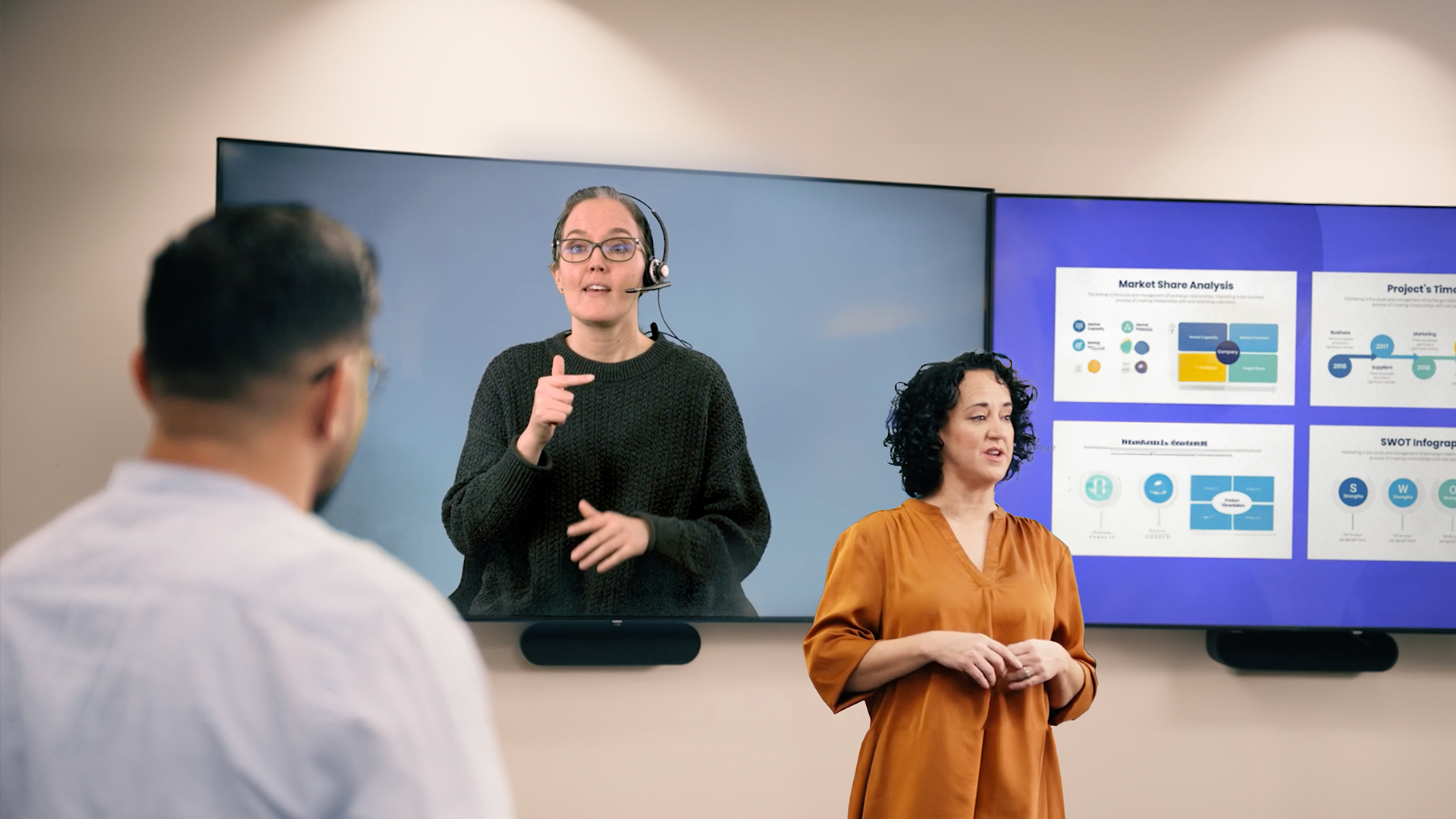
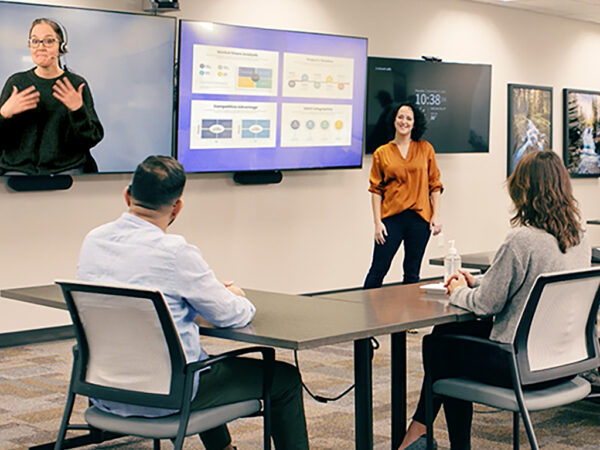
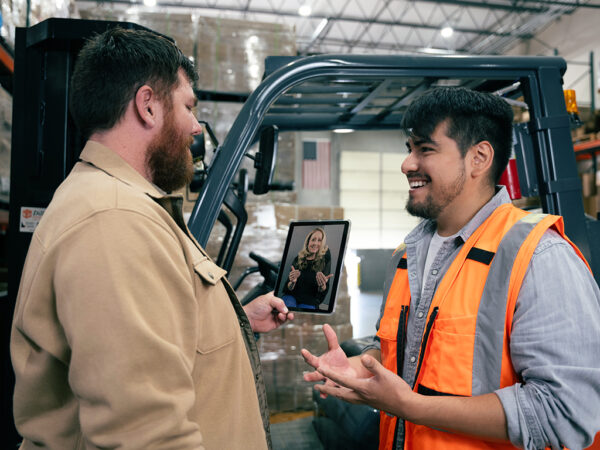
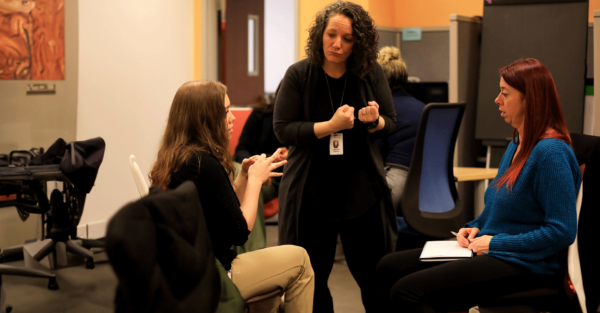
- On-demand ASL interpreting can provide equal communication access to Deaf customers who primarily use sign language.
A common practice for communicating with Deaf and hard-of-hearing customers is writing back and forth, either with pen and paper or via text. While it’s a cheap and impromptu workaround for hearing and Deaf people to communicate basic information, there are some notable drawbacks:
- It’s slow. Written notes significantly delay communication compared with using an ASL interpreter, since handwriting is far slower than natural language exchange and ASL enables real time conversation. While staff are writing notes back and forth, other customers may be left waiting for service.
- It’s limiting. An Institute of Education Sciences study found the median literacy rates of Deaf American high-school students to be around a fourth-grade level, which limits how effectively employees and customers can communicate about complex topics by simply passing notes.
- It’s invisible. Note-writing is not a solution you would proactively market to attract Deaf and hard-of-hearing individuals as customers.
Financial services providers that invest in more sophisticated integrated language solutions can establish a standardized, auditable approach to providing communication access. Increasing public visibility also invites new and existing customers to engage on their terms.
CX: improve customer experience with language access
Customer experience is an often-overlooked aspect of offering accessibility. For decades, businesses doing the bare minimum to comply with accessibility mandates have missed out on the benefit of providing service that leaves their customers feeling valued.
Great service is part of building trust. Trust breeds loyalty. Loyal customers stay with you, and they recommend you to people they know (and strangers on the internet; Reddit, Quora, even LinkedIn are full of people asking for recommendations and people serving up their tried-and-true suggestions).
When consumers have many options for financial services, optimizing customer service is not merely a nice-to-have:
While customer experience is important to all customers, it’s especially influential for commonly underserved groups — like Deaf and linguistic minorities. The majority of customers who use languages other than English say they heavily weigh recommendations from friends and family in choosing who they bank with. And customers aren’t shy about sharing those recommendations if they feel your service warrants it; nearly 3 out of 4 will tell others about a positive experience.
What makes for a positive customer experience
All the little things add up to create a great customer experience, but Americans overwhelmingly agree about which elements matter most: speed, convenience, knowledgeable help, and friendly service. These key aspects of the customer experience scream language accessibility. They also all boil down to demonstrating to customers that you value them and prioritize giving them excellent service.
Now that personalization is standard practice for top-tier customer service, the public expects that businesses will use all that data they’re collecting to tailor marketing and maintenance to customers’ individual needs and preferences…including language. In fact, that’s a dealbreaker for many consumers; two out of five say they don’t give their money to companies that won’t accommodate their primary language.
Improving customer experience with inclusive language solutions
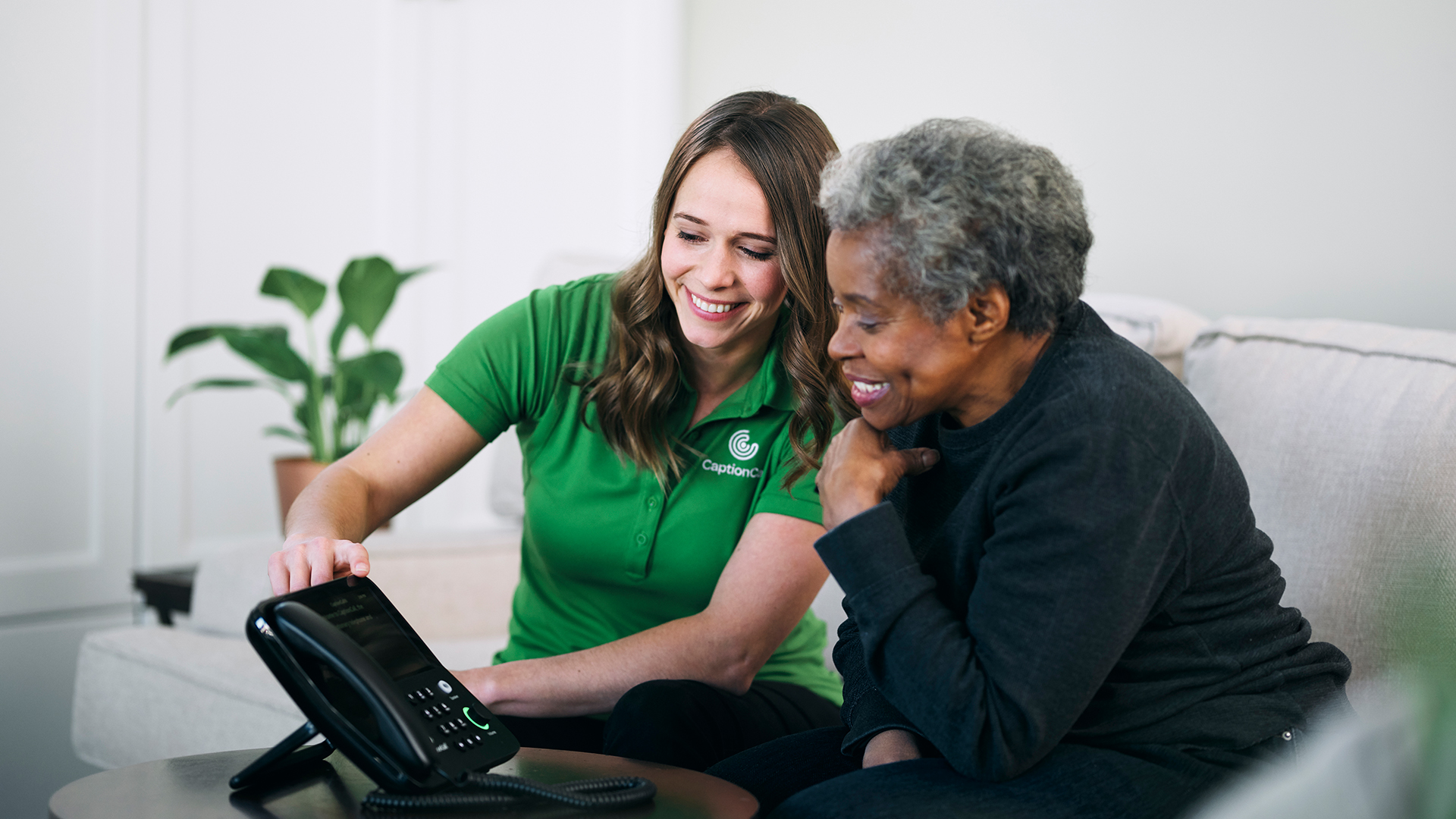
Language accessibility has exploded with the expansion of broadband internet and, more recently, artificial intelligence. While providing access in the past typically required scheduling and specialized equipment, now you can access inclusive language solutions for everyday use — no need to plan ahead or manage clunky tech.
For example, AI-powered speech translation and captioning, like Sorenson Forum, combines the real-time captioning functionality of Communication Access Realtime Translation CART for hard-of-hearing accessibility with instant translation into dozens of languages simultaneously.
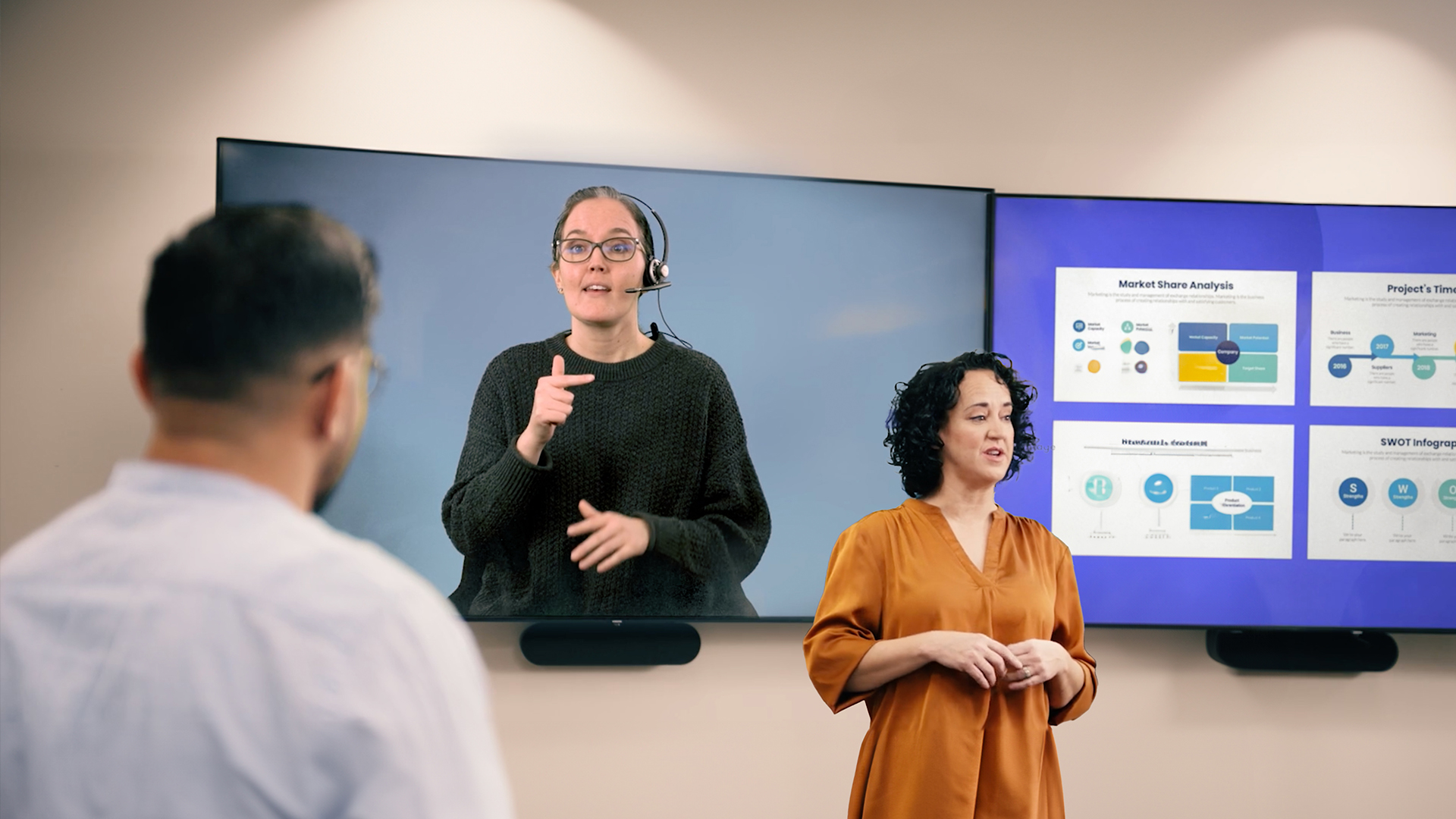
For communicating with Deaf customers who primarily use American Sign Language (ASL), captioning isn’t an ideal solution — but on-demand ASL interpreting can be. Sorenson Express is an app- and browser-based solution you can use to get an ASL interpreter on-the-fly to serve customers quickly and effectively — welcome them warmly, ask and answer questions, educate them about services — in their language and yours.
Customer experience as a business development driver
While financial services are essential for most people and can provide value to the public, it’s still a business with a need to attract and retain customers. It’s no stretch to make the connection between inclusive customer service and retention. However, institutions may overlook the power of accessibility as a magnet for new business.
It’s common knowledge that referrals are one of the most valuable ways any business acquires new customers, and statistics make it abundantly clear why:
- 9 out of 10 consumers trust recommendations from friends or family more than any type of marketing. And in fact, half of consumers rely on those recommendations when choosing a business.
- Referrals are 5x more likely to become customers than other lead sources.
- Customers from referrals average 16% higher lifetime value than other customers.
The data for consumers as a whole is persuasive, but referrals count for even more among Deaf consumers and foreign language speakers. For example — compared to overall consumer reliance on recommendations — customers who don’t speak English are 10% more likely to choose a financial institution based on the input of family and friends.
An accessible customer experience that supports the language needs of your community — be it local or global — is a competitive differentiator that gives your financial institution an edge in customer referrals, particularly for linguistic minorities who put extra weight in recommendations from the people around them.
The appeal of banking with an organization that prioritizes accessibility doesn’t end with the consumers who benefit directly from those considerations; their family members, friends, and advocates are also inclined to take their money to businesses that care about being accessible.
More than 90% of Deaf consumers come from hearing families — parents, siblings, aunts and uncles, even children — who also need a financial services provider also need a financial services provider.
HR: expand workplace inclusion and enrich company culture
HR teams play a critical role in building inclusive workplaces. That work goes beyond hiring. It includes ensuring employees with disabilities can succeed and that company values show up in customer-facing experiences.
Actively promoting accessibility boosts customer experience and builds a more inclusive workplace. Meeting a variety of language and culture needs at your institution shows everyone is valued, raising morale and lowering turnover. This helps employees from all backgrounds feel respected and included.
Training front-line staff on best practices for interacting with Deaf or multilingual customers, and on when and how to use ASL interpreting or translation services, equips employees to respond confidently and efficiently. The result: less uncertainty, faster service, and a more inclusive experience for all.
IT: integrate secure enterprise solutions for low-lift, seamless operations
Security and privacy are elements of customer experience. That may not be obvious when your IT operations are running like a well-oiled machine, but it becomes apparent the moment you have an outage or a breach.
Secure and seamless communication solutions
For IT departments, the challenge lies in implementing robust, secure, and user-friendly technology that supports accessibility initiatives without compromising data integrity or system performance.
Integrating ASL interpreting services, especially remote video interpreting (VRI), requires careful consideration of bandwidth needs, platform compatibility, and data security. However, the right technology solution can provide a flexible and efficient way to offer interpreting services across multiple branches or even for virtual meetings. We partner with financial institutions to implement VRI solutions that integrate seamlessly with your existing infrastructure, ensuring compliance with your data privacy and security programs while providing high-quality video and audio for interpreting sessions.
The bottom line: accessibility as a growth driver
Investing in language accessibility, particularly ASL interpreting, is more than just fulfilling a social responsibility. It's a strategic investment that can:
- Expand your customer base: Tap into the significant market of Deaf and Hard-of-Hearing individuals.
- Enhance your brand reputation: Position your institution as inclusive, forward-thinking, and customer-centric.
- Reduce legal risks: Help to comply with applicable accessibility mandates.
Boost employee confidence and satisfaction: Empower your team to serve all customers effectively.
At Sorenson Communications, we are committed to helping financial services providers unlock the full potential of accessibility. Let's work together to bridge communication gaps and build a more inclusive financial future for everyone.
Ready to discuss how ASL interpreting can transform your customer experience and meet your compliance goals? Contact us today for a consultation!











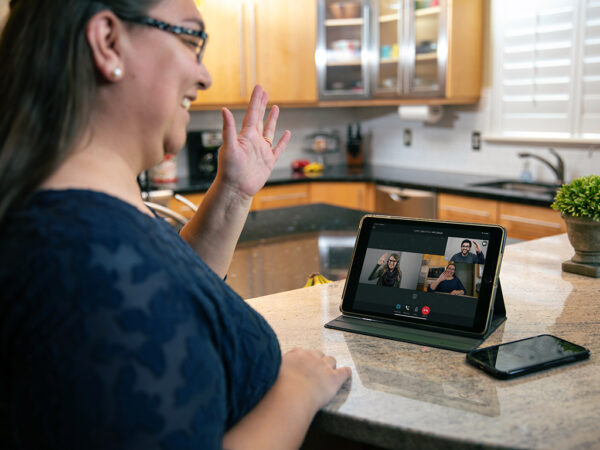
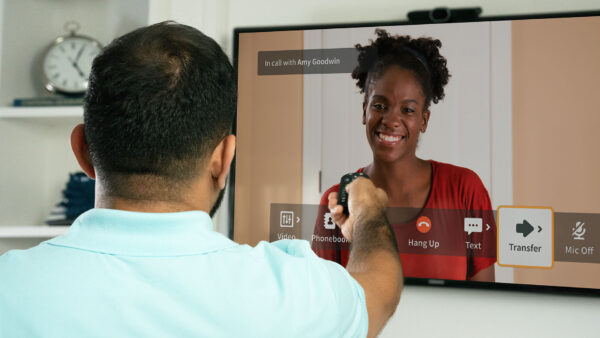

































 This shift replaced handwritten notes with real-time communication in ASL.

 Hearing and listening are closely related, but they are not the same thing. Understanding this difference can be especially empowering if you're living with hearing loss.
While hearing typically
Hearing and listening are closely related, but they are not the same thing. Understanding this difference can be especially empowering if you're living with hearing loss.
While hearing typically