


Skip to content















































-
VRS

-
CaptionCall
-
Enterprise
-
Provider
-
Resources
-
Company
Sorenson Uses Cookies
Cookies are small text files websites send to your browser to remember information about your visit. They make our site work properly and help with security. When you allow cookies, you will have the best experience on our site — you can use tools such as chatbot for support and access other relevant products and services.
The Science of Being a Good Listener
March 22, 2026
 Hearing and listening are closely related, but they are not the same thing. Understanding this difference can be especially empowering if you're living with hearing loss.
While hearing typically continues to get worse as we age, it’s never too late to become a better listener.
In this article, we explain the difference between hearing and listening. We explore how both works, why good listening matters, and techniques for better listening.
Hearing and listening are closely related, but they are not the same thing. Understanding this difference can be especially empowering if you're living with hearing loss.
While hearing typically continues to get worse as we age, it’s never too late to become a better listener.
In this article, we explain the difference between hearing and listening. We explore how both works, why good listening matters, and techniques for better listening.
Hearing vs. listening: What’s the difference?
Hearing and listening are related but distinct actions. Let’s start with the basics:How hearing works
Hearing is the physical process of sensing sounds. This is a complex process, but to simplify it:- Sound enters the ears as vibrations in the air.
- Specialized organs inside our ears sense those vibrations and translate them into electrical signals.
- They send those signals through our auditory nerve to our brain.
- The brain interprets the signals, allowing us to perceive them as sound.
What it means to listen
Unlike simply hearing, listening is a cognitive and emotional process that involves attention, working memory, context, and intention. When we listen, receiving the information is the first step. This is the "hearing" part of listening, but it can also include reading live captions or seeing ASL signs. Next, our brains process the meaning of the information we received. We then must remember what we've just heard for as long as it's useful — even if just for the remainder of a single conversation. Our brain then evaluates what we've heard and compares it with our existing views and beliefs. This is where emotion, opinions, and biases come in. We consciously (or sometimes unconsciously) consider what we've heard and put it in larger context. This allows us to empathize with and understand each other — one of the key elements of social connection. In other words, listening takes effort. But that doesn’t mean struggling to listen is a personal failure. The fact is, listening takes much more effort with hearing loss.How hearing loss affects listening
Our ears pick up lots of sounds and it’s our brain’s job to sort through all that noise, focus on the important sounds, then make sense of them. Hearing loss often muffles sounds, making the important noises more difficult to identify. It can also drop certain frequencies, forcing our brains to attempt to fill in gaps. All this requires more energy. In fact, it’s common for people with hearing loss to experience something called listening fatigue. Assistive hearing technologies like hearing aids or call captioning can help lighten the load and make listening easier. Hearing aids clarify the incoming noise, whereas captions help fill in the gaps.Why Good Listening Matters
Communication is central to human life. We form bonds, exchange ideas, and resolve conflicts this way. But communication isn’t just about making yourself understood — it's also about understanding others. Good listening helps you take in new information, compare it with what you already know and believe, and respond well. Without good listening, conversation is just talking at one another, instead of with one another.Signs of a good listener
Good listening isn't just about retaining information — it's also about being present in the conversation. Active listening signals to your conversation partner that your engaged and interested in what they're saying. Here are a few key traits of good, active listening:- Eye contact
- Non-verbal body language (nodding, leaning forward, facial expressions)
- Verbal reactions (ex. “Uh huh,” “I see,” or “Oh!”)
- Follow-up questions
- Restating or paraphrasing what someone said
The value of good listening
Good listening benefits everyone and is an important way to show the people in your life that you value them. Practicing good listening can help you avoid misunderstandings and even some arguments. Listening is also vital to receiving important information — whether from a medical professional explaining treatment options, a server listing the day’s specials, or anywhere in between. Remember, good listening isn’t about being perfect — it’s about being willing to put in the effort. But what does that effort look like, exactly?Practical, science-based tips for better listening
Anyone can be a good listener — even someone with bad hearing. But listening does require effort, no matter how good your hearing is. Here are a few ways you can become a better, more engaged listener.Tip 1: Reduce cognitive load
- Choose quieter places when possible. The noisier the environment, the more information your brain needs to sift through.
- Slow down speech slightly (this helps everyone).
Tip 2: Use more than one sense
- Arrange yourselves so you’re face to face.
- Use clear turn-taking and minimize interruptions.
- Avoid multitasking during conversations.
Tip 3: Follow up
- Asking to repeat something is a way to participate.
- Questions show interest and improve communication.
- Reflect and summarize what the person you’re talking to just said.
Tip 4: Use available support tools
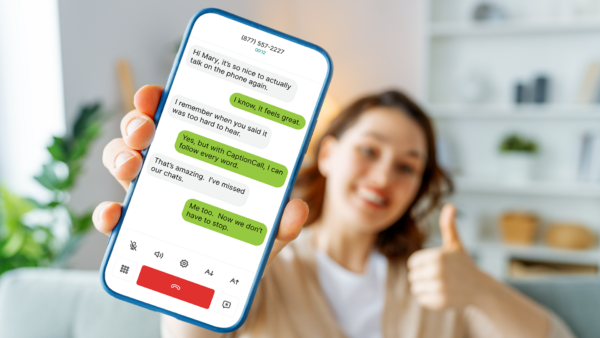
- Tools like hearing aids or phone call captioning can help you overcome hearing loss during conversations. These tools can reduce strain and allow your brain to focus on meaning, not decoding sound.

