


































-
VRS

-
CaptionCall
-
Enterprise
-
Provider
-
Resources
-
Company


Sorenson Uses Cookies
Cookies are small text files websites send to your browser to remember information about your visit. They make our site work properly and help with security. When you allow cookies, you will have the best experience on our site — you can use tools such as chatbot for support and access other relevant products and services.

Hearing Loss Due to Military Service: An Interview with Audiologist Stephen DeMari
May 12, 2023
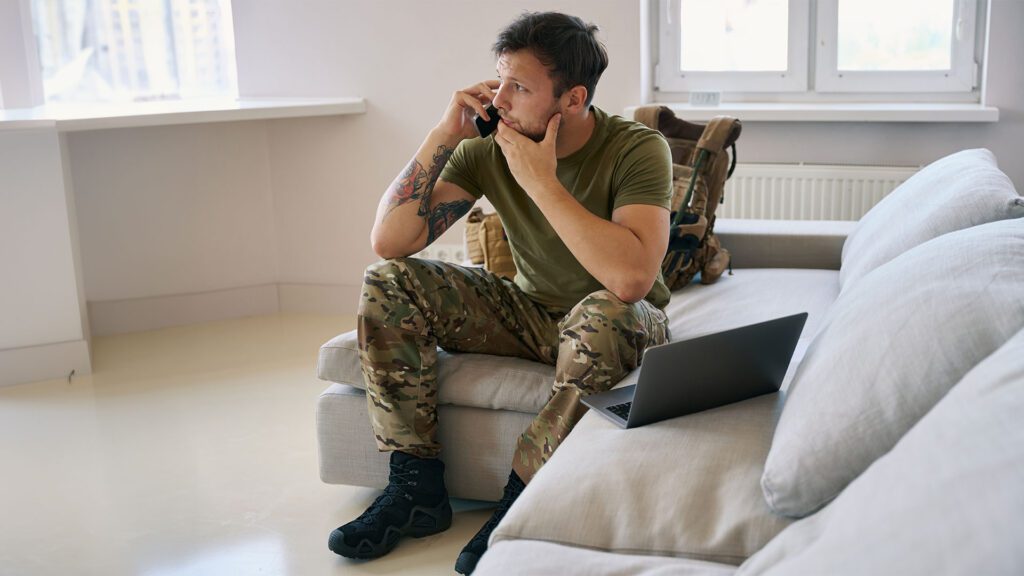
The most common service-connected disabilities for American Veterans are hearing loss and tinnitus, which is a ringing or buzzing in the ears. An estimated 3.6 million Veterans receive compensation for hearing loss or tinnitus.1 And this impacts Veterans from every war from World War II through the Korean, Vietnam, and Gulf Wars, as well as those who served during peace time.
Compared to the general male population, 11% fewer male Veterans have good to excellent hearing while 10% more have at least moderate trouble hearing.2
Both hearing problems and tinnitus can impact quality of life and communication. Both also contribute to isolation, frustration, and even depression without intervention.
We sat down with audiologist Stephen DeMari, who is also Sorenson’s director of business development and education, to talk about Veterans and hearing loss due to military service.
Why talk to Stephen about hearing loss in Veterans?
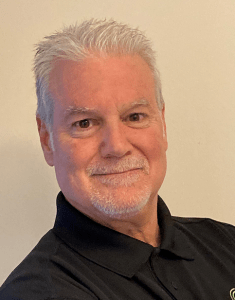
Stephen has more than 30 years of experience in the audiology and hearing aid industries. He earned his master’s degree in audiology from Syracuse University. He then completed a clinical and research audiologist fellowship at the Department of Veterans Affairs Medical Center in Long Beach, California. He’s a member of both the American Academy of Audiology and the American Speech-Language-Hearing Association.
Q: Do Veterans have different types of hearing loss than the general population?
A: No. There are different types of hearing loss. Conductive hearing loss occurs in the outer and/or middle ear. It can be caused by debris, excess ear wax, disease, or trauma.
Sensorineural hearing loss (SNHL), results from noise exposure, age, disease, or a combination of these. It involves the inner-ear and/or auditory nerve. It’s usually the result of damage to the hair cells in the inner ear. Severity of SNHL can be mild to profound.
SNHL is the most common type of hearing loss for Veterans and non-Veterans. Veterans most commonly suffer from high-frequency SNHL, which means they struggle to hear high-pitched sounds.
Q: What are some of the causes of hearing loss for Veterans?
A: Hearing is a complex mix of three parts of our ears. Sound waves vibrate tiny bones in our ears and those vibrations create waves that interact with hair cells in our ear and create an electric signal that the brain interprets as sound.
That’s a very basic and abbreviated description. The complexity of it creates a number of opportunities for aging, noise exposure, disease, and heredity to affect hearing. Still, the most common cause of hearing loss is loud noise.
Hearing loss for service members results from gunfire, aircraft, tanks, bombs, and trauma from blast explosions. With noise-induced hearing loss (NIHL), the longer the exposure and the more intense sound, the greater the damage that occurs.
A lawn mower has a decibel level of about 95, while military guns range in the 150 decibels. Grenades and louder explosives can exceed 170 decibels. Anti-tank fire can approach 190 decibels. A single grenade or tank blast can cause immediate and permanent hearing loss. Anything over 140 decibels instantly damages nerves. Exposure to 130 decibels can cause permanent damage with as little as 30 minutes of exposure.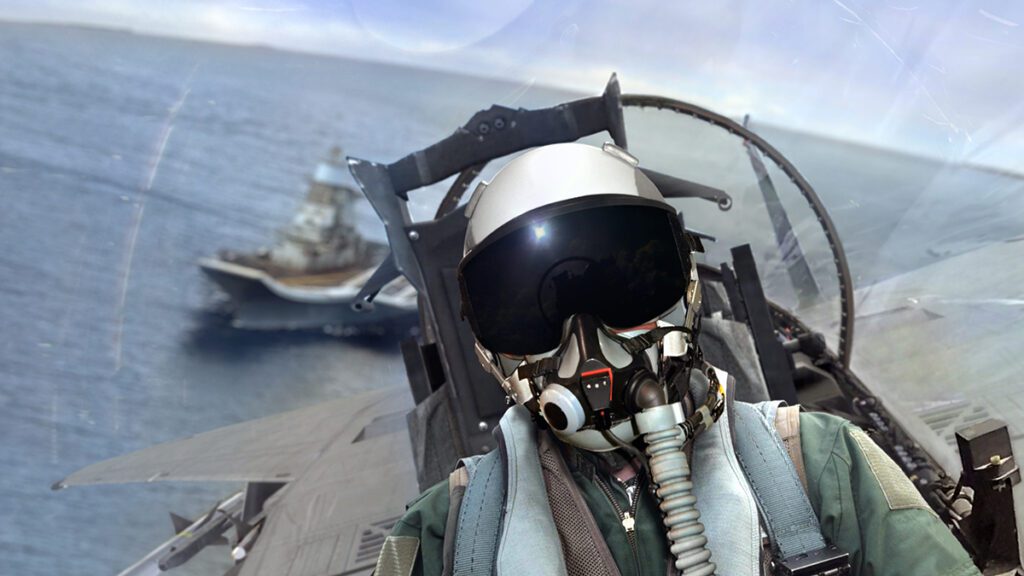 Q: What are some of the symptoms a veteran may experience with hearing loss or damage?
A: Symptoms depend on the severity of impact. Tinnitus isn’t hearing loss but a sensation of ringing, buzzing, clicking, or even roaring in one or both ears. It can seem like an engine or appliance is always running nearby. For some people, it’s loud and persistent enough to be debilitating.
A feeling of fullness in the ears can be a symptom of hearing loss. It can feel something like needing to pop your ears when you go up in elevation. Other symptoms of general hearing loss include:
- Asking people to repeat themselves or misunderstanding what they say
- Needing the television volume louder than normal
- Difficulty understanding speech, especially in the presence of background noise
- Fatigue after conversation, which results from struggling to listen
- Missing the phone or doorbell ringing
With high-frequency SNHL, Veterans might struggle to hear consonants. Speech will sound like mumbling.
Often, it’s the people a veteran interacts with who first notice a change in a veteran’s hearing.
Q: Does hearing loss only affect older Veterans?
A: Hearing loss can affect Veterans of any age. It can also affect them while still actively serving. As I mentioned, exposure to a loud enough sound, such as tank fire, can damage hearing immediately and permanently. And as we grow older, our cognitive ability to understand speech naturally declines, as does our hearing sensitivity.
If exposed to sustained, unprotected noise levels during combat or training, a service member can experience hearing loss and/or tinnitus. High-frequency SNHL is the most common form among Veterans, old and young.
Q: Are there things Veterans and active-duty service members can do to prevent hearing loss?
A: The only preventative methods are avoiding the noise and wearing hearing protection when possible. Ear plugs offer 30 to 40 decibels of attenuation (sound reduction). The military does buy and provide a lot of ear plugs. Earmuffs — like the headphones you see naval servicemen wearing — are another option. Some helmets also have built in hearing protection. Over time though, even with hearing protection, loud noise can damage hearing.
These devices help during active duty, but a veteran exposed to loud noises who didn’t have these options has likely already suffered damage. And even though they may not yet have symptoms of NIHL, their hearing may have been damaged. Options there include Veterans Health Administration (VHA) programs that offer further NIHL prevention and aural rehabilitation services to optimize remaining hearing.
Definitely, any inactive veteran should take the same precautions to protect their hearing as everyone should by avoiding loud noise and wearing hearing protection when using power equipment.
There are a variety of things anyone can do to naturally protect their hearing.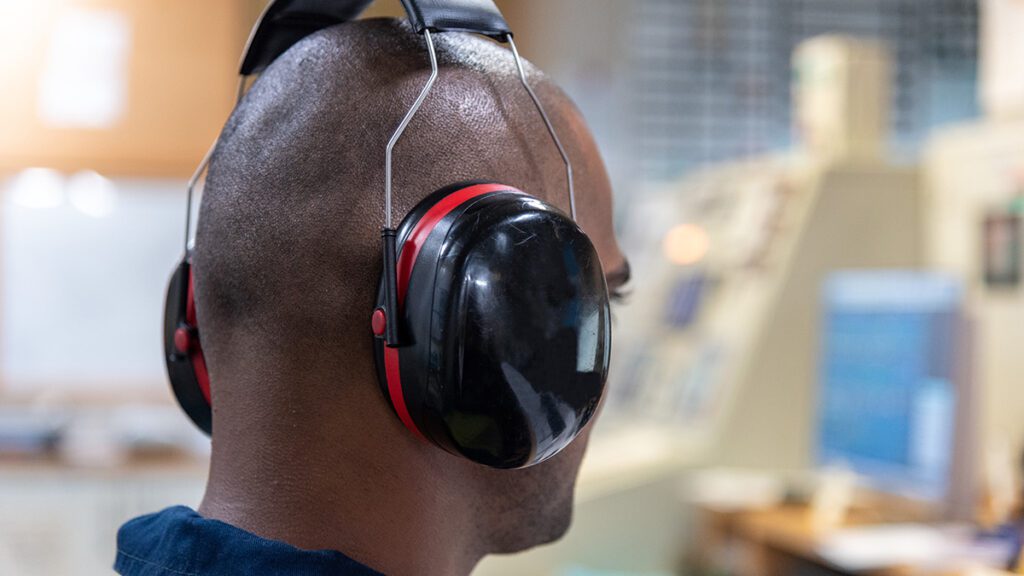 Q: What can vets do if they’re experiencing symptoms of hearing loss and/or tinnitus?
A: It’s important to see an audiologist. A vet can do that through their local Veterans Affairs Medical Center (informally called the VA). The U.S. Department of Veterans Affairs website is a great place to start if you don’t know your local VA yet.
In some cases, the effects of tinnitus can be alleviated by a hearing aid or tinnitus program.
Q: Can a vet just see their non-VA doctor or audiologist?
A: Vets can see any doctor they choose. If they qualify for the Veteran’s Choice Program, their care for a covered non-VA doctor is covered under their VA benefits. The potential advantage of using a VA medical facility is that those practitioners specialize in helping Veterans with issues, including hearing loss, due to military service.
Q: Are VA audiologists licensed professionals?
A: Yes. Each of the over 1,000 audiologists employed by the VA must hold a state license and participate in continuing education according to state regulations. And the Veteran’s Health Administration (VHA) operates the nation’s largest audiology program with audiologists at 400 locations. So, whether a vet chooses their own provider or a VHA provider, they have access to excellent care. Q: How do Veterans get a hearing test with the VA?
A: Once enrolled for medical services at a VA facility, they can arrange for an audiometric test. If they’re deemed eligible for hearing aids, they’ll be scheduled for a fitting as well.
Many hearing aids can be adjusted remotely through the VA’s live video conferencing service, VA Video Connect. Veterans can contact their nearest VA audiology clinic to see if telehealth visits are available in their area.
Q: Do VA benefits cover hearing tests, hearing aids, and cochlear implants?
A: They do if the hearing loss is related to military service. Vets can get their hearing aids, hearing aid batteries, and related appointments covered under their VA benefits.
The VA also covers cochlear implants, which are devices that are surgically placed in the skin and used with an external device to transmit sound directly to the auditory nerve. Cochlear implants are sometimes the only option when hearing loss is significant enough or beyond the scope of hearing aids.
If a vet’s hearing loss is deemed to not be service-connected, Medicare may pay for hearing aids for older vets.
Q: Does the VA provide the latest hearing aids and cochlear implants?
A: Yes. For eligible vets, the VA dispenses hearing aids from the top six manufacturers, GN Resound, Oticon, Phonak, Siemens (Signia), Starkey, and Widex. The devices provided by the VA are actual premium devices that sale for the highest prices in the non-veteran sector.
They also offer cochlear implants from three FDA-approved cochlear implant manufacturers, Cochlear Corporation, Advanced Bionics, and MedEl.
Q: Does the VA offer other hearing solutions for vets?
A: Yes. The VA also offers FM systems, which are frequency modulated (FM) systems. With such a system, someone speaking wears a small microphone that is transmitted to a receiver worn by the person with hearing loss. The transmitter can even be attached to a hearing aid.
Vets also have access to TV amplifiers and transmitters, remote microphones, and internet protocol (IP) captioned telephone service through the VA and other programs and based on their needs.
A TV amplifier works like an FM system but with a TV.
Q: What else can Vets do about hearing loss?
A: There are a variety of tools available to anyone with hearing loss. There are smartphone apps designed to assist with hearing loss, including captioning apps. [*Some no-cost apps have user eligibility standards].
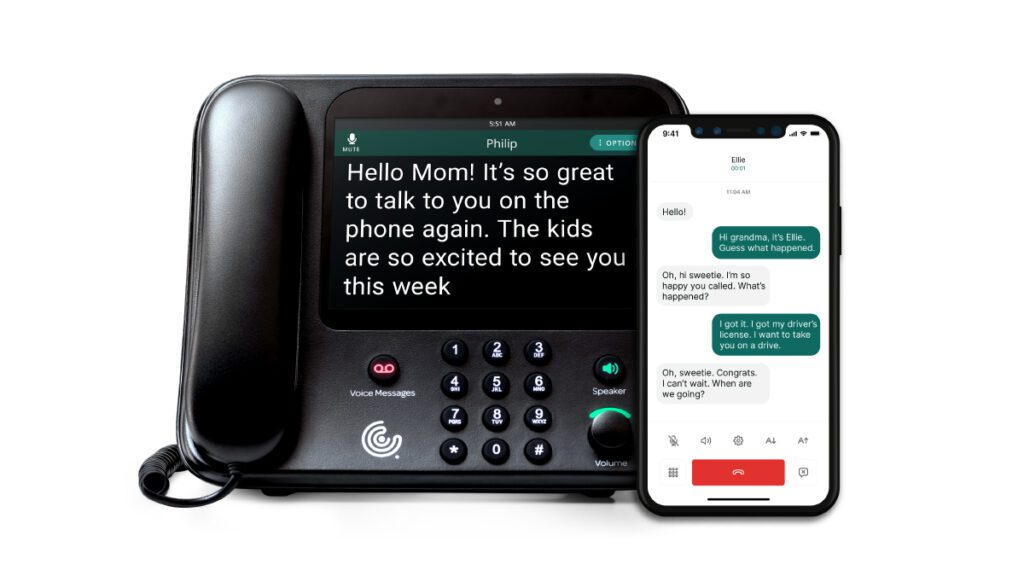
Captioning apps are available. And captioned telephone service uses either a specially designed phone or a smartphone to turn spoken phone conversations into readable captions. Captions on a TV or show can also help. Studies have shown that captions can help with comprehension, even when someone wears hearing aids.
There are also aural rehabilitation programs, including some offered by the VA, designed to help reduce or compensate for hearing loss.
Support groups and organizations are also available to help Veterans with hearing loss, including HLAA Veterans Across America Virtual Chapter (VAAVC).
Whether a vet has symptoms of hearing loss, practicing good hearing hygiene is always a good idea as well.
Q: How can Veterans get captioned telephone service for hearing loss?
A: Sorenson and other providers offer captioned telephone service to vets and others with hearing loss that requires they have captions to use the phone effectively.
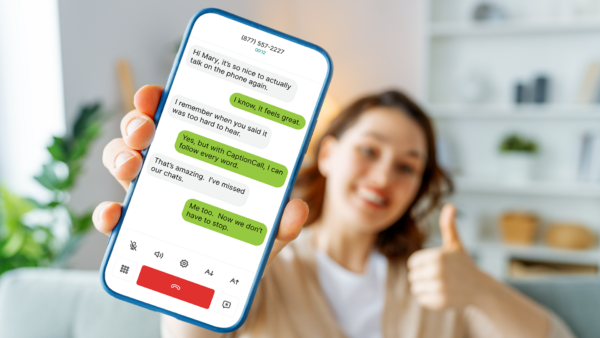
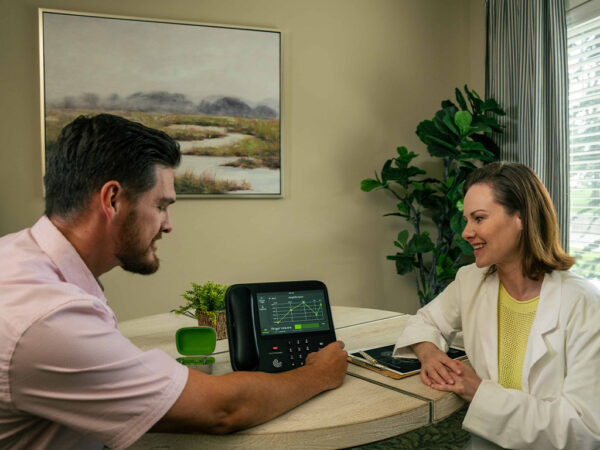
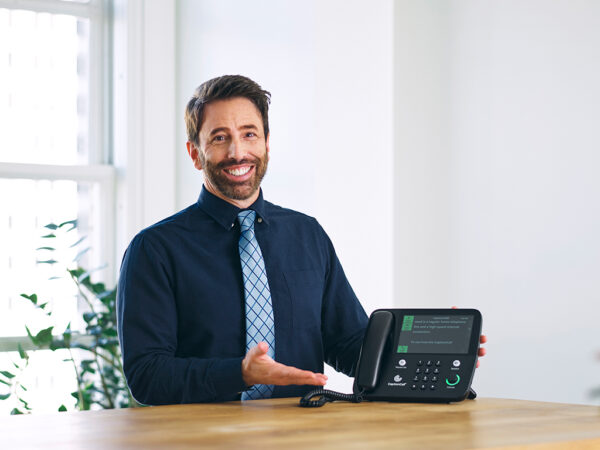
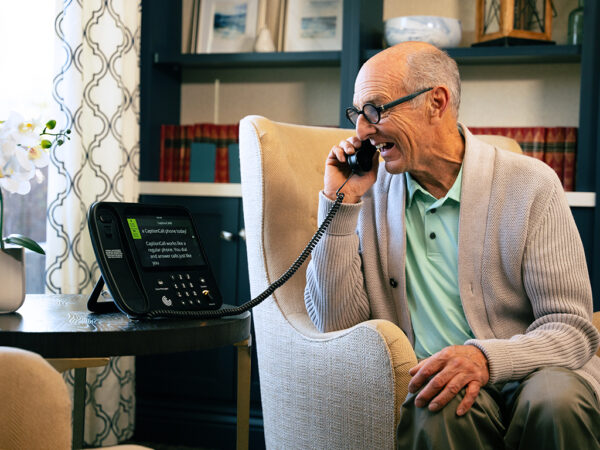
Sorenson offers both CaptionCall and CaptionCall Mobile app by Sorenson to help vets with hearing loss stay connected. CaptionCall transcribes phone conversations using a specially designed phone with a screen for captions. CaptionCall Mobile is a smartphone app that captions calls on a mobile phone.
Vets can ask their audiologist about this no-cost service or visit Sorenson — Global Communications Solutions for People, Businesses, and Enterprises to learn more.
 Q: How do Veterans qualify for captioned telephone service?
A: Captioned telephone service is available at no-cost to anyone with hearing loss that necessitates the use of captioned telephone service to use the phone effectively. Vets who meet this eligibility requirement can access the service through their audiologist by self-certifying they need it when they enroll.
Q: Do Veterans need to have internet access to use CaptionCall or CaptionCall Mobile service?
A: No. Anyone who qualifies, including Veterans, can get captioned telephone service without internet access on select phones. And all that’s needed to use the CaptionCall Mobile app is a Wi-Fi connection or mobile (cellular) data connection.
 Malala Alonso