












































-
VRS

-
CaptionCall
-
Enterprise
-
Provider
-
Resources
-
Company


Sorenson Uses Cookies
Cookies are small text files websites send to your browser to remember information about your visit. They make our site work properly and help with security. When you allow cookies, you will have the best experience on our site — you can use tools such as chatbot for support and access other relevant products and services.

Who Can Use CaptionCall? Understanding Eligibility for No-Cost Caption Phone Service
May 14, 2024
Updated on September 9, 2026
CaptionCall is a life-changing service for people with hearing loss who struggle to hear and understand their phone calls. With captions, you can read along with what people are saying as they say. That means easily talking to family and friends, handling your affairs independently, or calling for help in an emergency.
One of the biggest benefits of CaptionCall is that there’s no cost to use it. That’s critical for many people who need captioned phone calls but can’t afford another bill. There’s no cost for CaptionCall because it’s federally funded as an Internet Protocol Captioned Telephone Service (IP CTS).
However, IP CTS has specific rules about who’s eligible to use the service. In this article, we’ll explain exactly what you need to qualify for no-cost call captioning.
What is Internet Protocol Captioned Telephone Service (IP CTS)?
IP CTS is a form of telecommunications relay service (TRS). It enables individuals who can speak, but who have difficulty hearing, to use a phone. A trained captioning agent or speech recognition technology connects to the call audio and transcribes the conversation for you.
What is the difference between IP relay and IP CTS?
Captioned phone service, like CaptionCall and CaptionCall Mobile, isn’t the only form of telecommunications relay service.
- IP CTS: The user receives captions of their phone conversation as they and the other party speak to each other. It’s a good option for people who are hard of hearing or deaf, but still comfortable speaking
- IP Relay: The user types what they want to say rather than speaking out loud. The service provider reads the statement to the hearing person on the other end of the line. Then the provider sends that person’s reply back to the user as text. This is a good option for deaf, DeafBlind, and hard-of-hearing people who do not speak and either do not use sign language (or use tactile signing) or simply prefer text-based communication.
Together, these services provide hard of hearing, deaf, and DeafBlind people equal access to communication by phone. The federal government covers the cost of both IP CTS and IP Relay services. Fees on telecommunications providers fund the program, and the FCC manages the funding.
However, they often pass the fees on to their customers; you might have noticed the small charge on your itemized phone bills.
How do you qualify for caption phone service?
Because IP CTS uses federal funds, only people who qualify can use the service. To qualify, you must have hearing loss that makes captions necessary to use the phone effectively. That’s not our rule; it’s an FCC requirement. That’s why captioned telephone service providers all must display a disclaimer about IP CTS eligibility.
Why do caption phone service providers warn about a federal offense?
When you sign up for IP CTS — or just research it — you’ll see this as part of the fine print:
FEDERAL LAW PROHIBITS ANYONE BUT REGISTERED USERS WITH HEARING LOSS FROM USING INTERNET PROTOCOL (IP) CAPTIONED TELEPHONES WITH THE CAPTIONS TURNED ON.
All caps is a little aggressive, we know, but it’s just to get your attention. The message is important. Only people who need IP CTS are eligible to use it.
Could CaptionCall be right for you?
Consider the following questions:
- Do you have hearing loss?
- Does your hearing loss make it difficult to understand conversations on the phone?
- Would captions help you use the phone more effectively?
If you answered yes to all three questions, CaptionCall may be able to help. Individuals with hearing loss who need captions to use the telephone effectively may be eligible for IP CTS.
No audiologist required
Some people learn about CaptionCall from an audiologist or other hearing care provider. In fact, many hearing health professionals recommend CaptionCall to patients whose hearing loss makes telephone conversations difficult.
A hearing care provider may evaluate your hearing and recommend tools or services that can help, such as hearing aids, captioned telephone service, or both.
However, you do not need a referral, hearing test, or recommendation from a hearing care provider to determine whether you are eligible for CaptionCall.
If you’re a hearing health professional, you can sign up to connect eligible patients with CaptionCall:
CaptionCall with hearing aids
Good news: if you get hearing aids with Bluetooth technology, you can pair them to your CaptionCall phone or CaptionCall Mobile app. This way you get the audio from your calls directly through your hearing aids.
What do you need to use CaptionCall?
We’ve covered the primary requirement for using CaptionCall: have hearing loss that makes captions necessary to use the phone effectively. If you’re eligible for IP CTS, there are just a few more things you'll need to start using call captioning.
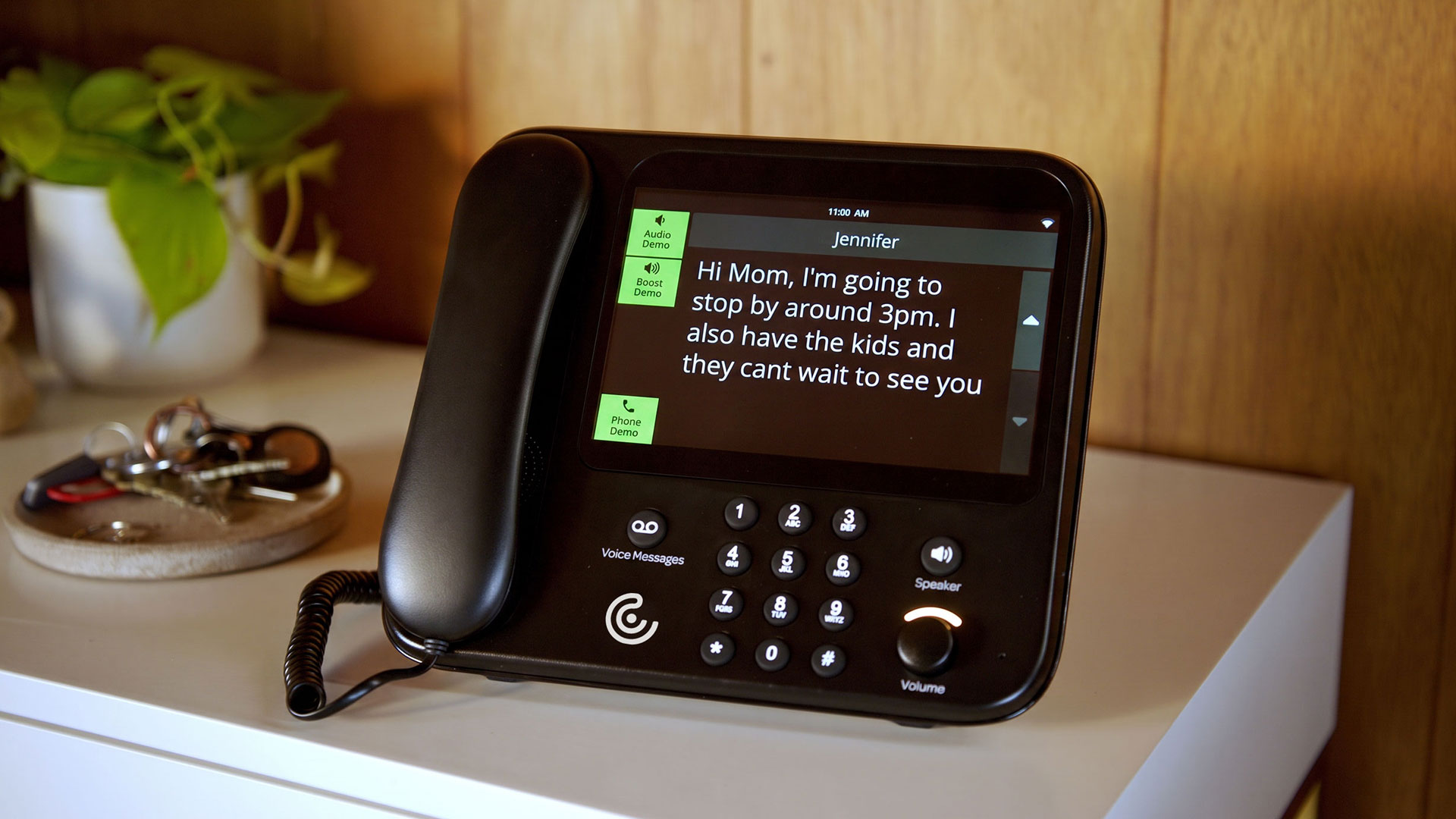
For CaptionCall at home or work:
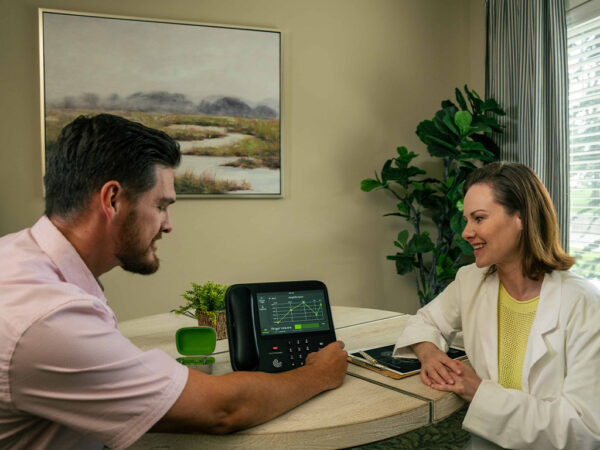
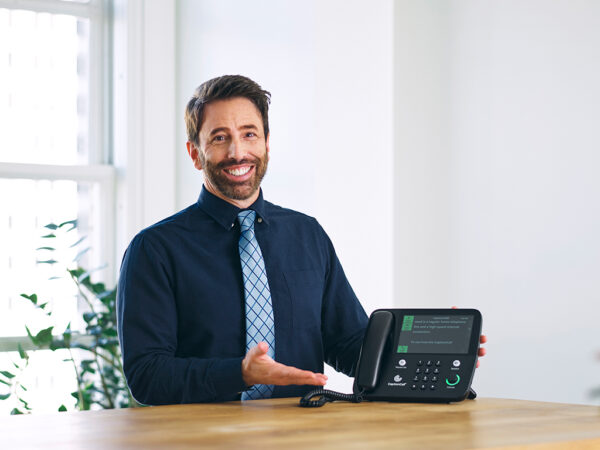
- You need a special phone with a screen to display your captions. In addition to caption phone service being no-cost, CaptionCall also provides the phone at no cost (along with delivery, setup, and training to use it).
- You need either landline phone service, high-speed internet, or a smartphone with data service. If you have at least one of these, our team can connect you with CaptionCall at home or work.
Learn more about getting caption phone service without internet: Can You Get Closed Captioned Phone Service without Internet Access?
Learn more about getting caption phone service for your home without a landline connection: What is VoIP — and How Can It Help You Use a Captioned Phone?
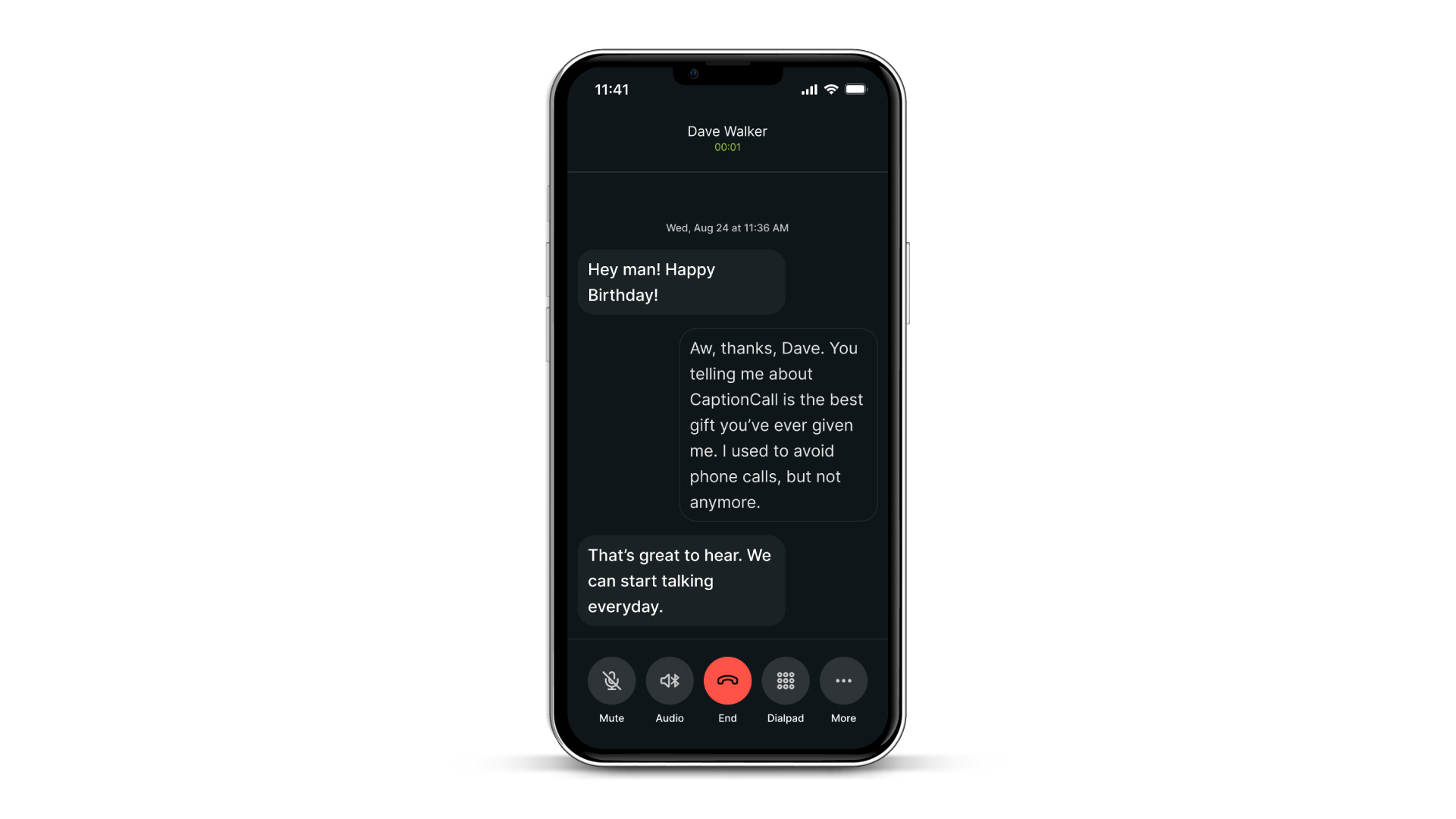
For CaptionCall on the go
- You need a smartphone or tablet with data service. That’s it. CaptionCall Mobile works on both Android and iOS.
Have questions about CaptionCall or CaptionCall Mobile? Review our FAQs.
Frequently asked question
Am I eligible for call captioning?
If you have hearing loss that makes it difficult to understand voices on phone calls, and if captions would enable you to use the phone as effectively as someone without hearing loss, you may be eligible for CaptionCall.
In other words, if you need call captions because of hearing loss, CaptionCall may be a good option for you. Simple as that.
Do I need a doctor referral to qualify for CaptionCall?
Your audiologist or other hearing care provider may refer you to CaptionCall, but you do not need a referral. If you have eligible hearing loss, you can sign up for no-cost call captioning at any time.
Is CaptionCall free?
Under the Americans with Disabilities Act (ADA), the federal government funds Internet Protocol Captioned Telephone Service (IP CTS). This includes CaptionCall and similar call captioning services. Fees that telecommunications providers pay to the federal government fund this program.
The FCC uses that funding to pay CaptionCall for each minute of captioned call service. Customers do not pay out of pocket. This is why the service is only available to people with hearing loss who need captions to use the phone.
Do I need a landline or internet connection to use CaptionCall?
As long as you have high-speed internet, a landline, or a smartphone, we can connect you with a CaptionCall phone. CaptionCall offers complimentary delivery and installation service. You can choose Red Carpet service with in-person installation and hands-on training. Or you can complete the installation yourself with help from a trainer who provides remote assistance.
Can I get both the CaptionCall home phone and CaptionCall mobile app?
You do not have to choose one or the other. If you have hearing loss and need captions to use the phone effectively, you’re eligible for both CaptionCall home phone service and CaptionCall Mobile.
How do I get free setup of my CaptionCall phone?
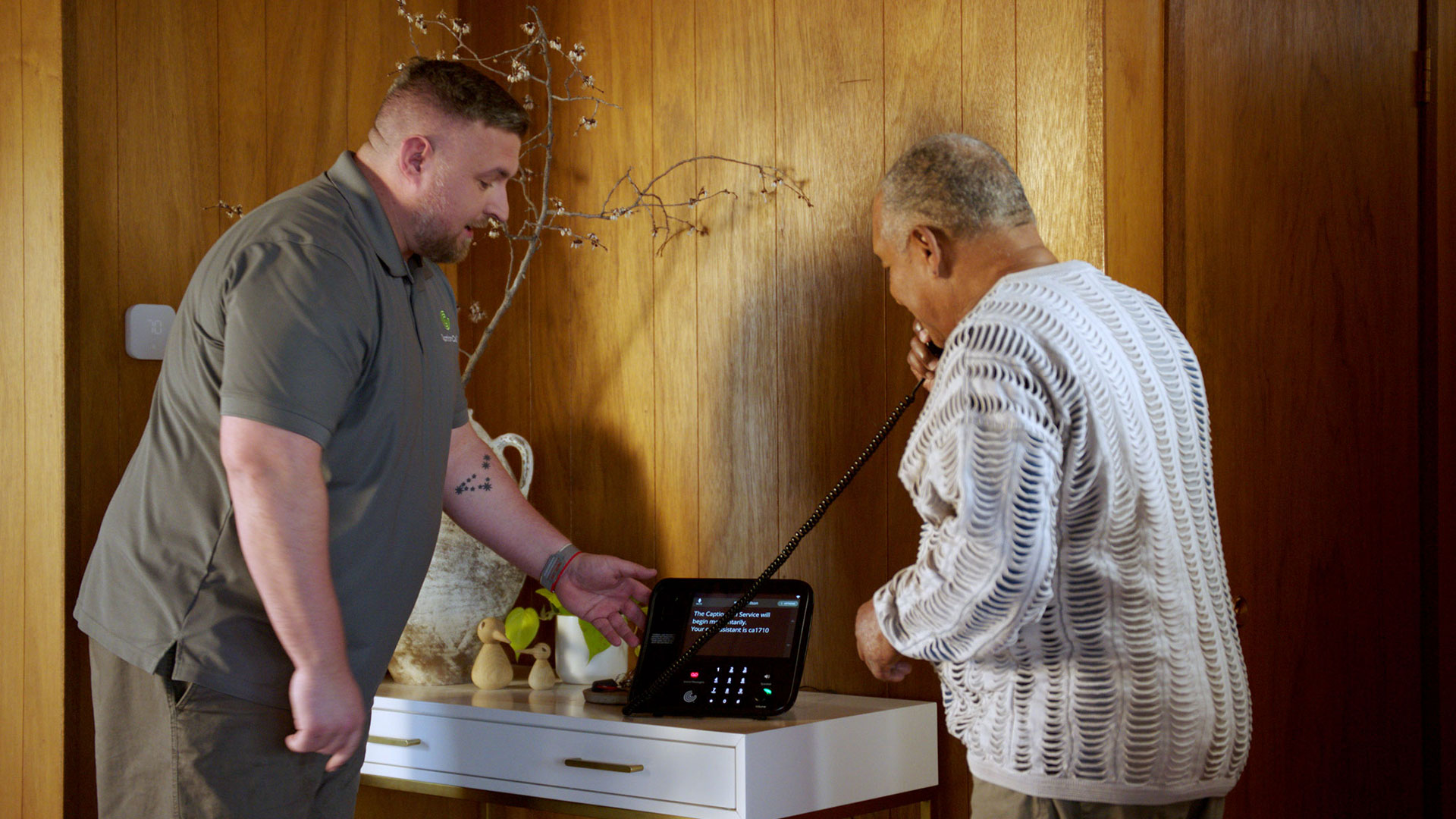
CaptionCall’s Red Carpet Service includes complimentary in-home setup of your CaptionCall home phone. Once you confirm your eligibility, we’ll schedule a time for a trained representative to visit your home. They will deliver your caption phone and show you how to use it. All at no cost!
Is it illegal to use a captioned phone?
Captioned telephone service may be used by individuals who are eligible for Ip CTS. Because IP CTS is federally funded, federal rules prohibit individuals who do not have qualifying hearing loss from using call captioning services.

