








































-
VRS

-
CaptionCall
-
Enterprise
-
Provider
-
Resources
-
Company


Sorenson Uses Cookies
Cookies are small text files websites send to your browser to remember information about your visit. They make our site work properly and help with security. When you allow cookies, you will have the best experience on our site — you can use tools such as chatbot for support and access other relevant products and services.

How to Use AI for Good: Everyday Connection through Real-Time AI Speech Translation
April 22, 2025
Any way you look at it, the rapid integration of artificial intelligence (AI) technology is transforming daily life. Whether you’ve leaned into AI tools to do your grunt work — from processing data and writing emails to generating your grocery list — or you’re skeptical about allowing machines to do your thinking, there’s no denying the world has flexed its creative muscles over the past few years in finding inventive ways for how to use AI.
An ethical AI use case
One of the most wholesome ideas for how to use AI stems from its ability to learn languages. Machine learning — a category of AI — taps into computers’ ability to quickly process and organize vast amounts of linguistic data.
That capacity to master vocabulary, pronunciation, and language structure enables AI to convert speech-to-text or text-to-speech in practically any language instantaneously…and simultaneously: a multilingual human translator may be able to convert Japanese to English and English to Spanish, but AI can do both at the same time, making everyday connection across languages possible without planning or expertise.
We’re going to discuss how — and when — you can effectively leverage that power to generate connection, engagement, and understanding with all kinds of people:
- Why you need interpreting, translation, and captioning
- Use cases for real-time translation and captioning
- Choosing the right multilingual solution: when to use AI speech translation vs human interpreters
- When to use an interpreter
- When to use AI speech translation
- Interpreting vs AI translation use case comparison
- Try using AI speech translation for language access
Why you need interpreting, translation, and captioning
The need for fast and reliable language services is no longer a niche demand. Economic and social shifts that drive globalization and multiculturalism have made interpreting and translation services an essential part of doing business and serving the public:
- More than 90% of the world’s population uses languages other than English as a primary language.1
- Countries that are largely English-speaking also have sizeable numbers of people with different primary languages.
- In the U.S., more than 20% of the population uses a language other than English at home.2
- Roughly 8% of people in the U.K. say their main language is not English.3
- Only about 57% of Canadians list English as their first language. About 20% speak French primarily. The remaining 23% use other languages at home.4
Even if you share the same language as the people you’re talking to, captioning is now a mainstream need. Worldwide, 20% of people are Deaf or hard-of-hearing and 15–20% are neurodivergent;5,6 captions can help them access and process information. Among hearing and neurotypical people, too, numerous studies support the benefits of captioning for comprehension and retention.
The benefits of providing services like interpreting, translation, and captioning come into focus when we view language access as more than transactional. Making it easy for customers, employees, and communities to communicate effectively signals to them that you value their perspectives and engagement.
When the people you work with and serve feel welcome, valued, and respected because you prioritize their access and inclusion, the impact snowballs:
- Productivity and efficiency rise when all parties can communicate quickly and effectively.
- It feeds a culture of belonging that spurs organic engagement.
- Word of mouth generates referrals and positive brand reputation.
Use cases for real-time translation and captioning
The need for captioning and translation services reaches into every sector, easing friction points on both sides of the equation when solutions put people on even footing:
Business: Companies that provide adequate service to linguistically varied and hard-of-hearing populations can tap into a double-digit boost to their customer base. For industries like financial services, retail, and hospitality that cast a wide net, expanding their reach to even half of those people makes an enormous impact.
- Customer support: Instead of hiring multilingual support staff, businesses can integrate real-time captioning and translation into their customer service to support hard-of-hearing and linguistically varied customers.
Beyond customers, supporting employees with captioning and translation expands your talent pool for recruiting and sets teams up for greater productivity.
- Multilingual meetings: It’s not far-fetched, or even unusual, nowadays for an enterprise to collaborate in multinational teams. Employees working together may speak English, Spanish, and Mandarin. Real-time translation makes it possible for companies to pair top talent across borders and cultures, ensuring everyone understands and contributes effectively.
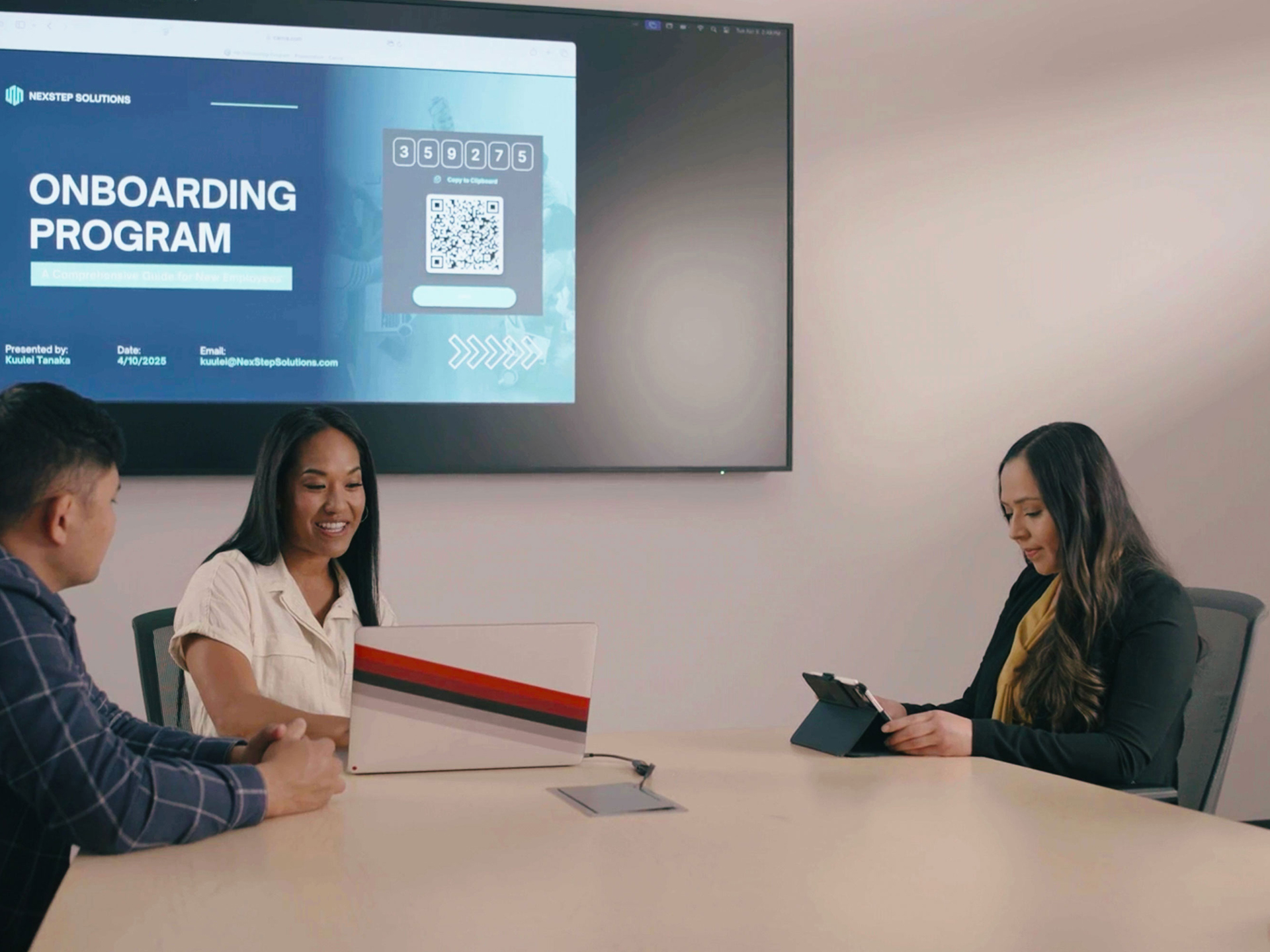
- Training and onboarding employees: Companies with global workforces can use AI translation to provide training materials and live instruction in multiple languages, ensuring consistent knowledge transfer.
Education: In primary and secondary education settings, it’s critical to communicate effectively not only with students but also their families. For post-secondary educational institutions, the overlap of linguistically varied and hard-of-hearing students makes captioning and translation service an indispensable educational tool.
- Supporting international students: Real-time captioning in their primary language can dramatically improve international students’ ability to comprehend and engage with lectures, class discussions, and communicate with professors.
- Providing language access for parents and families: Translate and caption orientations and open houses, parent–teacher conferences, and community events and graduation ceremonies with parents and grandparents.
- Encouraging global collaboration: Open doors to international research partnerships, guest speakers, and prestigious global opportunities for faculty and students.
For a deeper dive, read our blog specifically about the benefits of multilingual captioning in education.
Healthcare: Patients and healthcare providers alike know the frustrations of trying to communicate symptoms, diagnoses, and treatment when they don’t know what each other is saying, not to mention administrative challenges. Captioning in their preferred language can help with some of those challenges, allowing patients and staff to communicate more quickly and accurately for better outcomes.
- Patient consultations and diagnoses: Translation and captioning allows doctors and nurses to communicate more effectively with patients who are hard-of-hearing and/or speak different languages, supporting accurate diagnoses and treatment.
- Communicating medical records and instructions: Hospital and clinic staff using translation and captioning are better equipped to accurately communicate about medical history, patient instructions, and follow-up.
Find more details on the impact of communication accessibility in healthcare in our blog post, Language Accessibility in Breast Cancer Awareness and Treatment.
Event planning: The success of an event rides wholly on participant experience. By providing — and promoting — real-time captioning and translation services for events, organizers can create an inviting experience starting at registration. Event planners can attract more participants by offering accessible communication solutions and follow through with conditions that allow multilingual and hard-of-hearing attendees to fully engage.
- Presentations and panel discussions: Give audiences full access to speeches and discussions by thought leaders with simultaneous translation and captions. Even participants with basic command of the speaker’s language benefit from subtitles for technical or niche subject matter.
- Q&A sessions: Give and take improves events for both attendees and presenters. With simultaneous translation and captioning, your audience can feel more comfortable actively participating and asking questions.
There’s no limit to the examples of everyday communication that can benefit from real-time translation. However, the delivery of translation services must reflect the circumstances for a satisfactory experience; knowing when to use human interpreters versus AI translation makes all the difference in effective communication.
Choosing the right multilingual solution: when to use AI speech translation vs human interpreters
For years, real-time multilingual communication required scheduling an in-person spoken language interpreter. High-speed internet made it possible to receive remote interpreting service via audio/video streaming. Further technological advancement gave rise to the newest option on the scene: AI speech translation. Each of these is a valuable tool when you know how and when to use them.
Interpreter vs translator: what’s the difference?
Real quick, let’s address this common area of confusion. The difference between an interpreter and a translator — or the difference between translation and interpreting — is that
- an interpreter converts one spoken or signed language directly to another spoken or signed language.
- a translator works with written language, converting one written language to another or going from a spoken/signed language to written language (or vice versa).
You might use a human translator for document translation. When you want real-time language support for a conversation, you probably want an interpreter…or the new option, AI speech translation.
When to use an interpreter
Professional interpreters are an irreplaceable communication resource, able to bridge language and culture so people of different backgrounds can connect and understand each other. Sorenson is a global leader in sign language interpreting with more than 20 years of experience providing these services, so we will always advocate the benefits of using qualified interpreters.
Highly skilled interpreters come with an appropriate price tag. When you hire an interpreter, you’re paying for bilingual (or even multilingual) fluency, cultural competence, extensive training, and professional conduct — confidentiality, ethics standards, and reliability.
Some communication warrants, even demands, the cost of interpreting service:
- High stakes communication, including sensitive legal and medical situations
- Technical or jargon-heavy discussions where details are critical
- Emotional interactions
- Performances with verbal elements
The unique ability of professional interpreters to convey nuance — in the form of tone, context, emotion, body language, etc. — and their complex understanding of language gives their service a level of accuracy beyond word-for-word translation that technology cannot imitate.
That human element is most potent in person, and thus the tendency to prioritize onsite interpreting for important conversations: doctor appointments and legal proceedings, for example.
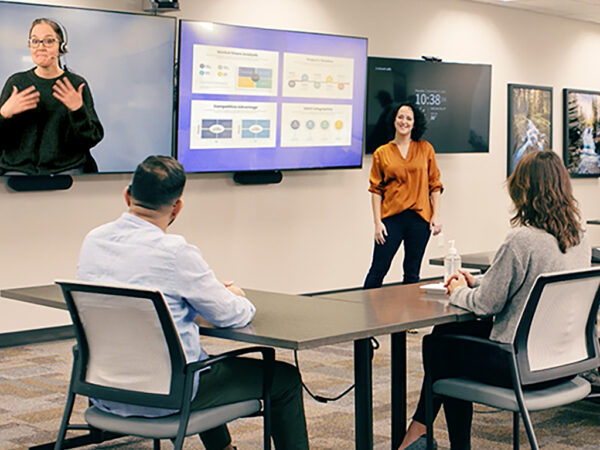
However, remote interpreting — via internet or phone connection — can provide a similar level of nuance with the flexibility and lower cost of virtual access. For example, Sorenson’s scheduled and on-demand sign language Video Remote Interpreting (VRI) services work for face-to-face, virtual, and hybrid conversations and require less planning ahead than onsite interpreting services.
When to use AI speech translation
AI speech translation services, like Sorenson Forum, elevate convenience and affordability to make multilingual communication accessibility an everyday solution rather than an occasional one.
How well can AI translate languages? Well, language processing is one of the areas where AI’s speed and consistency shine.
- AI can learn an entire language in a day, compared to the years it takes humans to become fluent.
- A single AI speech translation product can instantaneously translate dozens of languages, reducing costs and streamlining logistics.
- An AI language translator doesn’t sleep, expect weekends off, or observe holidays; it’s available 24 hours a day, 365 days a year with no need to schedule service.
Sorenson Forum is an AI translation service that is making multilingual accessibility affordable and scalable. It uses the most advanced speech recognition software and AI language models to convert speech to text and translate languages in real time, displaying captions in dozens of languages — even simultaneously. With AI text-to-speech functionality, users can listen to the translation as well as read the captions. Bonus: the transcript is available for distribution afterward in every language users used during the session.
The benefits of AI translation services make it possible for businesses and organizations to connect with people regardless of their language at a fraction of the cost of using human interpreters. That makes it practical and affordable to be accessible not only for critical communications, but the everyday interactions that build community and affinity. However, the technology isn’t an ideal fit for every situation.
AI language translators lack the human touch: the ability to convey nuance like tone, inflection, emphasis, emotion, body language — the elements of communication that add context to what we say. That requires a qualified interpreter.
Still, there are many applications for real-time AI speech translation that lean into the technology’s strengths to amplify engagement and inclusion at a fraction of the cost of interpreting services:
- Conferences and events
- Meetings
- Classes, training, and information sessions
An AI language translator will provide the best user experience when the value is in what you’re saying rather than how you’re saying it.
Interpreting vs AI translation use case comparison
Now that we’ve reviewed the strengths and ideal uses of professional interpreters and AI speech translation, let’s look at examples of how and when each might be useful across different settings.
Business
Invest in interpreting for:
- formal presentations to key decision-makers
- negotiating terms of contracts and agreements
- communication with Deaf clients or colleagues who use sign language
Leverage AI speech translation for:
- team meetings and planning sessions
- routine customer service
- public announcements
Education
Invest in interpreting for:
- serious disciplinary discussions
- Individual Education Program (IEP) conferences
- communication with Deaf students or parents who use sign language
Leverage AI speech translation for:
- classes and lectures, including transcripts
- assemblies and community events
- routine parent–teacher conferences
Healthcare
Invest in interpreting for:
- patient exams and consultations
- discussing diagnoses and treatment
- communication with Deaf patients who use sign language
Leverage AI speech translation for:
- administrative communication
- educating patients or the public about preventative health measures
Event planning
Invest in interpreting for:
- emotional presentations or performances
- communication with Deaf participants who use sign language
Leverage AI speech translation for:
- opening/closing remarks and orientation
- informational presentations and panel discussions
- Q&A sessions
Why to use interpreters with Deaf people who use sign language
We always recommend offering sign language interpreting to communicate with Deaf individuals who are native sign language users. While some deaf people can get by with captioning — and some deaf people do not use sign language at all and may prefer captioning — for native sign language users, those captions are in a second language rather than their preferred one.
American Sign Language (ASL), for example, has an entirely different linguistic structure than English. Providing an equitable experience for ASL users requires offering communication in ASL, which real-time speech translation does not accommodate…yet.
Sorenson is the global leader in sign language interpreting services and can provide scheduled or on-demand ASL interpreters anywhere in the U.S.
Now that you know how to use AI for language access, are you ready to try it?
If you’ve made it this far, chances are you see the potential to leverage real-time AI speech translation to transform how you engage with your community — locally and globally — without breaking the bank or adding logistical challenges. And that’s the idea: language accessibility that’s seamless and affordable.
Put real-time AI speech translation to work in meetings and events
Sources
- Exclusion of the non-English-speaking world from the scientific literature: Recommendations for change for addiction journals and publishers
- 2023 American Community Survey
- Language in England and Wales
- Statistics on official languages in Canada
- World Report on Hearing
- Embracing Neurodiversity at Work: Unleashing America’s Largest Untapped Talent Pool

