










































-
VRS

-
CaptionCall
-
Enterprise
-
Provider
-
Resources
-
Company


Sorenson Uses Cookies
Cookies are small text files websites send to your browser to remember information about your visit. They make our site work properly and help with security. When you allow cookies, you will have the best experience on our site — you can use tools such as chatbot for support and access other relevant products and services.

Captioned Home Phone vs. Mobile App: Which Is Right?
September 16, 2026

If hearing loss makes phone calls difficult, a caption phone for hearing loss or a mobile call captioning app can help you follow conversations more easily. Both solutions display real-time phone captions, so you can read what callers are saying while continuing to listen and speak naturally.
You can receive phone captions in two primary ways: on a dedicated captioned home phone or through a mobile captioning app on your smartphone.
The best option depends on where you make calls, the type of phone you prefer, and how comfortable you are using a mobile app. This guide can help you decide which solution best fits your daily life.
How phone call captioning works
During a captioned call, the other person’s words are converted into text and displayed on your screen in real time. You can listen, speak, and read the captions at the same time.
Captioned telephone service is available at no cost to eligible people in the United States whose hearing loss makes captions necessary to use the phone.
Eligible users must register to use call captioning. The service typically also requires an internet or mobile data connection.
How to get phone captions
Eligible users can get phone captions in two ways. They can use a special home phone with a caption screen. Or they can download a captioning app on a smartphone.
Caption phone for hearing loss
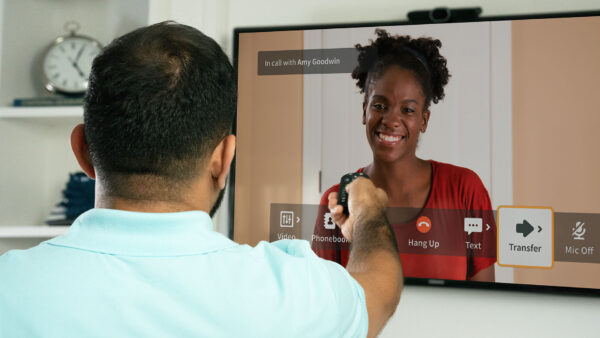
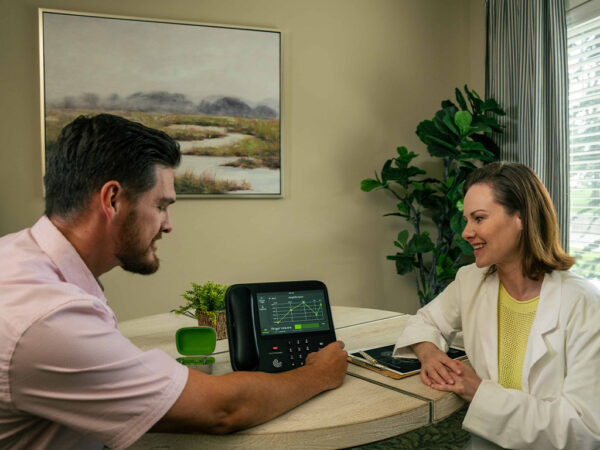
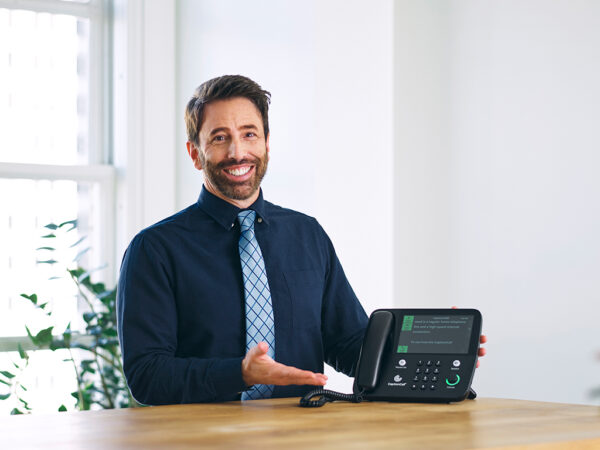
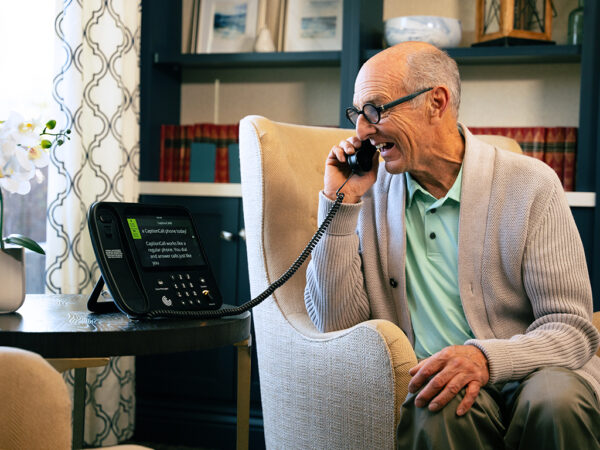
A caption phone for hearing loss is a dedicated telephone with a built-in screen that displays captions during calls
- A home phone may be a good fit if you:
- Make most of your calls at home
- Prefer using a traditional telephone handset
- Want a larger, dedicated caption screen
- Would benefit from personalized setup or training
- Do not want to rely on a smartphone for calls
Mobile call captioning apps
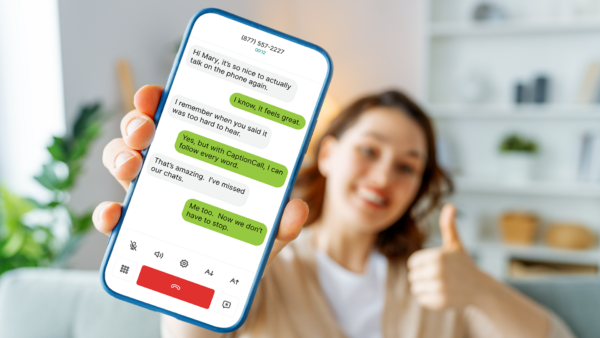
A mobile call captioning app displays phone call captions on a compatible smartphone during incoming and outgoing conversations.
A mobile app may be a good fit if you:
- Primarily use a smartphone
- Need captions when you are making calls away from home
- Are comfortable downloading and using mobile apps
- Travel or make calls from different locations
- Prefer using one device for everyday communication
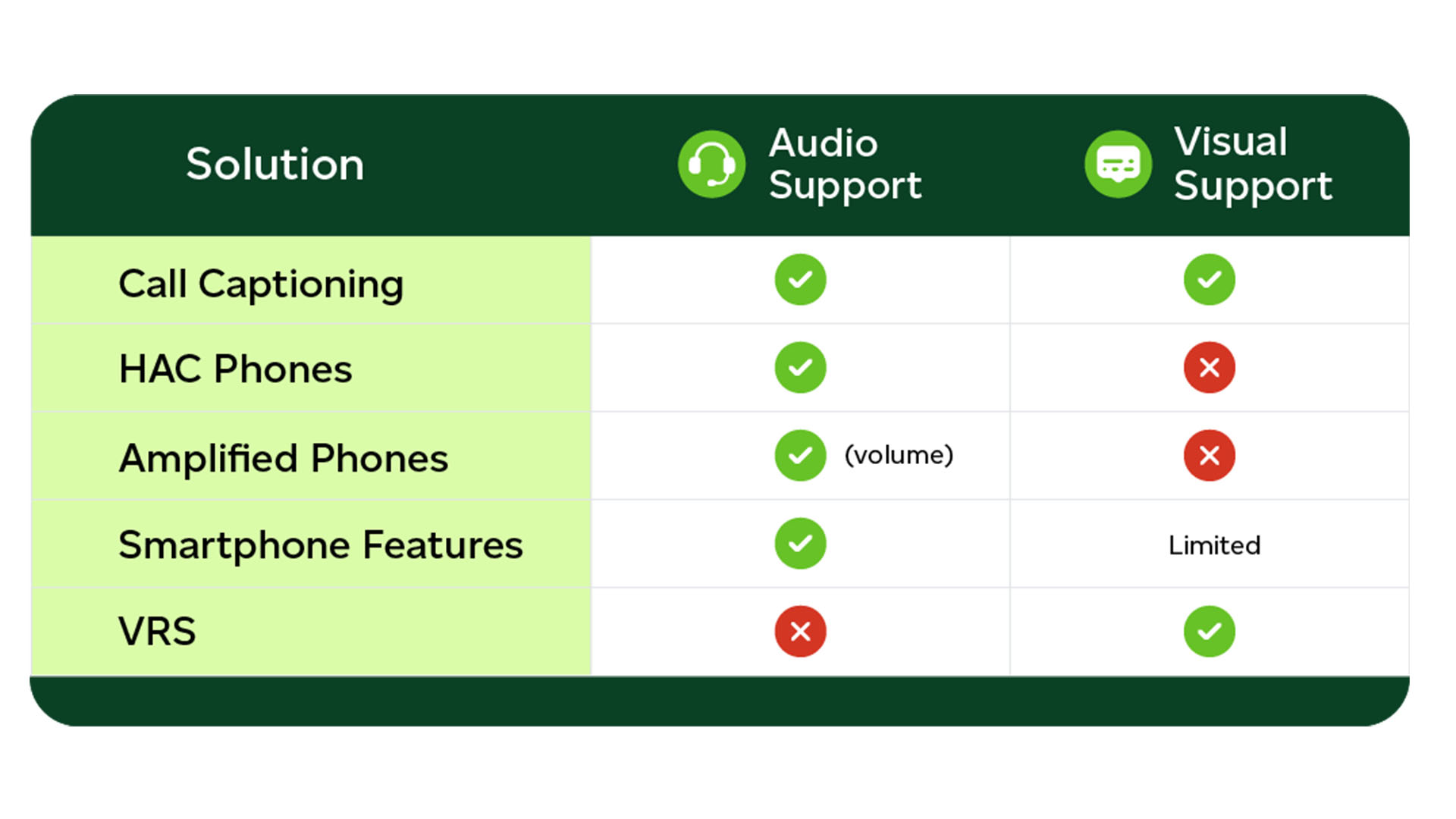
Quick comparison: Caption phone vs. app
If you're trying to choose the best caption phone for hearing loss or wondering whether a mobile captioning app would work better, this comparison can help.
How to choose the right captioning option for you
The right fit for a caption phone for hearing loss depends on how you prefer to make and take calls. People who primarily communicate from home often prefer a captioned home phone with a large display and familiar handset. People who rely on smartphones may prefer a mobile captioning app. Others choose a provider that offers both home and mobile options.
Consider these questions before choosing a service:
Where do you make most of your calls?
If most of your calls happen at home, a dedicated captioned phone may provide the most comfortable experience. If you regularly make calls while away from home, a mobile app offers greater portability.
How large do you want the captions to be?
If you prefer larger text, it’s worth considering screen size. A dedicated home caption phone generally provides a larger display.
Both home phones and mobile apps may allow you to adjust the text. However, your mobile device's smaller screen can limit the view and make large text captions hard to follow.
Which type of phone feels most familiar?
Some people prefer picking up a traditional handset and pressing physical buttons when they dial. Others are already comfortable using a smartphone for nearly every call.
Would you like help getting started?
Setup and support vary by provider. Some home-phone services include delivery, installation, and training.
Mobile apps generally require downloading the app, registering and completing setup on your device. Most apps include in-app instructions to help you get started.
Do you need both home and mobile captions?
You do not necessarily have to choose only one. Some providers offer both a dedicated home phone and a mobile captioning app.
Captioned telephone services and mobile captioning apps compared
Typically, when comparing this kind of service, price would be a major consideration. However, for eligible users, you can get call captioning from most providers at no cost. This is because a federally managed program provides the funding for these services.
One important difference is whether a provider offers a dedicated home phone, a mobile app or both. Popular captioned telephone service providers include CaptionCall, ClearCaptions, Hamilton CapTel, InnoCaption, and Rylo (formerly Nagish).
| Provider | Dedicated Home Phone | Mobile App | General Approach |
|---|---|---|---|
| CaptionCall | Yes | iOS and Android | Home and mobile captioning options, including personalized home-phone setup |
| ClearCaptions | Yes | iOS only | Primarily home-phone focused, with a mobile option for compatible Apple devices |
| InnoCaption | No | iOS and Android | Mobile-focused service with automated and live-stenographer caption modes |
| Rylo, formerly Nagish | No | iOS and Android | Mobile-focused service with AI call captions and additional communication tools |
Competitor information is based on publicly available provider materials reviewed in August 2026. Features, compatibility, and service requirements can change. Review each provider’s current information before selecting a service.
Need captions at home and away?
Some people prefer the larger screen and familiar handset of a captioned home phone while they are at home—but still need mobile captions when they are traveling, running errands or attending appointments.
CaptionCall offers both options:
- CaptionCall for Home provides a dedicated phone with a large caption screen, delivery, personalized setup and ongoing support.
- CaptionCall Mobile brings real-time phone call captions to a compatible iPhone or Android smartphone.
You can choose the option that best matches your routine or explore both ways to stay connected.
Frequently asked questions
Are captioned home phones and mobile captioning apps available at no cost?
Captioned telephone services are available at no cost to eligible individuals whose hearing loss makes captions necessary to use the phone. Registration is required. Your existing phone, internet, or mobile data charges may still apply.
Do I need hearing aids to qualify for call captioning?
No. You do not need to wear hearing aids. Eligibility depends on whether your hearing loss makes captions necessary for effective phone communication.
Can I keep my current phone number?
The process varies by provider and product. Some services work with your existing number, while others use call forwarding or provide a separate phone number for the service.
Can I use both a home phone and a mobile captioning app?
Yes. If both options fit your communication needs, you may be able to use a dedicated captioned phone at home and a mobile app when you are away. Confirm availability and registration requirements with the captioning provider.
Which option is easiest for older adults?
Age alone does not determine which option will be the easiest. People who prefer a traditional handset, larger screen, and personal setup may be more comfortable with a home phone. People who already use smartphones regularly may prefer a mobile app.
Which option provides the largest captions?
A dedicated home phone typically provides a larger physical caption display. Mobile caption size can be adjusted, and readability depends on the device and the app’s display settings.
Do captioned phone services require internet access?
Mobile captioning apps generally require Wi-Fi or cellular data. Home-phone connection requirements vary by provider and equipment.
What should I know about emergency calls?
Emergency-calling features and location requirements can differ between home phones and mobile apps. Review the provider’s current 911 or E911 information before using any captioning service for emergency calls.
Find the captioning solution that fits your life
The right solution is the one that makes phone conversations easier without making your daily routine more complicated.
Whether you prefer a large-screen home phone, captions on your smartphone or access to both, CaptionCall can help you stay connected with greater confidence.

