


Skip to content






























-
VRS

-
CaptionCall
-
Enterprise
-
Provider
-
Resources
-
Company
Sorenson Uses Cookies
Cookies are small text files websites send to your browser to remember information about your visit. They make our site work properly and help with security. When you allow cookies, you will have the best experience on our site — you can use tools such as chatbot for support and access other relevant products and services.
Call Captioning: A Key Part of Patient-Centered Audiology
March 12, 2026
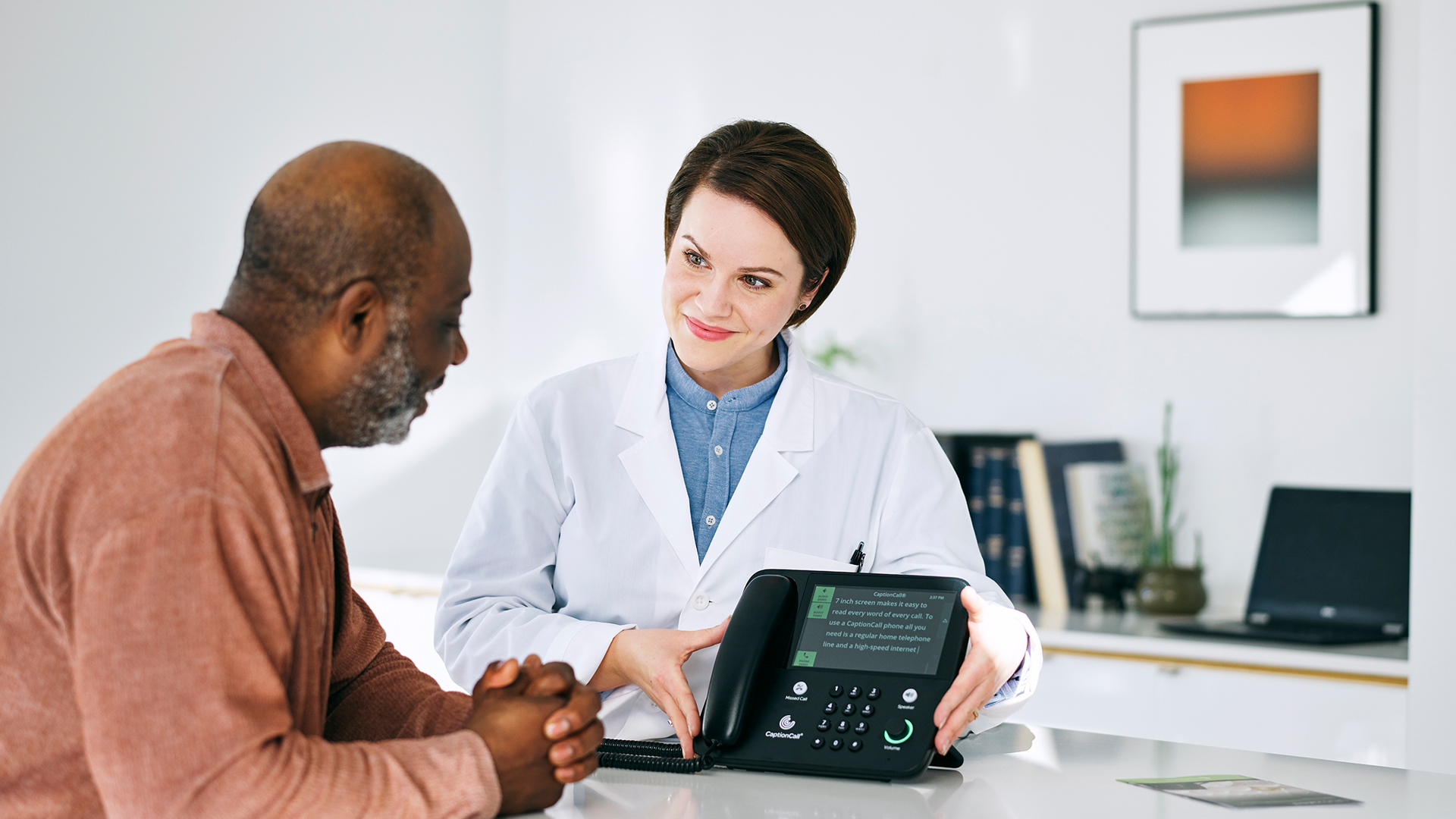 Across disciplines, there’s been a notable rise in a patient-centered approach to health care. Rather than focusing on standardized protocols and treatments, patient-centered care places a greater emphasis on the unique needs and preference of individual patients.
This approach aims for a more collaborative patient relationship. Patients who are given the chance to take a more active role in their own treatment plans often report higher satisfaction and better adherence to care plans.
Across disciplines, there’s been a notable rise in a patient-centered approach to health care. Rather than focusing on standardized protocols and treatments, patient-centered care places a greater emphasis on the unique needs and preference of individual patients.
This approach aims for a more collaborative patient relationship. Patients who are given the chance to take a more active role in their own treatment plans often report higher satisfaction and better adherence to care plans.
Patient-centered audiology
Patient-centered care stresses respect, communication, and a focus on overall quality of life. In audiology, this means a comprehensive approach that considers the patient’s daily lived experience and real-world challenges that arise outside of the clinic. True patient-centered care includes ensuring patients can communicate confidently in all aspects of daily life — including phone calls. This is where call captioning comes in.The realities of everyday communication
A good pair of hearing aids is generally the most effective tool for dealing with hearing loss. However, that doesn't mean they’re perfect. Even well-fit hearing aids can’t make up for every communication barrier. Phone calls can be particularly challenging, often compounding several problems:- Lack of visual cues
- Compressed audio
- Accents and background noise
- Automated systems
- Managing personal healthcare
- Maintaining employment
- Staying socially connected
- Handling financial and legal matters
The Audiologist's expanding role
As an audiologist, you do more than supply hearing aids. You are a trusted expert who helps people overcome hearing loss. That means you’re expected to anticipate unmet needs that your patients may not have considered. Simply recommending CaptionCall as a supplement to traditional hearing aids can improve patient satisfaction, increase their independence, and even reinforce the success of traditional hearing aids. Referrals demonstrate to your patients that you are committed to their hearing success beyond the hearing aid fitting appointment. A long-term approach to whole-person care.Integrating captioning into a patient-first model
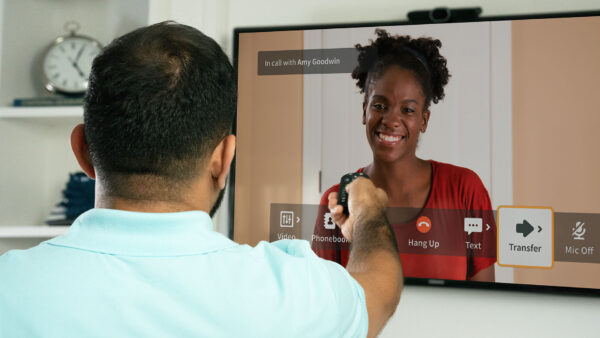
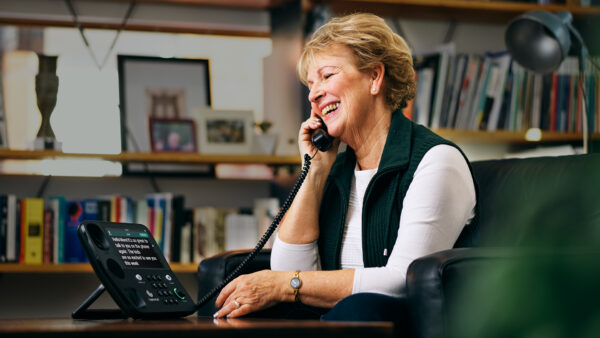
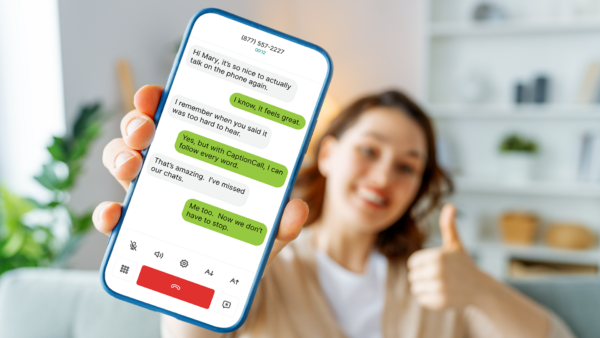
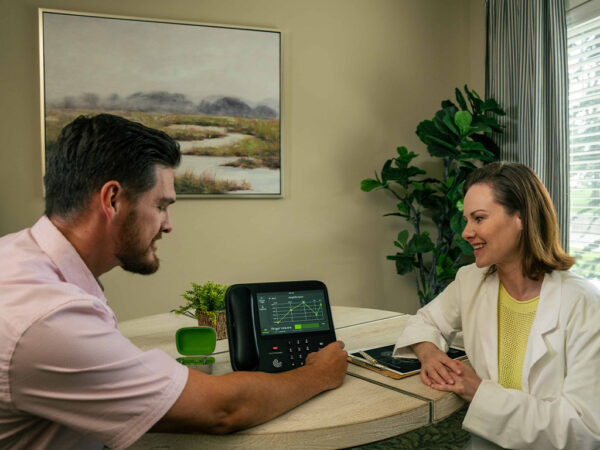
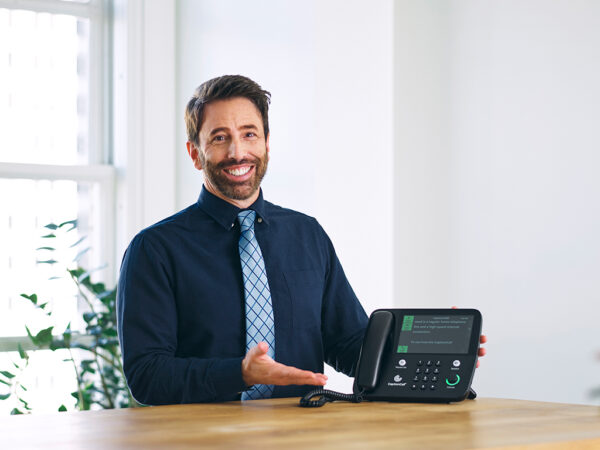
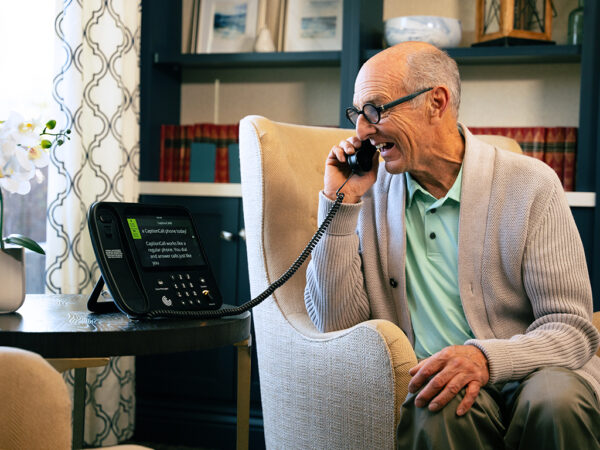
Call captioning uses specialized phones or smartphone apps to display real-time captions of phone calls. It’s a flexible solution that meets patients where they are and comes with some distinct advantages. Background noise, audio compression, and a lack of visual cues do not affect captions. These issues are common during phone calls for people with hearing loss. The best part about captions is how simple they are to use. Anyone who’s used a corded desktop phone before will find a CaptionCall home phone immediately familiar. Offering options supports patients with varying technology comfort levels and addresses both home and mobile communication Simply adding “How are phone calls going for you?” to your routine questions shows you care. It tells patients you value their communication access and quality of life. And if you can suggest a convenient, no-cost solution? That's even better!Testimonials: The power of a trusted referral
Many patients discover captioning because their audiologist recommended it. That trusted guidance often makes the difference between hesitation and action. As part of a complete care plan, a referral to call captioning does not feel like just an additional piece of technology. It feels like quality, patient-centered care. Many CaptionCall customers remember their audiologist’s referral with appreciation and gratitude. Here are a few examples:“Thanks to my audiologist for recommending CaptionCall to me and helping me to get it. It is a pleasure to get calls now and to understand friends and relatives when they talk to me.”-Millie B.
“What a lifesaver! It is my best friend. If it weren't for my audiologist, I wouldn't have known about CaptionCall. Thanks to whoever invented this great phone!”-Barbara K.
“I was getting so frustrated and depressed because not only was I not hearing like I wanted to -- I could no longer have the pleasure of visiting on the telephone with friends and family. Then my wonderful audiologist put me together with the people who installed this amazing CaptionCall phone. It is much more than a telephone; it has opened up a new door to my life.”-Yvonne
“Before I received my CaptionCall phone, I was missing half the conversation when anyone called me and sometimes it was an important call from the doctor’s office, hospital, my wife's music students. I’d try to remember what the call was all about, and I missed half of it because I couldn't hear what the person was saying, but now I can and CaptionCall phone has been an absolute blessing to me. I am so thankful that my audiologist told me about it.”-Gene W.
“It has been the greatest thing for me as I can't hear on normal or cell phones. [...] This is foolproof, and when I am home to use it. I love it and consider it a must for all hearing-impaired people. I am so happy my audiologist made me aware of it and got it installed - LOVE IT.”-Phyllis P.
“Not only have I lost a great deal of hearing, but high frequency sound, which are essential for word recognition, are distorted. I could use closed captions or subtitles for TV but was shut off nearly completely from phone calls. If I asked people to constantly repeat, frustrating for us both, I could still get only parts of what they said. My audiologist told me about CaptionCall, applied, and in a very short time, a wonderful representative came out and installed it. [...] It's made a huge difference in my life. I'm so grateful for this service. I can 'hear' calls again.”-Pris C.
“I love you every time the phone rings and I can hear what my caller is saying to me. I love you every time my family calls and I can stay in touch with them. I love you when I need help and I’m able to call 911. I love you every time my friends call to see how I am. Thank you CaptionCall!”-Elizabeth B.
“CaptionCall has become indispensable to me. About 90% of my calls, I must ‘see’ on my CaptionCall telephone. Truly, it is such a big help as I would be totally lost without it. I am very thankful for it. I first found out about CaptionCall by looking at the brochure I picked up in my audiologist's office. I am thankful for the young man who came with it one day and helped me set it up. I'm thankful for the program that made it possible to help those of us in need of it. I'm very thankful for the wonderful machine that helps me communicate with the world.”-Roxa K.
“Just wanted to say how much I have enjoyed my CaptionCall. I had never heard of this until my audiologist explained it to me. Not long until I had a lady come out and set mine up. What a blessing to be able not to miss what people are saying to me. So, thank you for all you have done for me.”-Jeanette T.
“I'm thankful to say that CaptionCall has given me a lot of my phone confidence back. I have been on the phone for over an hour this morning. Thank you for being a part of something that really does make a difference.”-Jennifer
“I have had hearing aids for about twenty years are really a benefit. I am unable to communicate adequately on the house phone or on my cell. A couple of years ago I received my Caption phone thanks to my Audiologists. Believe me, this is the very best thing that has happened to me as far as being able to communicate. I highly recommend that anyone with hearing loss get a CaptionCall phone ASAP.”-Gerald
Redefining what “comprehensive care” means
When taking a patient-centered approach, care doesn’t end at the clinic door. Your goal as a trusted expert isn’t just to improve a patient’s hearing in a clinic. It is to help them communicate with confidence in the real world. Real-world conditions can be far from ideal. When working with your patients, make sure you’re considering all likely communication environments — including phone calls. Given the challenges of hearing during phone calls, call captioning referrals are important. They help support patient-first audiology.Interested in helping connect your patients with call captioning?


This site is registered on wpml.org as a development site. Switch to a production site key to remove this banner.