










































-
VRS

-
CaptionCall
-
Enterprise
-
Provider
-
Resources
-
Company


Sorenson Uses Cookies
Cookies are small text files websites send to your browser to remember information about your visit. They make our site work properly and help with security. When you allow cookies, you will have the best experience on our site — you can use tools such as chatbot for support and access other relevant products and services.

Best Practices for Video Remote Interpreting (VRI)
February 15, 2026
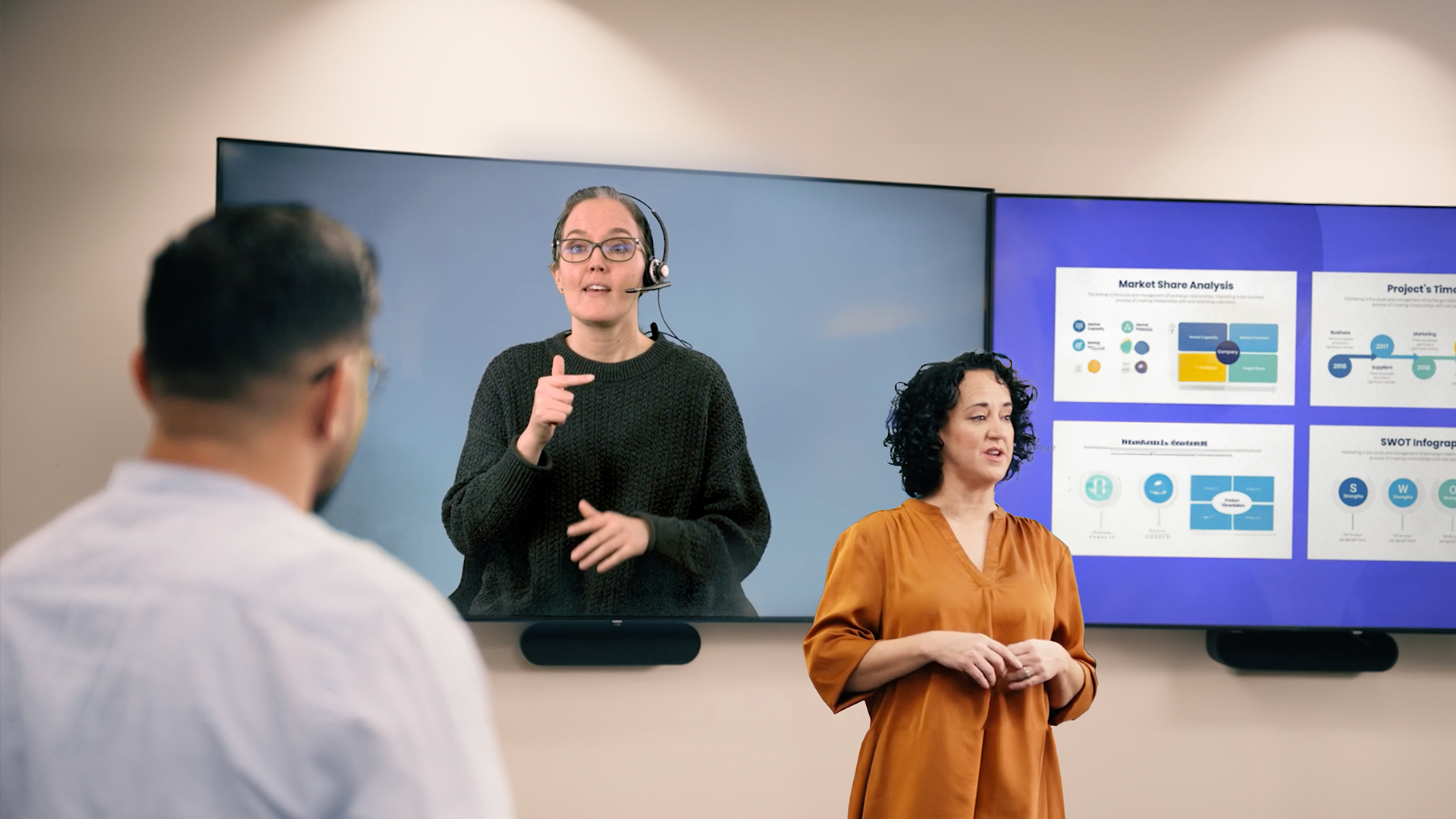
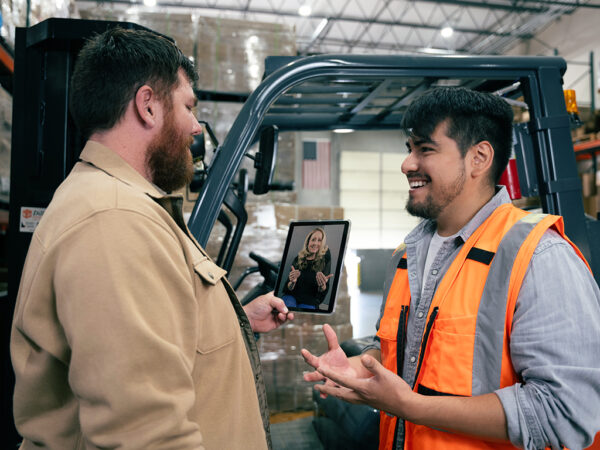
Video Remote Interpreting (VRI) is a flexible solution for in-person, virtual, or hybrid meetings when an on-site interpreter is not available. When used correctly, scheduled VRI enables effective, respectful communication for Deaf and hard-of-hearing participants across a wide range of scenarios.
This guide outlines when to use VRI and the best practices that help interpreted conversations run smoothly.
When to use video remote interpreting
Video Remote Interpreting is best suited for:
- Scheduled meetings, trainings, or events
- Longer or more complex conversations
- Situations where preparation and context improve accuracy
- In-person, virtual, or hybrid environments with reliable internet
For short, spontaneous conversations that require immediate access, on-demand interpreting may be a better option.
Prepare for a successful VRI session
Preparation is one of the most important factors in a successful VRI experience.
- Schedule in advance: Whenever possible, request VRI ahead of time to ensure interpreter availability and readiness.
- Ask about interpreter preferences: If appropriate, ask Deaf participants whether they have preferences related to communication style or familiarity with certain terminology.
- Share meeting details early: Provide the interpreter with an agenda, participant names, specialized terminology, and a point of contact in case of technical issues.
- Test your technology: Before the meeting, confirm that your internet connection, camera, microphone, and audio are working properly.
Make sure:- Deaf participants can clearly see the screen and interpreter
- Hearing participants are close to the microphone or using a headset or Bluetooth device
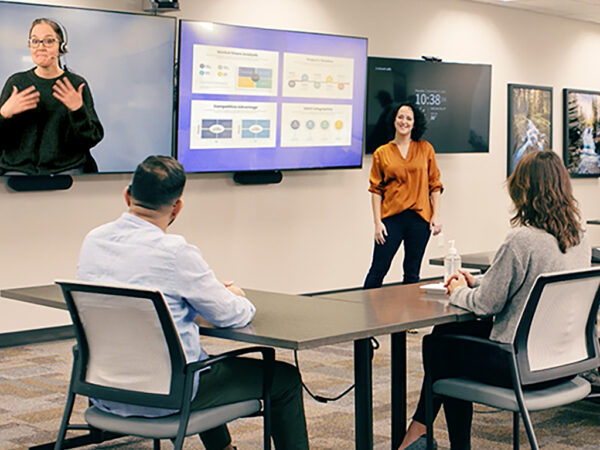
- Plan for interpreter visibility: In virtual meetings, ensure the interpreter’s video can be pinned or spotlighted so it remains visible throughout the session.
VRI etiquette during the conversation
Following basic ASL interpreting etiquette helps conversations feel natural and inclusive.
- Speak directly to the Deaf or hard-of-hearing person, not the interpreter
- Take turns and avoid speaking over others
- Pause to allow the interpreter to finish signing before responses
- Identify yourself when speaking in group settings
- Keep cameras on so facial expressions and visual cues are visible
- If you reference slides or documents, pause briefly so everyone—including the interpreter—can review them
Tips for virtual and hybrid VRI meetings
- Pin or spotlight the interpreter’s video
- Avoid repeatedly turning cameras on and off, which can cause video windows to shift
- Use the hand-raise feature to manage turn-taking
- If sharing your screen, confirm the interpreter can still see Deaf participants before continuing
Learn more about ASL interpreting etiquette
For general guidance on how to work respectfully and effectively with ASL interpreters in any setting, see our full guide:
Frequently asked questions about video remote interpreting
- When is Video Remote Interpreting better than on-site interpreting?
VRI is often preferable when on-site interpreters are unavailable, when meetings are virtual or hybrid, or when interpreting is needed quickly due to shorter turnaround times. - Do I need to schedule VRI in advance?
It’s best to schedule VRI in advance for known or recurring meetings and events. Advance scheduling allows interpreters to prepare and helps ensure availability, especially for longer or more complex conversations. For impromptu or last-minute needs, having access to on-demand VRI through a subscription can help ensure interpreting support is available when conversations arise unexpectedly. - Can VRI be used for in-person meetings?
Yes. VRI can support in-person meetings when participants have access to a screen, camera, microphone, and reliable internet connection. - How does VRI compare to on-demand interpreting?
VRI is better suited for longer or more structured meetings, while on-demand interpreting is designed for quick, impromptu conversations.
 Malala Alonso