







































-
VRS

-
CaptionCall
-
Enterprise
-
Provider
-
Resources
-
Company


Sorenson Uses Cookies
Cookies are small text files websites send to your browser to remember information about your visit. They make our site work properly and help with security. When you allow cookies, you will have the best experience on our site — you can use tools such as chatbot for support and access other relevant products and services.

Language Barriers in Breast Cancer Awareness & Care: What Healthcare Providers Need to Know
January 27, 2026
How communication gaps harm diagnosis and treatment—and practical steps administrators can take to improve equity, patient safety, and outcomes.

What’s scarier than a cancer diagnosis?
No diagnosis — or one that comes too late — because accessible healthcare was out of reach. That’s a preventable risk for millions in the U.S.
Breast cancer is the most common cancer among U.S. women, and early detection saves lives. But for millions of patients who are Deaf, hard-of-hearing, or who speak a language other than English, early detection often depends on something far more basic than technology: communication access.
When patients can’t understand their provider — or their provider can’t understand them — screenings get delayed, symptoms go unreported, and treatment plans aren’t followed. These communication gaps are preventable and improving them can lead directly to better outcomes.
Language disparities in healthcare
Language accessibility has life-and-death implications in breast cancer diagnoses, treatment, and outcomes — especially for non-English-speaking and Deaf and hard-of-hearing (DHH) patients.
Language barriers affect every step of the healthcare system, from scheduling appointments to understanding diagnoses and treatment plans.
Studies show:
- Language barriers delay access to screenings and disrupt treatment for immigrant patients (BMC Health Services Research).
- Adults aged 18-64 who speak a language other than English are 2.5x more likely not to have a primary care provider and more likely to miss routine preventative screenings (Journal of General Internal Medicine).
- Deaf ASL users’ understanding of English medical terminology is comparable to that of non-English-speaking immigrants (Preventing Chronic Disease).
- Linguistically varied patients have longer hospital stays, more surgery delays, and higher readmission rates due to due to misunderstanding their care (The Joint Commission).
- Deaf and hard-of-hearing patients often lack access to appropriate communication, such as sign language interpreters or captioning, which increases the risk of misunderstandings and delayed treatment (PubMed Central).
- Breast health knowledge gaps are significant among deaf women — in one study, only 64% could correctly explain a mammogram (PubMed Central).
- Health literacy is low nationwide: only 12% of U.S. adults have proficient health literacy (U.S. Department of HHS).
- Deaf ASL users are seven times more likely to have inadequate health literacy compared to hearing peers, even when information is translated into ASL (PubMed Central).
Combined, these barriers limit patients’ ability to understand breast health information, ask informed questions, follow instructions, and receive timely care.
Why healthcare administrators should care
Language needs for healthcare access
When you speak the dominant language in your country or region, it’s easy to take for granted how smoothly communication flows throughout the healthcare process. But for linguistically varied and DHH patients, language barriers can appear at each stage:
- Scheduling and check-in: Difficulty communicating with front-office staff.
- History and symptoms: Incomplete or inaccurate documentation due to misunderstandings.
- Testing and procedures: Limited ability to ask questions or understand preparation instructions.
- Diagnosis and treatment planning: High risk of miscommunication around medical terminology, options, risks, and follow-up care.
Common challenges include:
- Ineffective patient-physician communication: Without a shared language or appropriate language services, patients can misunderstand instructions — and providers miss essential context.
- Professional language services:
- Interpreting: Patients may rely on family members or untrained staff, leading to inaccuracies (Joint Commission).
- Translation: Missing or incomplete translated materials cause confusion around diagnoses and treatment (PLOS One).
- Captioning: Without accurate real-time captioning, DHH patients may miss critical details during complex appointments.
- Limited access to accessible health information: Few materials are available in ASL or non-English languages, limiting patient education and informed consent.
Addressing these communication gaps — through interpreters, translation, captioning, and culturally appropriate information — may improve patient safety, satisfaction, and outcomes.
Real patient stories: The human impact
Early detection depends on understanding the why
A hearing patient who spoke English went in for regular mammograms — and one of those screenings caught her breast cancer early enough to treat effectively.
But imagine if she hadn’t understood why mammograms were necessary or how often to get them. Many patients who are non-English-speaking or culturally underserved miss screenings simply because the information wasn’t communicated in their language.
For her, understanding the guidance changed her outcome. For others, lack of access delays care until the cancer is more advanced.
Access is more than “providing an interpreter”
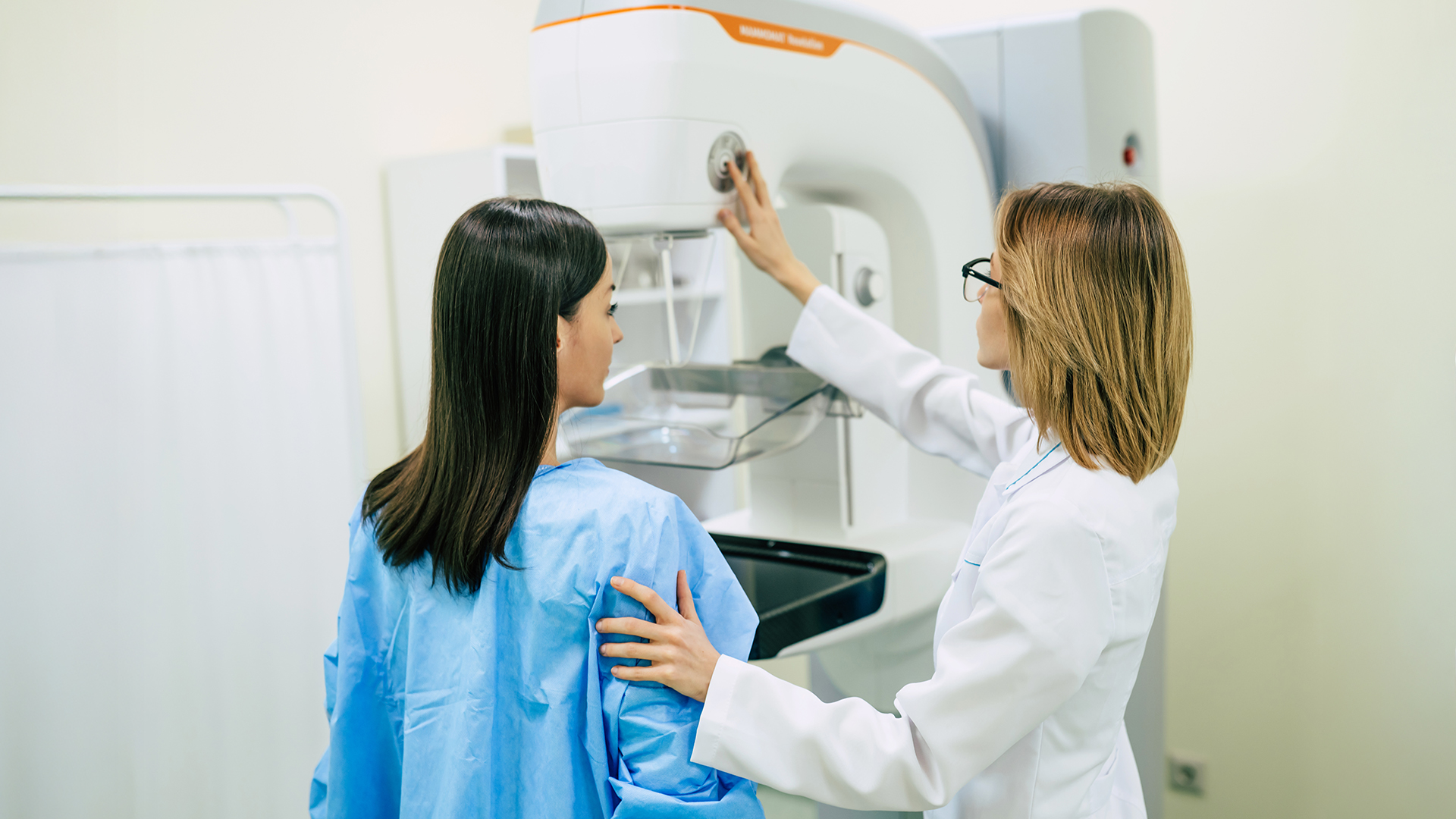
A different patient, who is Deaf, went in for a routine mammogram. That turned into repeat scans, ultrasounds, and eventually a breast cancer diagnosis.
The law in her state required the hospital to provide an interpreter — but that didn’t guarantee clear communication. Different interpreters used different signs. Some didn’t know the specialized medical terminology. And masked providers made lip-reading impossible during the pandemic.
She wanted to understand her diagnosis and take an active role in her care. Her first step was to request the same interpreter for each appointment whenever possible. This consistency helped them build a shared vocabulary of medical signs. Once signs became familiar, she could follow what her care team was saying.
However, interpreters can only translate what clinicians say — they can’t teach the medical concepts behind the terms. So, she began researching at home. Her doctors supported her by giving her copies of all her reports and letting her read visit summaries.
Her story illustrates a key point: compliance with interpreter laws is not the same as meaningful access. Providers must ensure the communication itself is accurate, consistent, and patient-centered.
Without a professional interpreter, patients get left behind
A third patient, a Spanish-speaking patient in California, was unaware that she was entitled to a qualified interpreter and her full cancer care team did not speak Spanish. Her relative chose to step in and interpret, as he said he did not want her to worry needlessly about her health.
As a result, some information was withheld, softened, or mistranslated. Family members cannot ethically — or effectively — replace trained medical interpreters. Misunderstandings can lead to missed screenings, late diagnoses, or failure to follow treatment plans.
According to the California Health Care Foundation’s (CHCF) California Health Interview Survey (CHIS), 2.7 million adults in California are linguistically varied. Twenty-nine percent of these adults reported getting help from a family member or friend to understand their doctor, and 23% were not aware of their right to an interpreter.
How healthcare providers can solve language barriers
Improving language accessibility is achievable, and the strategies below can significantly improve outcomes for linguistically varied, Deaf, and hard-of-hearing patients.
1. Know and follow the legal standards
- Certain federal and state laws require language access for limited English proficient (LEP) patients.
- Similarly, certain federal laws require effective communication for Deaf and hard-of-hearing patients.
- Relying on family or staff to interpret is not compliant.
Action: Establish a formal process for requesting, scheduling, and documenting qualified interpreters.
2. Provide multilingual and multi-format patient materials
Patients need accessible information in the format they use:
- Written materials translated into key community languages
- ASL videos for Deaf patients
- Visual, plain-language summaries of treatment plans
- Digital portals with captioning and translation options
Action: Audit commonly used patient education materials and prioritize those related to cancer prevention and follow-up care.
3. Trainstaff on communication best practices
Most access problems occur before a patient ever sees the physician.
Training should cover:
- How to identify language access needs
- How to request an interpreter
- How to work effectively with interpreters
- How to communicate with Deaf/linguistically varied patients using interpreters, captioning, or visual tools
- How to confirm patient understanding without relying on yes/no responses
Action: Include language access protocols in onboarding and annual training.
4. Use technology to close gaps
Many health systems already have language accessibility tools they’re not fully using.
Examples include:
- Video Remote Interpreting (VRI)
- Captioning for telehealth
- Patient portals with translated summaries
- Automated translation for nonclinical information
- AI-supported sign language avatars for patient education (emerging)
Action: Standardize when and how teams should use these. Gather patient feedback and analyze patient outcomes to identify areas for improvement.
5. Partner with community organizations
Local Deaf groups, Latino health advocates, and multicultural organizations can help providers:
- Understand cultural differences in breast cancer awareness
- Co-create communication materials
- Improve outreach for mammogram scheduling and follow-up
Action: Establish at least one community partnership annually focused on preventive care.
These strategies can help healthcare providers improve language accessibility and patient outcomes, contributing to a more equitable healthcare system.
Moreover, expanding language services to eliminate language barriers makes patients more likely to get preventative and follow-up treatment, reducing hospitalizations. Being able to effectively communicate also leads to greater patient satisfaction, reduced risk for errors, and lower chances of problems with medication.
Conclusion: Language access helps save lives
Language access isn’t just about preventing delayed diagnoses — it’s essential at every stage of breast cancer care. When patients can’t fully understand screening recommendations, test results, treatment options, or follow-up instructions, the risk of complications rises and trust erodes.
Professional interpreters, clear multilingual materials, captioning, and culturally responsive communication help ensure patients can participate fully in their care — from early detection to treatment decisions to long-term recovery.
By strengthening language accessibility for Deaf, Hard-of-Hearing, and multilingual communities, healthcare systems can improve cancer screening rates, improve patient satisfaction, and create a more equitable experience for every patient.
Language barriers should never stand in the way of quality healthcare. If you’re ready to build a more accessible and compliant patient journey, our team can help.
Let’s design the right language access strategy for your organization.
 Malala Alonso