































-
VRS

-
CaptionCall
-
Enterprise
-
Provider
-
Resources
-
Company


Sorenson Uses Cookies
Cookies are small text files websites send to your browser to remember information about your visit. They make our site work properly and help with security. When you allow cookies, you will have the best experience on our site — you can use tools such as chatbot for support and access other relevant products and services.

Communication Accessibility Checklist for Your Business
December 16, 2025

Business accessibility elements
Ensuring your company provides an inclusive and accessible environment for employees and customers can be a challenge — but well worth it! Communication accessibility can help you reach more potential customers, help to keep you compliant with applicable laws and regulations, and even lead to higher employee and customer satisfaction.
So, where do you start? Before making any big changes or investing in new solutions, it helps to know where you stand right now. These quick tips will help you build a more inclusive, accessible experience for employees and customers.

Workplace communication
- Physical accessibility: Add flashing-light sensors to your smoke detectors, fire alarms, and doorbells. Ensure that important signage includes braille. Be sure that customers and employees can easily find information about what accessibility services your business has available, such as ASL interpreters or screen readers.
- Clear communication guidelines: Set easy-to-follow guidelines for how your team communicates. Have speakers introduce themselves so interpreter users can follow along, and use plain language in written messages, particularly when meeting remotely.
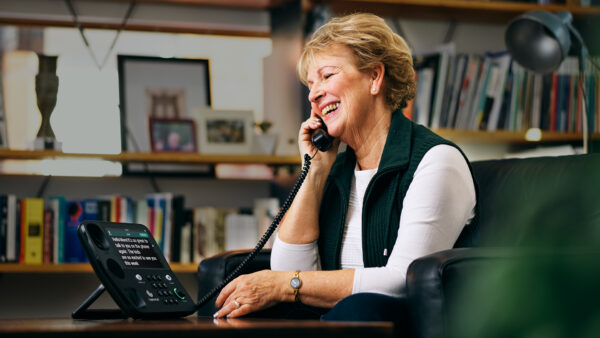
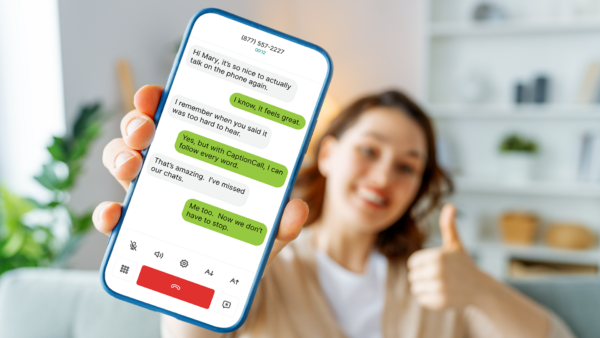
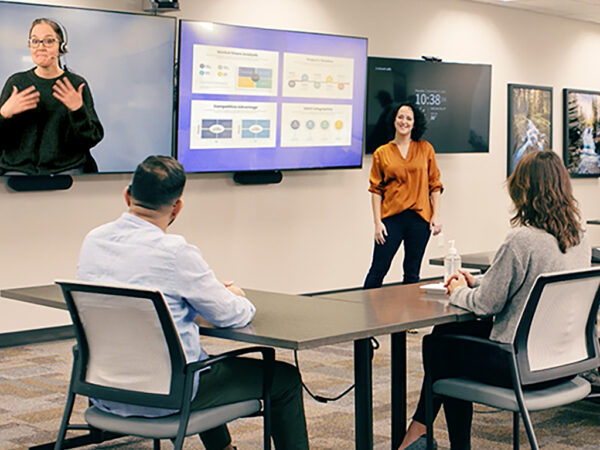
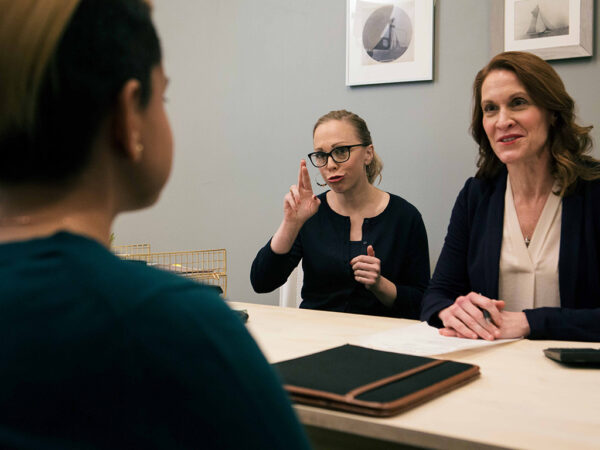
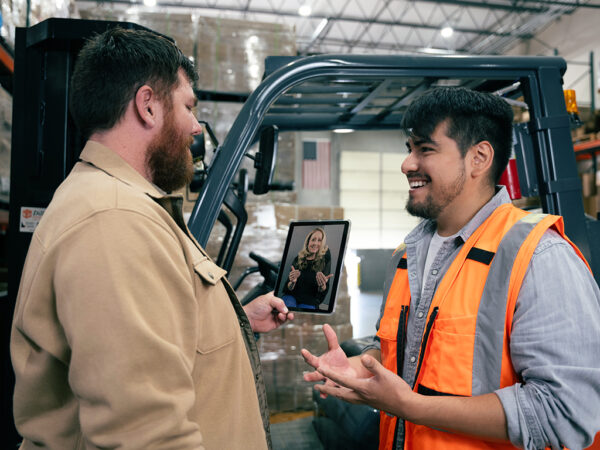
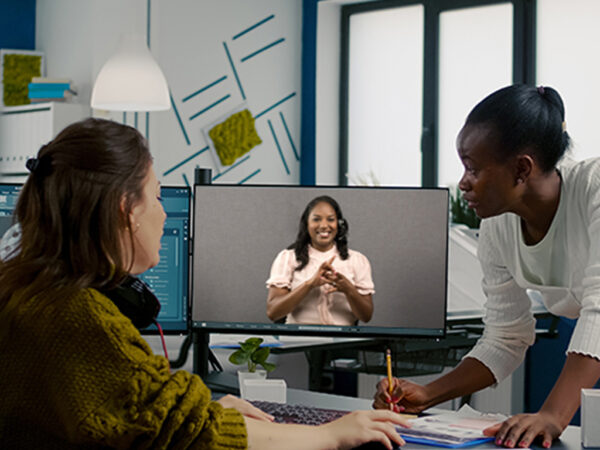
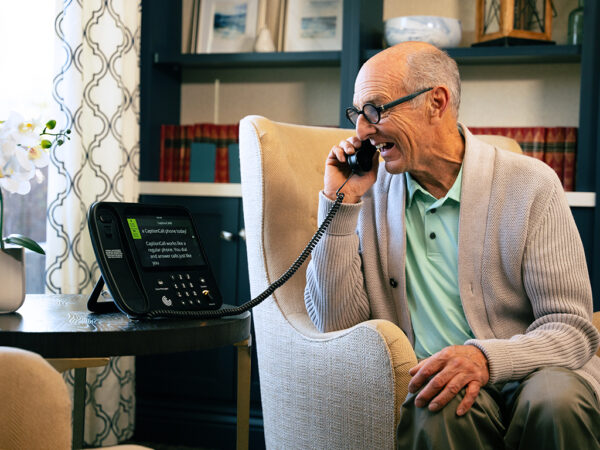
- Assistive technologies: Invest in screen readers, speech-to-text software, visual interpreting, and sign language interpreting services to support employees and customers who are blind, low-vision, Deaf, or hard-of-hearing. You can also take advantage of no-cost Video Relay Service (VRS) and call captioning service for employees’ phone calls. Ensure remote meetings, presentations, and events are captioned and translated, and share transcripts afterward to support comprehension and engagement with participants who are neurodiverse, limited English proficient (LEP), Deaf, or hard-of-hearing.
- Training programs: Conduct regular training on accessible content and communication practices. Research1 from the Society for Human Resource Management (SHRM) indicates that companies with disability-inclusive cultures are more likely to outperform their peers financially.
- Captioning multimedia content: Caption all multimedia content to ensure accessibility for neurodiverse, LEP, Deaf, and hard-of-hearing participants.
- Accessible presentation materials: Share slides and documents before the meeting. Provide them in accessible formats — such as large print, tagged PDFs, or screen-reader–friendly files — so everyone can review and engage at their own pace.
- Physical meeting accessibility: Choose meeting rooms with step-free access, wide pathways, accessible restrooms, and seating options for mobility devices. Confirm the space meets ADA requirements and remove any barriers before the meeting begins.
- Inclusive participation: Make participation easy for everyone: use turn-taking, prompt quieter participants, and allow written or anonymous feedback. Assign an accessibility lead to watch for barriers and support participants during the meeting.

Customer experience
- Website accessibility: Ensure your company website and digital content are accessible to individuals with disabilities by following Web Content Accessibility Guidelines (WCAG).
- Proper HTML markup: Use proper HTML markup and provide alternative text for images to enhance accessibility for screen readers and other assistive technologies.
- Accessible digital documents: Design digital documents with accessibility in mind, including proper headings, formatting, and descriptive links.
- Testing for accessibility: Test digital communication platforms for accessibility and usability, ensuring they meet the needs of all users.
- Training on digital accessibility: Provide your employees with training on how to create accessible digital content.
- Physical accessibility: Ensure your business space is equipped with wheelchair ramps, automatic doors, braille signage, and other features that ensure everyone has access.
- Customer service for all: If your organization provides customer service through a call center, consider using tools like call captioning or video relay service (VRS) to enable hard of hearing or Deaf individuals to call in.

Feedback and collaboration
- Open feedback environment: Make it easy for people to speak up about accessibility. Send regular polls, offer anonymous feedback channels, and share updates so everyone sees progress.
- Collaborative problem-solving: Promote collaboration among employees to identify barriers to communication and implement effective solutions.
- Leadership commitment: Lead by example. Prioritize accessibility in all communications and decision-making processes, demonstrating organizational values and fostering a culture of inclusivity.
- Policy integration: Incorporate accessibility considerations into company policies and procedures, ensuring alignment with legal requirements and industry best practices.
- Regular review and update: Regularly review and update accessibility practices to ensure ongoing improvement and compliance with evolving standards and technologies.
Are you ready to start creating a more inclusive and accessible business? Sorenson is committed to providing a suite of solutions to ensure your business is as inclusive and accessible as possible.
 Malala Alonso